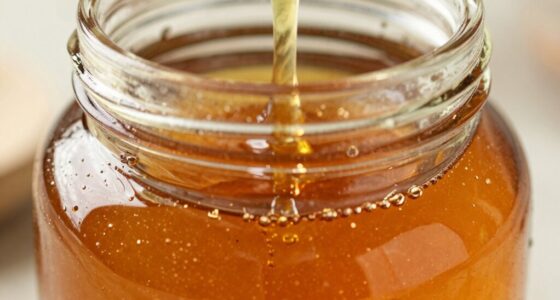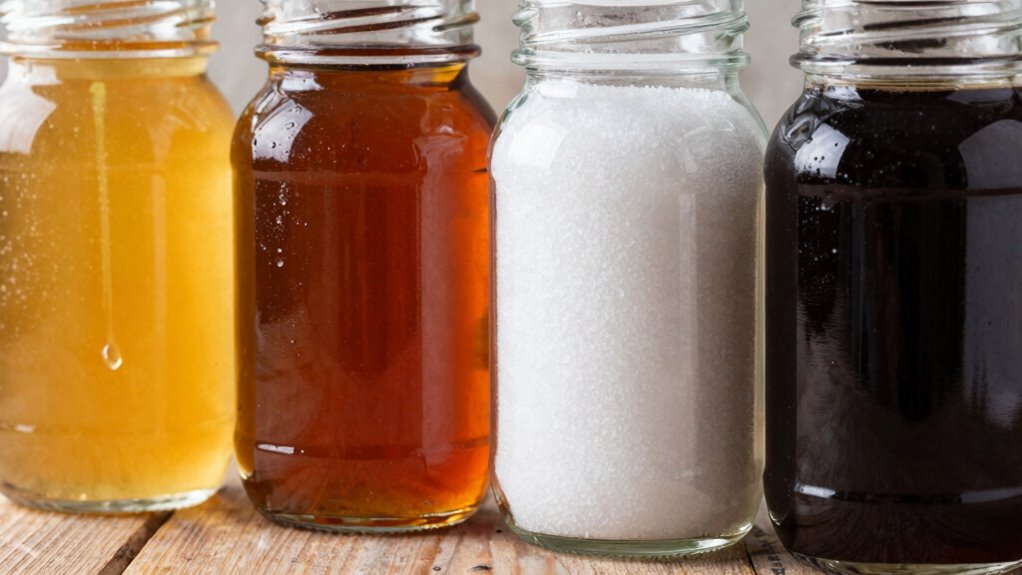

When swapping sugar, honey, agave, or maple syrup, consider their unique effects on health and flavor. Honey adds antioxidants but is high in calories, so use it sparingly. Agave has a low glycemic index but is very high in fructose, which can be problematic in large amounts. Maple syrup offers minerals and antioxidants but is calorie-dense. If you want to understand how to choose and measure these sweeteners safely, you’ll find helpful tips ahead.
Key Takeaways
- Substitute sugar with honey, agave, or maple syrup in recipes, adjusting quantities to maintain sweetness and flavor.
- Use honey for natural sweetness in tea or yogurt, but limit to prevent blood sugar spikes.
- Choose agave nectar for a low glycemic index option, but consume in moderation due to high fructose content.
- Opt for maple syrup to add antioxidants and minerals, using sparingly to avoid excessive calories.
- Always measure sweeteners carefully to balance flavor and health considerations in your recipes.
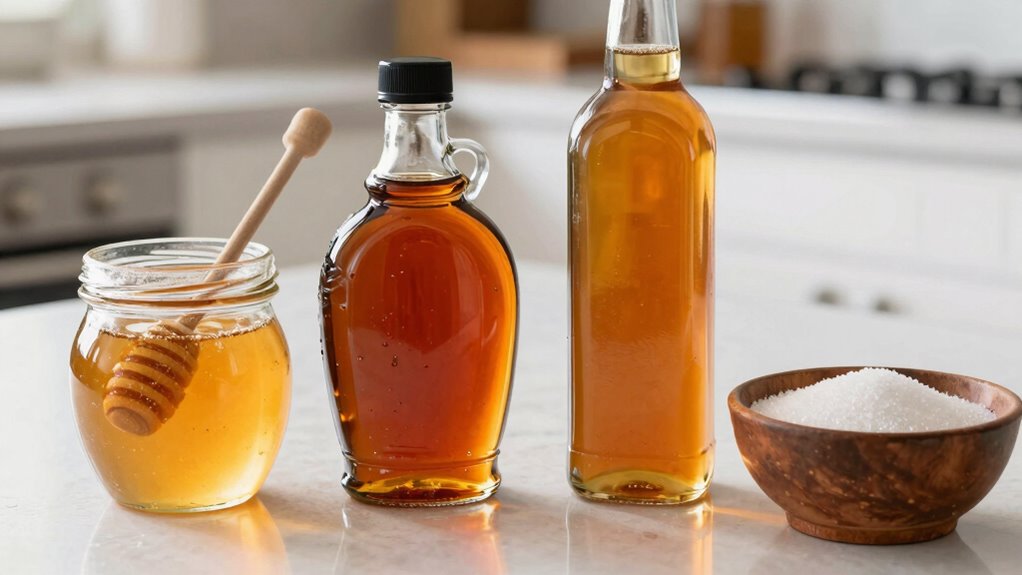
If you’re trying to cut back on sugar or find a healthier alternative, swapping sweeteners can feel overwhelming. The options are diverse, and each comes with its own set of benefits and drawbacks. When exploring sweetener alternatives, it’s essential to weigh health considerations, as some options may impact blood sugar levels, digestion, or overall wellness more than others. Your goal should be to choose sweeteners that satisfy your cravings without compromising your health.
Starting with honey, it’s a natural sweetener that’s often seen as a healthier choice. It contains antioxidants and enzymes that can offer some health benefits, but it’s still high in sugars and calories. If you’re managing blood sugar levels or trying to lose weight, you’ll want to use honey sparingly. Despite its natural reputation, honey can cause spikes in blood glucose, so moderation is key. It’s a good option for adding flavor to tea or yogurt but might not be ideal for those with diabetes or insulin resistance.
Honey is natural and flavorful but high in sugars; use sparingly if managing blood sugar or weight.
Agave nectar is another popular sweetener alternative, especially for vegans or those seeking a plant-based option. It has a low glycemic index, which means it won’t cause rapid spikes in blood sugar. However, agave is very high in fructose, which can be problematic in large quantities. Excessive fructose intake has been linked to insulin resistance and other metabolic issues. If you choose agave, use it in moderation and be mindful of your overall fructose consumption.
Maple syrup offers a rich, distinctive flavor and contains some antioxidants and minerals like manganese and zinc. Compared to honey and agave, it has a moderate glycemic index, making it a slightly better option for blood sugar control. Still, it’s calorie-dense and mainly sugar, so you should use it sparingly. Maple syrup can add depth to oatmeal, pancakes, or baked goods, but overdoing it can negate its health benefits. Additionally, considering essential DIY tools for measuring and mixing can help ensure you use the right amounts of these sweeteners in your recipes.
As an affiliate, we earn on qualifying purchases.
Frequently Asked Questions
How Do Different Sweeteners Affect Blood Sugar Levels?
Different sweeteners impact your blood sugar levels based on their insulin response and glycemic index. For example, sugar causes a quick spike, while honey and maple syrup have moderate effects. Agave has a lower glycemic index, leading to a slower rise. You can manage blood sugar better by choosing sweeteners with a lower glycemic index and mindful of their insulin response, helping maintain steady energy levels.
Are Natural Sweeteners Healthier Than Processed Sugars?
Natural sweeteners are generally healthier than processed sugars because they undergo minimal processing and lack chemical additives. You get more nutrients and fewer artificial ingredients, making them a better choice for your health. Processed sugars often contain chemical additives and are highly refined, which can lead to blood sugar spikes. By choosing natural sweeteners, you reduce exposure to unnecessary chemicals and enjoy a more wholesome, less processed option.
Can I Substitute Sweeteners Equally in All Recipes?
You can’t substitute sweeteners equally in all recipes because different sweetener types have unique properties. For example, honey and maple syrup add moisture and distinct flavors, while agave and sugar are more neutral. Consider flavor compatibility and texture when swapping. If a recipe relies on sugar’s structure, you might need to adjust other ingredients. Experimenting helps determine which sweetener works best for each specific dish.
Do Sweeteners Have Any Impact on Dental Health?
Sweeteners are like double-edged swords for your teeth. They can contribute to tooth decay and enamel erosion if consumed excessively, especially those that feed harmful bacteria. While natural options like honey or maple syrup might seem gentler, they still pose risks. To protect your dental health, limit sugary and sweetened foods, brush regularly, and visit your dentist. Remember, moderation is key in keeping your smile bright and healthy.
Which Sweetener Has the Best Flavor Profile for Baking?
For baking, honey offers the best flavor profile, thanks to its rich, floral notes and natural sweetness. Its flavor intensity enhances baked goods without overpowering other ingredients. You’ll notice aftertaste differences—honey leaves a smooth, lingering sweetness, unlike the more neutral taste of sugar. Honey’s unique profile makes it ideal for adding depth to cakes, muffins, and bread, elevating flavors with a natural, complex sweetness.
As an affiliate, we earn on qualifying purchases.
Conclusion
Think of choosing a sweetener like tending a garden. Each option—sugar, honey, agave, or maple—provides unique flavors and benefits, shaping your culinary landscape. By selecting wisely, you cultivate a balanced, vibrant harvest that suits your taste and health. Just as a gardener nurtures their plants, you nurture your creations with mindful choices. Embrace the variety, and let your sweetening journey flourish with harmony and depth.
As an affiliate, we earn on qualifying purchases.
natural sweetener measuring spoons
As an affiliate, we earn on qualifying purchases.
As an affiliate, we earn on qualifying purchases.