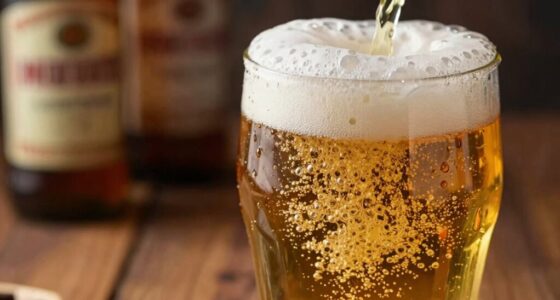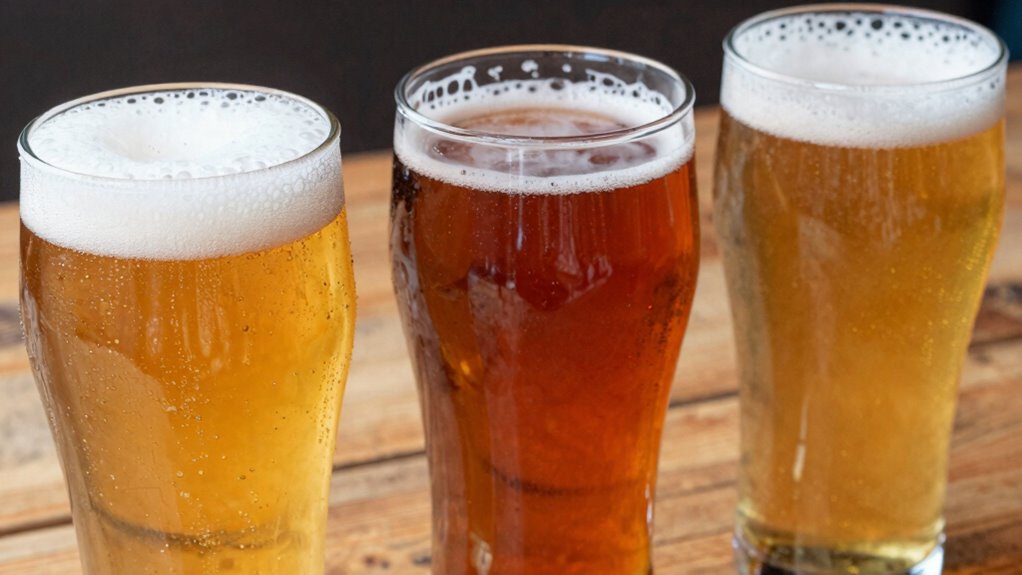

Pilsners are light, crisp lagers with a golden color and noticeable hop bitterness, brewed at cooler temperatures for a clean finish. Traditional lagers cover a broad range, from sweet and pale to darker, maltier styles, all made with cold fermentation for smoothness. Kölsch blends ale and lager techniques, fermented at warmer temps but cold-conditioned for clarity and subtle fruitiness. Keeping these differences in mind helps you understand each style’s unique qualities—continue exploring to discover more details.
Key Takeaways
- Pilsners are a type of pale lager brewed with bottom-fermenting yeast at cooler temperatures, emphasizing hop bitterness and clarity.
- Lagers encompass a broad range of beers fermented with bottom yeast at cold temperatures, from light to dark styles.
- Kölsch is brewed with ale yeast but cold-conditioned like lagers, resulting in a light, delicate, and slightly fruity beer.
- Brewing techniques, especially fermentation temperature and conditioning, define each style’s flavor, appearance, and texture.
- Pilsners are crisp and refreshing, lagers are smooth and balanced, and Kölsch combines ale richness with lager smoothness.
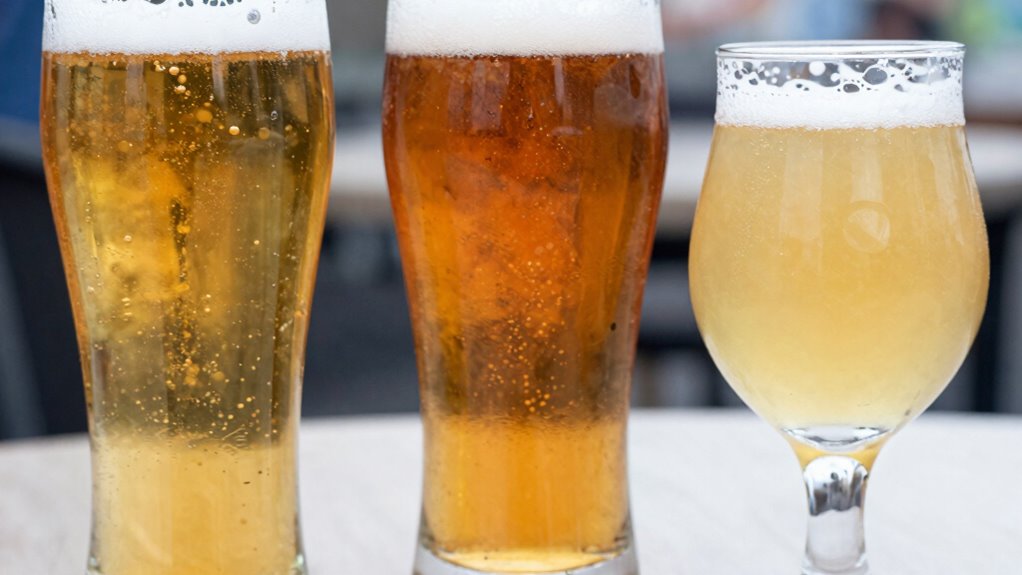
Are you curious about the differences between Pilsner, Lager, and Kölsch? These terms often get tossed around when discussing beers, but understanding what sets them apart can elevate your drinking experience. First, let’s talk about brewing techniques. Pilsners are a type of lager, brewed using bottom-fermenting yeast that thrives at cooler temperatures, typically between 45-55°F. This process results in a clean, crisp beer with a smooth finish. Lagers, in general, follow similar brewing methods, emphasizing cold fermentation and extended lagering periods. This slow process helps develop their characteristic smoothness and clarity. Kölsch, on the other hand, is a bit of a hybrid. It’s brewed with ale yeast but fermented at cooler temperatures, around 55-65°F, and then cold-conditioned like lagers. This unique approach gives Kölsch a distinct brewing technique that blends the best of both worlds, resulting in a beer that’s both lively and refined.
When it comes to flavor profiles, the differences become even more noticeable. Pilsners typically boast a light, golden color with a noticeable hop bitterness, often with floral or spicy notes from traditional European hop varieties. They’re invigorating, with a crispness that makes them perfect for hot days or as a palate cleanser. Lagers, depending on the type, can range from pale and sweet to darker, maltier varieties. They generally have a balanced profile with subtle sweetness, maltiness, and a clean finish. Kölsch is usually a pale, straw-colored beer with a delicate fruitiness and a slightly dry finish. It’s less bitter than a Pilsner, emphasizing subtle malt sweetness and a gentle hop character that’s smooth and easy to drink. Additionally, understanding the brewing techniques can further enhance your appreciation of these unique beer styles.

BERO Variety Pack Non-Alcoholic Beer, Non-Alcoholic Craft Ale, Hoppy IPA Style Craft Brew, NA Beer by Tom Holland, Refreshing Alcohol Alternative Beverages for Any Occasion – Pack of 12
PREMIUM NON-ALCOHOLIC IPA: Discover BERO’s award-winning beers in a variety pack bundle. Three cans each of Kingston Golden…
As an affiliate, we earn on qualifying purchases.
As an affiliate, we earn on qualifying purchases.
Frequently Asked Questions
How Do the Brewing Processes Differ Among These Beers?
You’ll notice that Pilsners, Lagers, and Kölsch differ mainly in fermentation techniques and ingredient choices. Pilsners use bottom fermentation at cooler temperatures, creating a crisp, clean profile. Lagers also ferment cold, but with different malt and hop selections, leading to a smooth taste. Kölsch undergoes a hybrid fermentation—top-fermented like ales but conditioned like lagers—using unique ingredients that give it a subtle fruitiness and light body.
Which of These Beers Pairs Best With Spicy Foods?
For spicy food pairing, you’ll find that a Kölsch works best because its light, crisp flavor enhances the heat without overpowering your palate. The subtle malt sweetness balances spiciness, while the carbonation cools your mouth. Pilsners also work well, offering a invigorating bitterness that complements spicy dishes. Lagers, especially lighter ones, provide a smooth, mellow experience, but Kölsch’s delicate profile often delivers the best flavor enhancement in spicy food pairings.
Are There Regional Variations Within Each Beer Type?
You’ll find regional variations within each beer type, with about 80% of breweries maintaining unique local flavor traditions. In Pilsners, for example, German and Czech styles differ especially in hop bitterness. Lager traditions vary from American light lagers to dark European versions, while Kölsch reflects Cologne’s distinct brewing customs. These regional brewing traditions give each beer its own character, making each sip a taste of local heritage.
How Do Alcohol Contents Compare Across Pilsner, Lager, and Kölsch?
You’ll find that Pilsners generally have a slightly higher alcohol content, around 4.5-5.5%, compared to lagers, which typically range from 4-5%. Kölsch falls somewhere in between, at about 4.4-5.2%. These differences come from distinct fermentation techniques and flavor profiles, with Pilsners often being more bitter and crisp, while lagers and Kölsch tend to be lighter and more subtle. Always check the label for exact alcohol percentages!
What Are the Traditional Glassware Styles for Serving Each?
You’ll want a tall, slender pilsner glass to showcase its crystal clarity, while a sturdy, tulip-shaped lager glass enhances its robust aroma. For Kölsch, a narrow, cylindrical stein keeps it delightfully cold and highlights its delicate flavor. Pay attention to glassware aesthetics and serve each at their ideal temperature—pilsners chilled, lagers slightly warmer, and Kölsch ice-cold—to elevate your drinking experience. Cheers!

Craft A Brew – Light – Craft Lager – Beer Making Kit – Make Your Own Craft Beer – Complete Equipment and Supplies – Starter Home Brewing Kit – 1 Gallon
MAKE YOUR OWN BEER – Be more than a beer drinker; be a beer maker! This craft beer…
As an affiliate, we earn on qualifying purchases.
As an affiliate, we earn on qualifying purchases.
Conclusion
Now that you know the differences between pilsner, lager, and kölsch, you’re equipped to choose your perfect pour. Think of it like a map to a treasure trove of flavor—each style offering a unique adventure. Whether you prefer the crisp refreshment of a pilsner, the smoothness of a lager, or the delicate charm of kölsch, don’t settle for just any drink. Immerse yourself, explore, and let your taste buds discover a world more vibrant than you ever imagined!
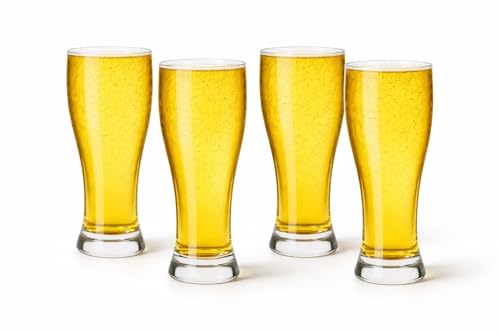
Pilsner Beer Glasses Set of 4 – Classic Tall Craft Beer Cups for IPA, Lager, and Ales – Solid Glassware for Men & Women – 12oz Bar Glass Set – Great Beer Gifts for Him, Her, or Home Bar
Includes four 12oz tall beer glasses designed to enhance flavor, aroma, and carbonation for a more enjoyable drinking…
As an affiliate, we earn on qualifying purchases.
As an affiliate, we earn on qualifying purchases.

Libbey Craft Brews Assorted Beer Glasses Set of 6, Versatile, Premium Beer Glass Set, Craft Beer Glasses for Pilsner, Stout, Lager, IPA & More
Complete 6‑piece assortment: Includes a sour (12 oz), wheat (16 oz), lager/pilsner (16 oz), stout (16 oz), high‑ABV (10 oz), and IPA (16.75 oz)…
As an affiliate, we earn on qualifying purchases.
As an affiliate, we earn on qualifying purchases.