
To prevent infected beer, remember the key rule: always clean thoroughly first, then sanitize. Cleaning removes dirt, residue, and organic matter that can shield microbes, making sanitizers less effective. Sanitizing then kills remaining bacteria and wild yeasts. Skipping cleaning or rushing to sanitize can lead to contamination and off-flavors. Following this sequence is essential for consistent, high-quality beer. Keep going to discover more tips for maintaining your brewing hygiene and equipment.
Key Takeaways
- Always clean equipment thoroughly to remove organic matter before sanitizing to ensure sanitizers work effectively.
- Use proper cleaning agents like soap and water first, then follow with sanitizer to eliminate microbes.
- Regularly inspect and maintain equipment to prevent microbial harborage that can lead to infection.
- Organic debris can shield microbes from sanitizers, making cleaning a critical step prior to sanitizing.
- Proper hygiene practices, including cleaning and sanitizing, are essential to prevent infected beer and maintain quality.
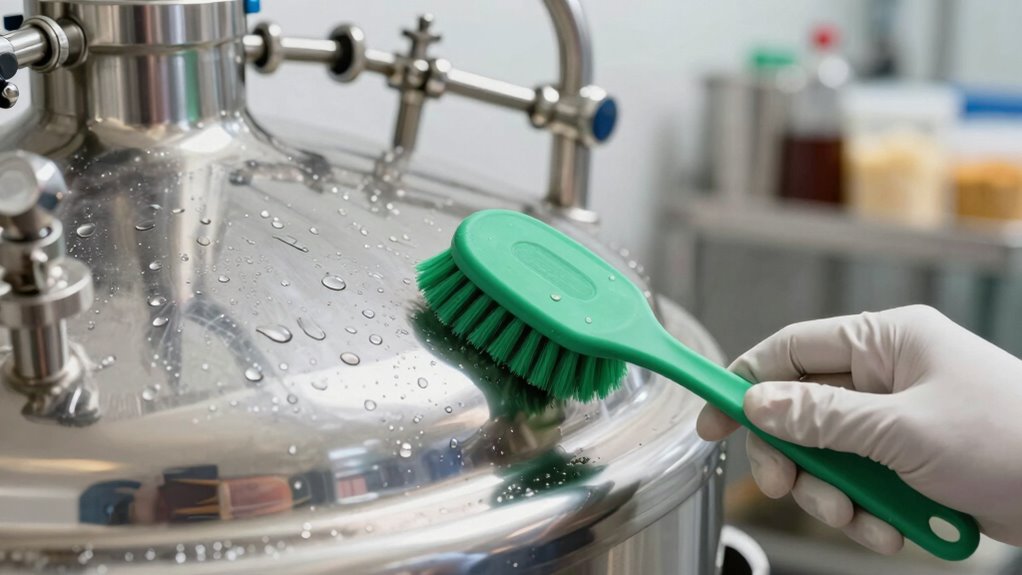
Ever wondered what really sets cleaning apart from sanitizing? It’s a vital distinction, especially when you’re brewing beer. Cleaning involves removing dirt, residue, and organic matter from your equipment and surfaces, but sanitizing takes it a step further. It reduces the number of bacteria, wild yeasts, and other microbes that can spoil your brew or cause infection. The key to consistently good beer lies in proper fermentation hygiene and diligent equipment maintenance. If you neglect either, you risk contamination that can ruin your batch.
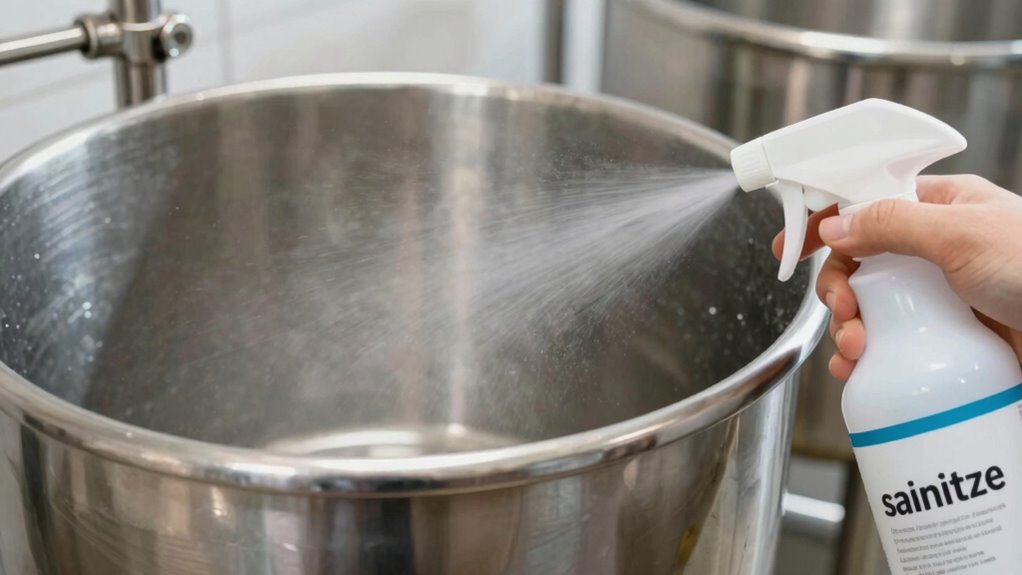
Fermentation hygiene is all about creating a clean environment where yeast can work without interference from unwanted microbes. You can clean your fermenters, bottles, and all related tools with soap and water, but that’s only the first step. To truly prevent infections, you need to sanitize those surfaces afterward. This is where sanitizing solutions like star san or alcohol-based disinfectants come into play. They wipe out the microscopic nasties that can cause off-flavors or spoilage. Remember, cleaning alone isn’t enough because debris and organic matter can shield harmful microbes from sanitizers. That’s why thorough cleaning paired with proper sanitization is essential for fermentation hygiene.
In the realm of brewing, understanding different content formats can significantly enhance your approach to fermentation hygiene.
Equipment maintenance is equally important. If your brewing equipment isn’t well-maintained, residues can build up over time, creating breeding grounds for bacteria and wild yeasts. Regularly inspecting and replacing worn-out seals, gaskets, and hoses ensures there are no hidden spots where microbes can hide. Properly maintaining your equipment also means keeping it in good condition so that cleaning and sanitizing are effective every time. Neglecting maintenance can lead to contamination issues that are hard to detect until your beer has already been compromised.
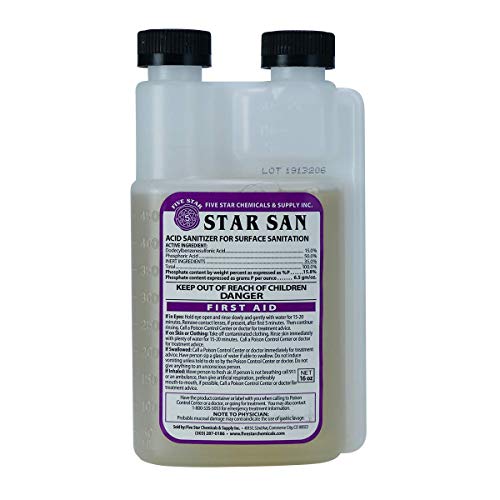
Five Star – Star San – 16 Ounce – Brew Sanitizer High Foaming Acid Anionic
HIGH FOAMING- This sanitizer produces foam with little agitation for penetration into those cracks and crevices of equipment
As an affiliate, we earn on qualifying purchases.
As an affiliate, we earn on qualifying purchases.
Frequently Asked Questions
Can I Sanitize Without Cleaning First?
You shouldn’t sanitize without cleaning first because cleaning rituals remove dirt, residue, and organic material that can hinder sanitization. Proper sanitization techniques are effective only when surfaces are free of debris. Skipping cleaning can leave bacteria and yeast behind, risking infection. Always clean thoroughly before sanitizing to guarantee your brewing equipment is properly disinfected, preventing contamination and producing better, safer beer every time.
What Are the Best Cleaning Agents for Beer Equipment?
Think of your beer equipment as a delicate dance partner — you need the right cleaning agents to keep the rhythm smooth. Use a no-rinse brewery cleaner or PBW (Powdered Brewery Wash) to cut through beer foam residue and bacteria. These agents are tough on grime but gentle on your gear, helping maintain proper fermentation temperature and ensuring each brew stays pure and delicious. Keep it clean, keep it perfect.
How Often Should I Sanitize My Brewing Tools?
You should sanitize your brewing tools after every use to guarantee fermentation vessel maintenance and prevent contamination. Focus on sanitizing all equipment used during brewing, especially before storage and when shifting between batches. Regular sanitation helps eliminate bacteria and wild yeast, maintaining beer quality. Be diligent with your brewing equipment storage, keeping sanitized items in a clean, dry place. This routine minimizes infection risks and keeps your beer tasting great.
Can Dirty Equipment Ruin My Beer?
Dirty equipment can absolutely ruin your beer—think of a fermentation vessel teeming with yeast contamination, leading to off-flavors and potential spoilage. When you neglect cleaning, residual bacteria and wild yeast can overpower your carefully cultivated yeast, causing infection and ruining your brew. Every piece of equipment, especially the fermentation vessel, needs thorough sanitization to keep your beer pure, delicious, and free from contamination. Don’t let dirty tools sabotage your brewing success!
Is There a Difference Between Cleaning and Sanitizing Brushes?
Yes, there’s a difference between cleaning and sanitizing brushes. Cleaning brushes involves using specific brush types and proper cleaning techniques to remove dirt and residue. Sanitizing brushes, on the other hand, guarantees they’re free of harmful bacteria. You should first clean your brushes thoroughly with hot water and a suitable cleaner, then sanitize them to prevent infection. Proper maintenance of both types keeps your brewing equipment safe and your beer tasting great.

Kegconnection Kegerator Beer Line Cleaning Kit – Easy and Safe to Use Keg Cleaner – with Brew Clean Solution and More
FOR A SEAMLESS BEER LINE CLEANING – This home kegerator and brewery machine cleaner kit has every tool…
As an affiliate, we earn on qualifying purchases.
As an affiliate, we earn on qualifying purchases.
Conclusion
So, now that you understand the difference between cleaning and sanitizing, are you ready to take your brewing to the next level? Remember, neglecting proper sanitation can invite unwanted bacteria and ruin your beer. By consistently applying the right techniques, you guarantee every sip is pure perfection. Don’t let simple mistakes spoil your craft—aren’t your brews worth the effort? Take control and keep your beer safe, clean, and delicious every time.

Cooler Keg Star San Cleaner 32oz – No Rinse Food Grade Brewing Sanitizer Rinseless Cleaning Agent for Home Brew, Kegs, Stainless Steel. Acid-based, foaming sanitizer for Beer, Wine, & Mead Equipment
STAR SAN: Star San is what sanitizes your Cooler Keg system. This is the step after PBW in…
As an affiliate, we earn on qualifying purchases.
As an affiliate, we earn on qualifying purchases.

Nu-Foam Sanitizing Tablets for Bar Glassware – Superior Rinse Aid – Hand Washing Bar, Brewery Supplies – Spotless Serving Glasses – Professional – 4 Pack 400 Tablets/ 2,400 Quarts Sanitizing Solution
Sparkling Clean Bar Glassware: Our Sanitizing Tablets with Rinse Aid provide a superior solution for the bars, breweries,…
As an affiliate, we earn on qualifying purchases.
As an affiliate, we earn on qualifying purchases.