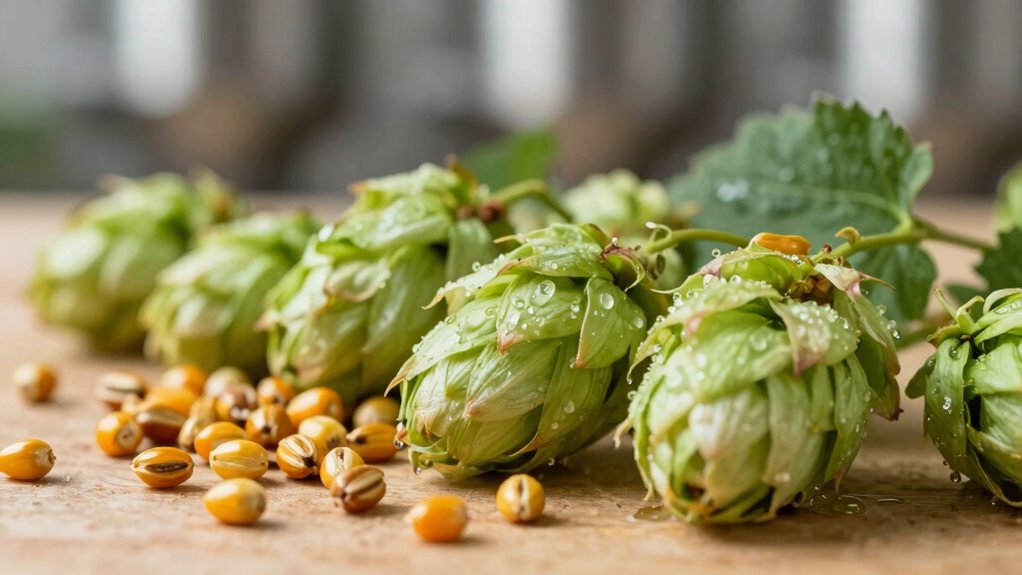

To control bitterness, add hops early in the boil to maximize iso-alpha acids extraction. For flavor, mid-boil additions (15-20 minutes) give complexity without overpowering bitterness. To boost aroma, add hops late in the boil or during fermentation (dry hopping) to preserve delicate oils. Timing is key to balancing these elements and customizing your beer profile. Keep exploring how each addition influences your brew for better results.

Get the little things that make your day delivered free with Prime
- Fast, free delivery on millions of items
- Prime Video, Amazon Music and more included
- Member-only deals all year
Key Takeaways
- Early hop additions (at boil start) maximize bitterness through iso-alpha acids isomerization.
- Mid-boil additions (15-20 minutes) influence both flavor and bitterness, creating complexity.
- Late additions (last 5-10 minutes) enhance hop flavor and aroma without significantly increasing bitterness.
- Dry hopping (post-boil) amplifies aroma without affecting bitterness or flavor from boiling.
- Precise timing allows brewers to tailor beer profiles by balancing bitterness, flavor, and aroma.
Hops Timing
Have you ever wondered when to add hops during your brewing process for the best flavor and aroma? Timing your hop additions can considerably impact your beer’s overall profile, especially in balancing hop bitterness, flavor, and aroma. The sequence and timing of hop additions are key to achieving the desired results, and understanding this can improve your brewing efficiency while giving you more control over the final product.
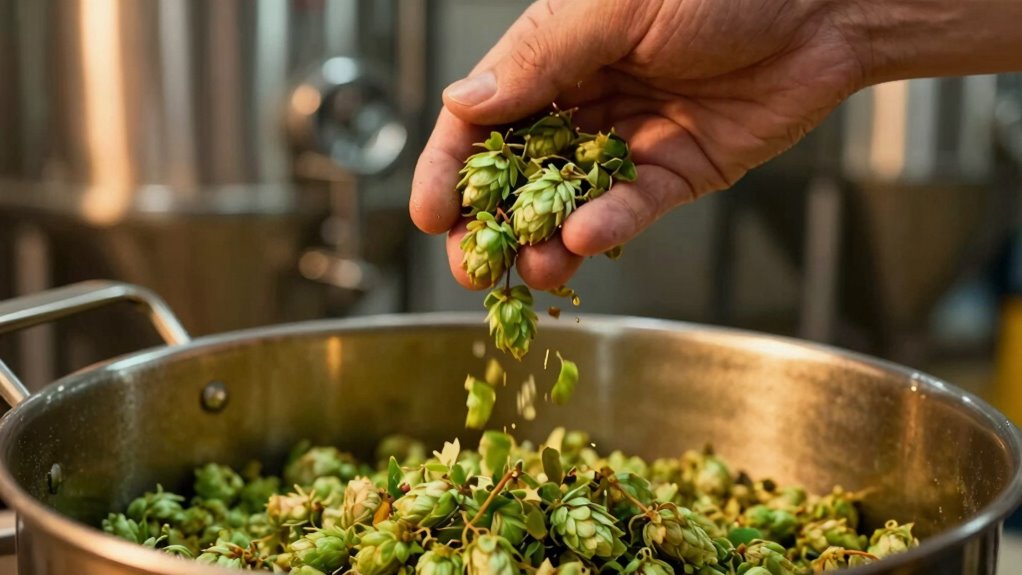
When you add hops at the beginning of the boil, you primarily extract bitterness. This is because boiling causes the iso-alpha acids in hops to isomerize, resulting in that classic hop bitterness that balances the malt sweetness. Adding hops early in the process is essential if you want your beer to have a firm, lingering bitterness. It’s also a way to maximize brewing efficiency since longer boil times extract more bitter compounds from the hops, making full use of your hop additions. However, keep in mind that too much early hop addition can overshadow delicate flavors and aromas, so balance is key.
Adding hops early in the boil extracts bitterness and maximizes efficiency, but can overshadow delicate flavors.
Midway through the boil, around the 15-20 minute mark, you start to influence both flavor and bitterness. At this stage, the hop compounds begin to contribute more to the beer’s flavor profile while still providing some bitterness. This timing allows you to fine-tune your beer’s profile—adding complexity without overwhelming the palate with bitterness. It’s especially useful if you want a beer that’s well-rounded, with a noticeable hop presence but not overly bitter. You also optimize brewing efficiency because you’re extracting flavor compounds that don’t contribute as much to bitterness but add depth to your beer.
Near the end of the boil, typically within the last 5-10 minutes, you start to maximize hop flavor. These late additions impart vibrant, fresh-tasting hop notes that can make your beer’s aroma pop. Since these hops aren’t boiled for long, they retain more of their delicate oils, preserving aroma and flavor. This stage is critical for brewing beers that showcase hop character without adding excessive bitterness. It’s also an efficient way to extract aroma and flavor compounds with minimal impact on bitterness, giving your beer a bright, lively profile.
Finally, adding hops after the boil or during fermentation—commonly called dry hopping—further amplifies aroma. This method doesn’t contribute to bitterness or flavor from the boiling process but infuses your beer with fresh hop aroma and a complex, layered profile. It’s a technique that maximizes hop aroma without compromising brewing efficiency or increasing bitterness. Overall, timing your hop additions precisely allows you to craft beers with balanced bitterness, layered flavors, and aromatic intensity, giving you full control over your brewing outcomes. Additionally, experimenting with content formats in your brewing process can yield unexpected and delightful results.
hop addition timing for home brewing
As an affiliate, we earn on qualifying purchases.
As an affiliate, we earn on qualifying purchases.
Frequently Asked Questions
How Does Hop Timing Affect Beer Clarity?
You’ll notice that hop timing directly impacts beer clarity by influencing hops extraction and sediment formation. Adding hops early in the boil enhances bitterness but may create more haze due to proteins and hop particles. Later additions, like whirlpool or dry hopping, minimize sediment, resulting in clearer beer. Proper timing helps you balance bitterness and aroma, ensuring the hops don’t cloud your beer while still delivering the desired flavor profile.
Can Hop Timing Influence Beer Shelf Life?
Yes, hop timing can influence beer shelf life by affecting hop stability. Adding hops later in the brewing process, especially during flameout or dry hopping, preserves fresh hop aroma and reduces oxidation risks. Proper storage conditions, like keeping beer in a cool, dark place, further help maintain hop quality. When hops are well-preserved, your beer stays fresher longer, delaying flavor degradation and ensuring better shelf stability.
Are There Differences in Hop Utilization Based on Timing?
Yes, hop utilization varies with timing, affecting hop extraction and bitterness balance. When you add hops early during boiling, you extract more alpha acids, increasing bitterness. Late additions, such as at flame-out or during dry hopping, focus on hop aroma and flavor, with less bitterness. Timing influences how much hop compounds are extracted, so adjusting it helps you balance bitterness and preserve desired aroma and flavor profiles in your beer.
How Does Hop Addition Timing Impact Alcohol Content?
The timing of hop additions influences alcohol content by affecting hop extraction and yeast interaction. Adding hops early in the boil allows for more bitterness, which can slightly increase residual sugars and fermentation efficiency, potentially raising alcohol levels. Late additions focus on aroma, adding fewer fermentable compounds, so they have less impact on alcohol content. Overall, the timing tweaks how hops interact with yeast and extract compounds, subtly shaping your beer’s strength.
Can Hop Timing Alter the Beer’s Fermentation Process?
Yes, hop timing can influence the beer’s fermentation process. Adding hops early in the boil can slightly inhibit fermentation by introducing compounds that slow yeast activity, while late additions promote more yeast interaction with aromatic oils. Although the impact on fermentation acceleration is subtle, it can affect yeast health and flavor development. Ultimately, hop timing subtly alters fermentation dynamics, shaping the final beer’s character through nuanced yeast interaction.
best hop pellets for dry hopping
As an affiliate, we earn on qualifying purchases.
As an affiliate, we earn on qualifying purchases.
Conclusion
Think of hops timing as the brushstrokes in your brewing masterpiece. Early additions lay down the bold, dark hues—bittering that sets the mood. Midway, they add depth, like shadows shaping the scene—flavor. Finally, late and flame-out hops are the glowing highlights, giving your beer its vibrant aroma. Mastering these moments lets you craft a brew that’s a canvas of your passion, where each timing symbolizes your touch on the brewing journey.
beer brewing hop flavor and aroma kit
As an affiliate, we earn on qualifying purchases.
As an affiliate, we earn on qualifying purchases.
As an affiliate, we earn on qualifying purchases.
Halloween Picks
halloween
As an affiliate, we earn on qualifying purchases.