
Kegging is generally easier than bottling because it simplifies setup, reduces cleanup, and offers more consistent carbonation through direct CO2 control. With kegs, you store beer in one vessel, and serving is quick and spill-free. Bottling involves more steps, meticulous sanitation, and waiting for natural carbonation, which can be tricky to get right. If you’re looking for a straightforward brewing method, you’ll find kegging more user-friendly—and there’s plenty more to discover if you keep exploring.

Get the little things that make your day delivered free with Prime
- Fast, free delivery on millions of items
- Prime Video, Amazon Music and more included
- Member-only deals all year
Key Takeaways
- Kegging simplifies setup, serving, and cleanup by reducing the number of containers and steps involved.
- Kegs allow precise carbonation control via CO2, minimizing carbonation inconsistencies.
- Bottling involves more sanitation, handling, and time-consuming steps, making it more labor-intensive.
- Kegging offers consistent quality and carbonation levels over time.
- Bottling is suitable for small batches, gifting, or those preferring a traditional brewing ritual.
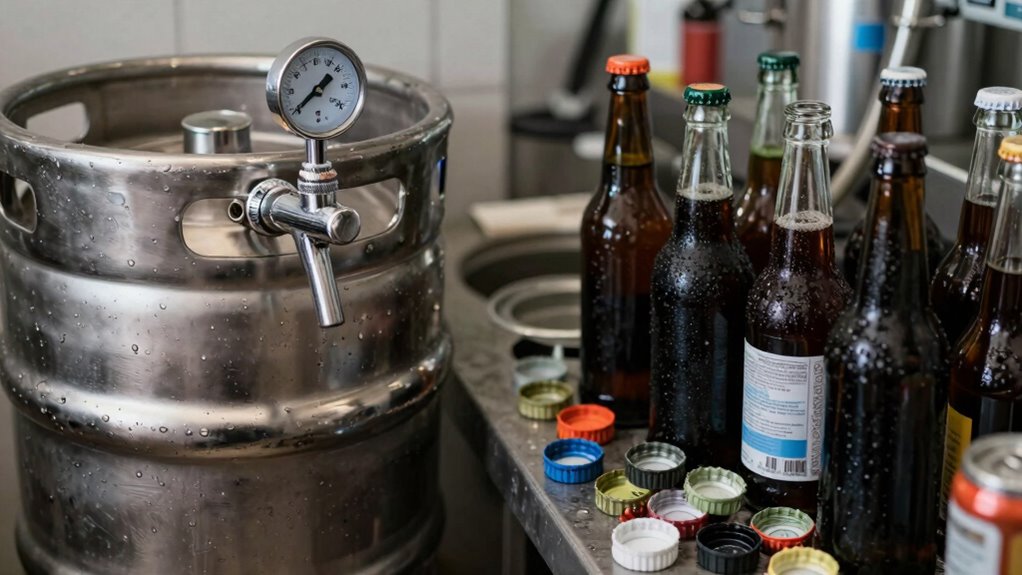
Are you trying to decide between kegging and bottling your homebrew? Both methods have their perks, but understanding the nuances can make the decision easier. When it comes to homebrew storage, kegging offers a streamlined approach. You can store your beer in a single vessel, which minimizes exposure to oxygen and light—factors that can spoil your brew. Kegs also keep your beer carbonated and ready to serve at a moment’s notice, making them highly convenient for frequent drinkers or homebrewers who want a quick pour. Bottling, on the other hand, involves transferring your brew into individual bottles, which can be more cumbersome and requires more space. Bottles need to be stored upright in a cool, dark place, and managing multiple bottles can be a hassle, especially when it comes to cleaning and sanitizing.
When considering fermentation control, kegging can give you an edge. Since you can connect your keg directly to CO2, you have greater control over carbonation levels without the need for additional priming sugar or secondary fermentation. This means you can fine-tune your beer’s carbonation to your liking and maintain consistent quality batch after batch. With bottling, you rely on priming sugar to carbonate your beer, which introduces variability. If not done carefully, your bottles might end up over- or under-carbonated, leading to foamy pours or flat beer. Additionally, bottling requires more patience because you have to wait for the beer to carbonate naturally after bottling, which typically takes a couple of weeks.
In terms of ease, kegging simplifies the process once you’re set up. Because you’re working with fewer containers and can serve directly from the keg, you save time and effort. Clean-up is also quicker, since you only need to sanitize the keg and tap rather than multiple bottles and caps. Bottling, however, demands meticulous attention to sanitation at every step—filling, capping, and storing. It’s more time-consuming upfront but doesn’t require a kegging system if you’re just starting out or brewing smaller batches.
Ultimately, if you prioritize convenience, precise fermentation control, and easier storage, kegging might be the better choice. If you enjoy the ritual of bottling, want to gift bottles, or have limited space and equipment, bottling can work just fine. But for many homebrewers, the simplicity and control of kegging make it the easier, more user-friendly option once you’ve invested in the right equipment. Creating calm and organized homes can also enhance your brewing experience, ensuring your space is conducive to crafting your best beer yet.
As an affiliate, we earn on qualifying purchases.
Frequently Asked Questions
Which Method Produces Clearer Beer, Kegging or Bottling?
Kegging produces clearer beer faster because it allows you to filter and carbonate more effectively, reducing sediment in the final product. Bottling can sometimes leave residual yeast, making the beer cloudier. Plus, kegging offers better storage convenience, helping maintain flavor retention over time. So, if clarity is your goal, kegging is usually the better choice, as it gives you cleaner, crisper beer with less sediment and easier storage.
How Long Does Each Process Typically Take?
You’ll find that bottling takes about two to three weeks, including fermentation and carbonation, with minimal storage needs. Kegging, however, can be quicker—around one to two weeks—since it allows for faster carbonation and easier monitoring. As you watch your beer develop, remember fermentation duration and storage requirements play vital roles. The suspense builds as you decide whether to wait longer for clarity or enjoy quicker gratification with kegging.
Can Beginners Easily Start With Kegging or Bottling?
As a beginner, bottling is generally easier because it requires less initial setup and traditional equipment, making it more accessible. Kegging, however, can be more complex due to the need for additional equipment and careful handling of CO2. Consider fermentation speed and storage space: bottling needs less storage, while kegging allows quicker servings. Start with bottling to learn the basics before moving to kegging as you gain experience.
What Are the Long-Term Cost Differences?
Long-term, kegging tends to be more cost-effective because it reduces ongoing storage costs and minimizes the need for constant bottle replacements. While initial equipment investments for kegging are higher, you save money over time by avoiding recurring packaging materials and bottles. Bottling may be cheaper upfront but incurs ongoing costs for bottles, caps, and storage space, making kegging a more economical choice in the long run.
Is One Method Better for Preserving Beer Flavor?
Did you know that kegged beer generally retains its flavor better than bottled? For you, this means kegging often offers superior flavor retention because it minimizes oxygen exposure and limits light contact. Plus, it’s more convenient for storage—you can keep kegs sealed and pressurized, maintaining freshness longer. So, if preserving beer flavor is your goal, kegging is the smarter choice, providing consistent taste and easier storage over time.
As an affiliate, we earn on qualifying purchases.
Conclusion
Ultimately, whether you choose kegging or bottling depends on your brewing style and preferences. Kegging offers convenience and quicker carbonation, while bottling provides a nostalgic, hands-on experience. Remember, “A journey of a thousand miles begins with a single step.” Whichever method you pick, enjoy the process and the delicious results. After all, the best brew is the one you make with passion—so choose what suits your pace and enjoy every sip!
As an affiliate, we earn on qualifying purchases.
As an affiliate, we earn on qualifying purchases.
Fall Picks
fall essentials
As an affiliate, we earn on qualifying purchases.