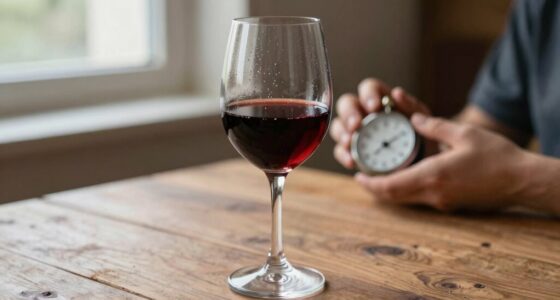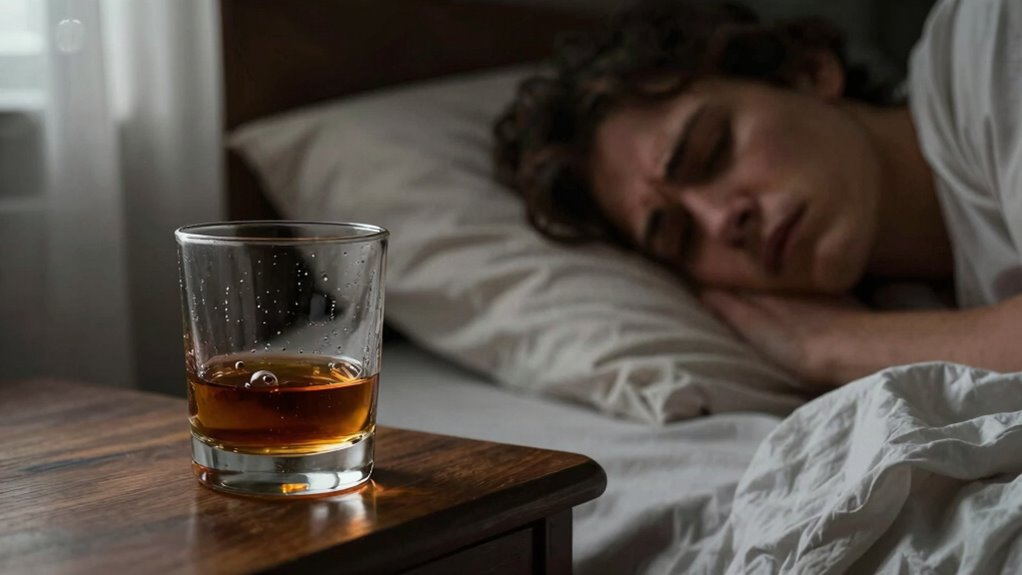

When you drink alcohol before bed, it may help you fall asleep faster, but it disrupts your sleep cycle and reduces sleep quality. Alcohol causes lighter, fragmented sleep and prevents your body from reaching deep, restorative stages. It also affects neurotransmitters, making you more aroused as alcohol wears off. This combination leads to waking feeling tired and unrested. To understand why your sleep suffers after drinking, explore the full effects alcohol has on your body and sleep patterns.

Get the little things that make your day delivered free with Prime
- Fast, free delivery on millions of items
- Prime Video, Amazon Music and more included
- Member-only deals all year
Key Takeaways
- Alcohol initially promotes sleep but causes fragmented, lighter sleep stages, leading to unrefreshing rest.
- Metabolizing alcohol triggers rebound effects, causing awakenings and disrupting sleep continuity.
- Alcohol impacts neurotransmitters like GABA and glutamate, impairing sleep quality over time.
- Drinking late shifts circadian rhythms, making natural sleep onset and restoration more difficult.
- Overall, alcohol’s effects lead to feeling tired and unrested upon waking.
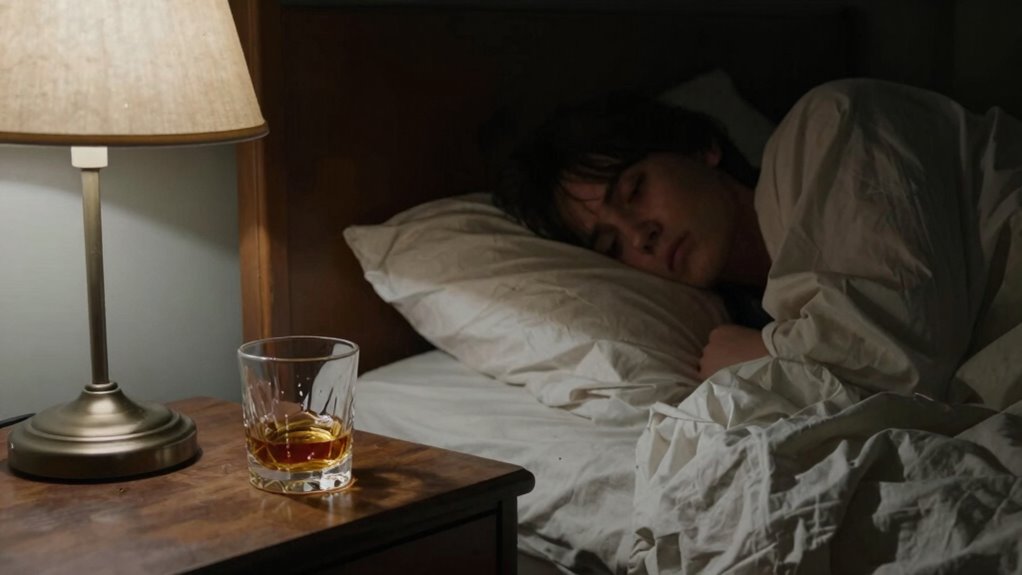
Many people believe that a nightcap can help them fall asleep faster, but alcohol’s effects on sleep are more complicated than they seem. When you drink, your body begins to process the alcohol through a process called alcohol metabolism. This involves your liver breaking down alcohol into simpler compounds, which your body then gradually eliminates. At first, alcohol may seem to make you sleepy, helping you drift off quickly. However, that initial drowsiness is misleading. The real issue lies in what happens afterward: alcohol interferes with your sleep cycle and causes disruptions that leave you feeling groggy and unrested in the morning.
Alcohol may help you fall asleep initially, but it disrupts your sleep cycle and leaves you feeling tired in the morning.
As your body metabolizes alcohol, it affects your brain’s chemistry and sleep architecture. Alcohol initially promotes feelings of relaxation and sedation, which can mask underlying sleep problems. But as the alcohol is metabolized, it triggers a rebound effect, leading to frequent awakenings and lighter sleep stages. These disruptions prevent you from entering the deep, restorative phases of sleep that you need for physical and mental recovery. Instead, your sleep becomes fragmented, and you spend more time in lighter sleep stages, which leaves you feeling tired and unrefreshed when you wake up.
The disruption of your sleep cycle is a key reason why you often wake up worse after a night of drinking. Alcohol impacts various neurotransmitters in your brain, including gamma-aminobutyric acid (GABA) and glutamate, which regulate your sleep-wake balance. When alcohol is present, it initially enhances GABA activity, making you feel relaxed. But as alcohol wears off, glutamate activity surges, leading to heightened arousal and difficulty staying asleep. This cycle of initial sedation followed by arousal results in poor sleep quality overall.
Moreover, alcohol can affect your body’s circadian rhythm, the internal clock that guides sleep and wakefulness. Drinking late at night can shift your sleep timing, making it harder for you to fall asleep naturally and wake up feeling rested. This misalignment can cause further sleep disturbances and leave you feeling worse the next day.
In the end, alcohol’s influence on sleep is complex. While it might seem to help you fall asleep faster initially, the way your body metabolizes alcohol and the subsequent disruption of your sleep cycle make it more likely that you’ll wake up feeling tired, unrested, and less prepared for the day ahead. Instead of relying on alcohol as a sleep aid, consider healthier strategies to improve your sleep quality and heal cravings to wake up feeling refreshed.
As an affiliate, we earn on qualifying purchases.
Frequently Asked Questions
How Does Alcohol Affect REM Sleep Cycles?
Alcohol disrupts your REM sleep cycles by suppressing dreams and altering sleep patterns. When you drink, it initially makes you feel sleepy, but it reduces the amount of REM sleep you get later in the night. This sleep disruption prevents you from reaching the restorative REM stage, leading to fragmented sleep and waking up feeling worse. As a result, alcohol hampers your overall sleep quality, leaving you tired and unrested.
Can Drinking Alcohol Improve Sleep Quality Temporarily?
Imagine being in the Roaring Twenties, thinking alcohol could be your all-night remedy. Drinking might temporarily make you feel more relaxed and fall asleep faster, but it doesn’t improve sleep quality long-term. As your alcohol tolerance increases, you need more to feel the same effects, and it worsens sleep deprivation. Ultimately, alcohol disrupts your REM cycles, leaving you tired and unrested, even after a night of drinking.
What Are Long-Term Effects of Alcohol on Sleep Health?
Long-term alcohol use disrupts your sleep health because it interferes with alcohol metabolism and worsens sleep deprivation. Over time, you may experience trouble falling asleep, frequent awakenings, and poorer sleep quality. Alcohol can suppress REM sleep, leaving you feeling less rested and more fatigued during the day. Chronic drinking also increases your risk for sleep disorders like insomnia, making it harder to maintain restorative sleep patterns.
Does Alcohol Withdrawal Impact Sleep Patterns?
Yes, alcohol withdrawal can considerably impact your sleep patterns. As your body works to metabolize alcohol, you may experience sleep deprivation, leading to difficulty falling asleep and frequent awakenings. During withdrawal, your sleep cycles become disrupted, causing restless nights and poor sleep quality. These changes happen because your body is adjusting to the absence of alcohol, which had initially altered your natural sleep processes, making restorative sleep harder to achieve.
Are Certain Types of Alcohol Worse for Sleep Than Others?
Yes, some types of alcohol are worse for sleep than others. Clear spirits like vodka and gin are often less disruptive because they contain fewer congeners, which can interfere with sleep. In contrast, darker drinks like whiskey and red wine have more congeners, making sleep quality worse. Your alcohol metabolism varies with the type you consume, especially during social drinking, so choosing lighter spirits can help you wake up feeling better.
As an affiliate, we earn on qualifying purchases.
Conclusion
So, next time you reach for that nightcap, remember: alcohol’s not just messing with your sleep—it’s turning your nights into a battlefield of restless chaos. You might think it’s helping you unwind, but it’s actually setting the stage for epic mornings filled with fog, fatigue, and frustration. Don’t let a few drinks turn your peaceful sleep into a nightmare you’ll wake up wishing you could forget. Choose better nights, and give your body the rest it truly deserves.
As an affiliate, we earn on qualifying purchases.
As an affiliate, we earn on qualifying purchases.
Halloween Picks
halloween
As an affiliate, we earn on qualifying purchases.