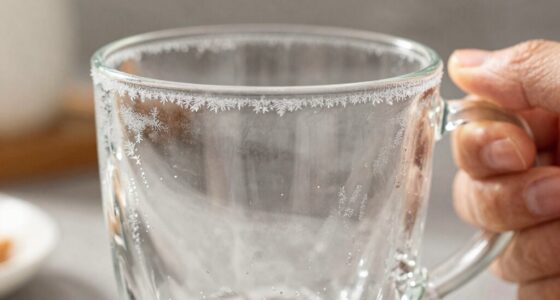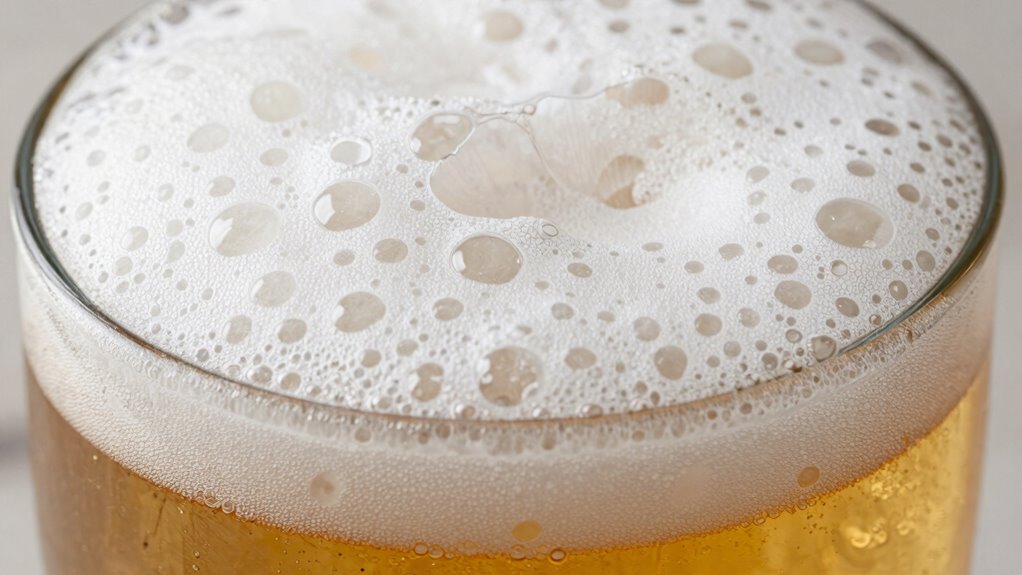
If your beer’s foam collapses quickly, it’s a sign your glass might not be properly cleaned or rinsed. Residues like soap, oils, or mineral deposits from hard water can disrupt bubble stability, causing foam to dissipate faster. Poor cleaning can also introduce bacteria or contaminants that affect the beer’s flavor and safety. Paying attention to foam stability can reveal hygiene issues—keep exploring to discover how to improve your glass cleanliness and beer experience.

Get the little things that make your day delivered free with Prime
- Fast, free delivery on millions of items
- Prime Video, Amazon Music and more included
- Member-only deals all year
Key Takeaways
- Residues like soap, oils, or hard water deposits weaken bubble stability, causing foam to collapse quickly.
- Poor rinsing or improper cleaning leaves contaminants that interfere with foam formation.
- Hard water minerals can disrupt the soap film, reducing foam longevity.
- Insufficient cleaning results in residues that diminish foam stability and affect beer quality.
- The foam’s lifespan serves as a quick indicator of glass cleanliness and hygiene practices.
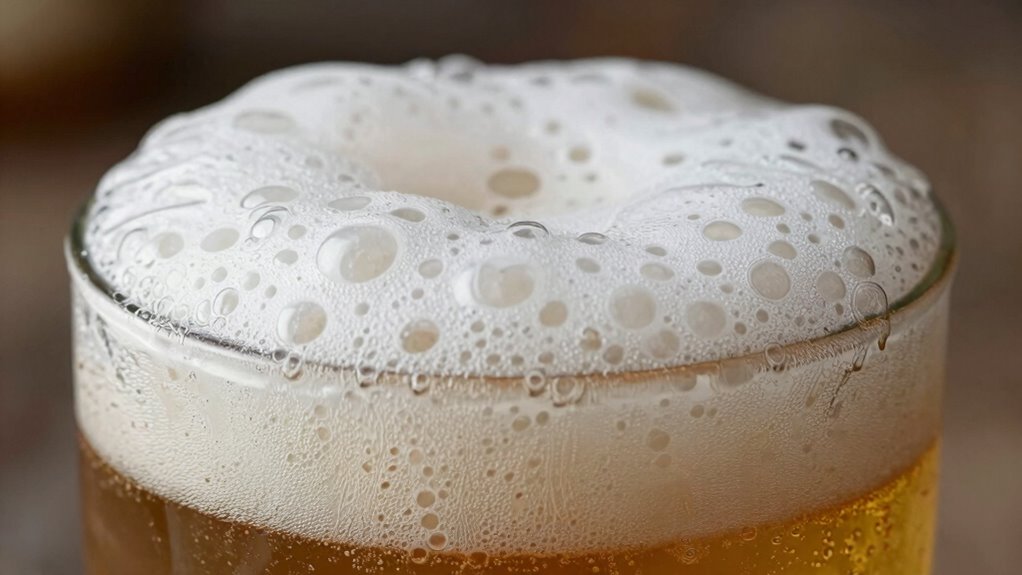
The Dirty Glass Test
The Dirty Glass Test is a simple yet effective way to determine if a restaurant or bar maintains good hygiene standards. When you order a beer, you might notice the foam on top looks promising—thick, creamy, and inviting. But if that foam collapses quickly, it’s often a sign that the glass isn’t properly cleaned. Glass cleanliness directly impacts your beer experience, especially its flavor and presentation. A dirty glass can introduce unwanted residues or bacteria that interfere with the beer’s natural taste, causing it to taste flat or off. It might also create a less appealing visual, which affects your overall enjoyment.
When you observe a collapsing foam, it’s usually linked to the presence of soap residues, mineral deposits, or oils from previous washings. These contaminants disrupt the formation of stable bubbles, leading to a short-lived foam. The quality of the beer flavor is closely tied to the glass it’s served in—if the glass isn’t spotless, you risk muddling the beer’s intended aroma and taste. A clean glass allows the beer’s natural flavors to shine, without interference from residues that can impart bitterness or sourness. Consequently, the foam’s stability isn’t just about aesthetics; it’s an indicator of whether you’re truly getting the beer as the brewer intended.
You might also notice that poorly cleaned glasses can cause the beer to appear cloudy or streaky, further diminishing the visual appeal. This cloudiness can be a result of leftover soap or hard water deposits, which can also alter the beer’s flavor profile, making it seem dull or metallic. When the foam collapses rapidly, it suggests that the glass wasn’t rinsed thoroughly after washing, or that improper cleaning agents were used. Both scenarios point to hygiene issues that could compromise your safety and the quality of your drink.
Next time you see a bartender pour you a beer, pay attention to how long the foam lasts. A properly cleaned glass will support a stable, lasting head, enhancing both the aroma and taste. If the foam falls flat quickly, consider it a sign that the establishment might not prioritize glass cleanliness. That small detail can make a big difference in your overall experience, from flavor to safety. Ultimately, the Dirty Glass Test is a quick, straightforward way to gauge the standards of a place, ensuring you get the best possible beer every time.
As an affiliate, we earn on qualifying purchases.
Frequently Asked Questions
Can Cleaning Techniques Improve Foam Stability in Beer Glasses?
Yes, cleaning techniques can improve foam stability in beer glasses. Using proper cleaning methods, like rinsing thoroughly and avoiding residues that disrupt foam, helps maintain foam consistency. Regularly cleaning your glass with hot water and a gentle detergent removes oils and contaminants, ensuring the beer’s head stays frothy longer. A clean glass enhances carbonation retention, resulting in a more stable and appealing foam that improves your overall drinking experience.
Does Glass Shape Affect Foam Retention?
Yes, glass shape affects foam retention. Thicker glasses tend to insulate the beer better, helping maintain carbonation and foam longer. The lip design also plays a role; a tapered or rounded lip encourages a smoother pour, creating a more stable foam. When choosing a glass, opt for one with the right thickness and a shape that promotes a gentle, controlled pour, ensuring your beer stays creamy and frothy longer.
What Types of Beer Are Most Prone to Foam Collapse?
You’ll find that beers like stouts and lagers are most prone to foam collapse, especially if their freshness and carbonation levels aren’t maintained properly. When beer isn’t fresh, the bubbles don’t hold as well, causing the foam to dissipate quickly. Similarly, low carbonation reduces the stability of foam. To keep your beer’s foam intact, serve fresh beer with ideal carbonation, and use clean, well-designed glasses.
How Does Glass Temperature Influence Foam Longevity?
You’ll notice that glass temperature considerably influences foam longevity. When your glass is too warm, the foam tends to collapse faster because warmer surfaces cause the beer’s carbon dioxide to escape more quickly, reducing foam stability. Conversely, a chilled glass helps maintain a colder environment, which preserves the foam longer. To maximize foam longevity, always serve beer in a properly chilled glass, ensuring your beer retains its lively, frothy head.
Are There Specific Glasses Designed to Prevent Foam Collapse?
Think of some glasses as magic wands for your foam, crafted to keep that bubbly crown from collapsing. These glasses are made from special materials like crystal or coated glass, designed to enhance foam adhesion and resist temperature swings. By choosing these glasses, you give your beer a sturdy stage, allowing the foam’s delicate dance to last longer. They’re your secret weapon against premature collapse and flatness.
hard water mineral deposit remover
As an affiliate, we earn on qualifying purchases.
As an affiliate, we earn on qualifying purchases.
Conclusion
So, next time your foam collapses unexpectedly, consider the dirty glass test—you might just find the answer. It’s funny how a simple streak or smudge can cause such a big change, almost like life’s little coincidences reminding us to pay attention to the details. Sometimes, it’s these small, overlooked things that make all the difference. Keep your glass clean, and your foam will thank you, proving that even the tiniest details matter more than you think.
As an affiliate, we earn on qualifying purchases.
As an affiliate, we earn on qualifying purchases.
NFL season / tailgating Picks
team gear
As an affiliate, we earn on qualifying purchases.