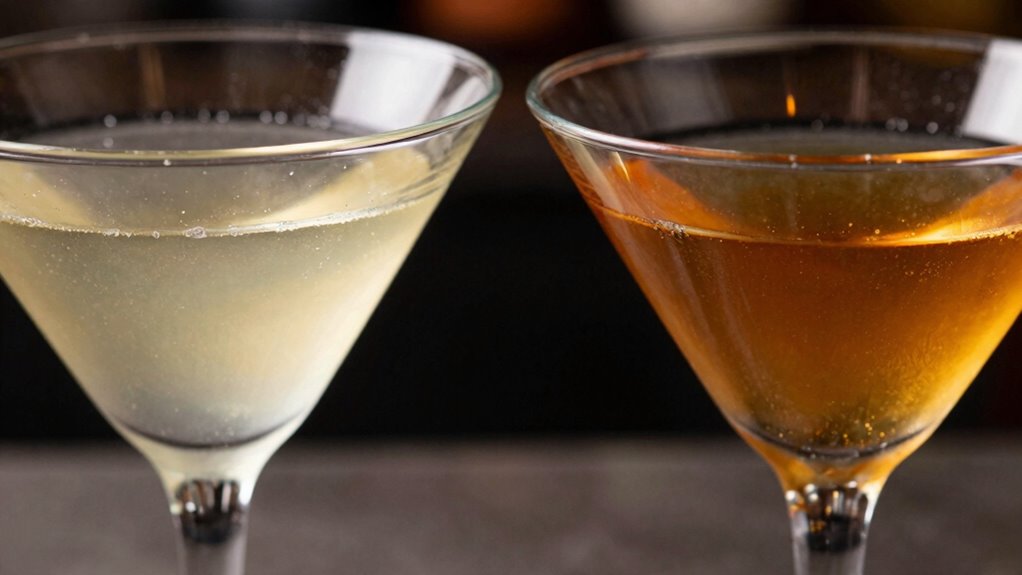

Swapping dry for sweet vermouth in a martini can drastically alter its flavor and balance. Dry vermouth offers a light, herbal, and slightly bitter taste that complements the crispness of a classic cocktail. Using sweet vermouth makes the drink richer, more aromatic, and syrupy, which clashes with the intended sharpness. Choosing the right vermouth is essential for a well-balanced martini. Keep exploring, and you’ll discover how each type impacts the drink’s harmony.
Key Takeaways
- Using sweet vermouth in a Martini makes it overly sweet and cloying, disrupting the classic dry profile.
- Substituting dry vermouth in a Manhattan results in a less herbal, more neutral cocktail, altering its intended complexity.
- Proper vermouth choice maintains the intended balance of dryness or sweetness in each cocktail.
- The botanical ingredients in dry and sweet vermouth directly influence the flavor and harmony of the drink.
- Incorrect substitutions can ruin a Martini’s crispness or a Manhattan’s richness, undermining traditional cocktail craftsmanship.
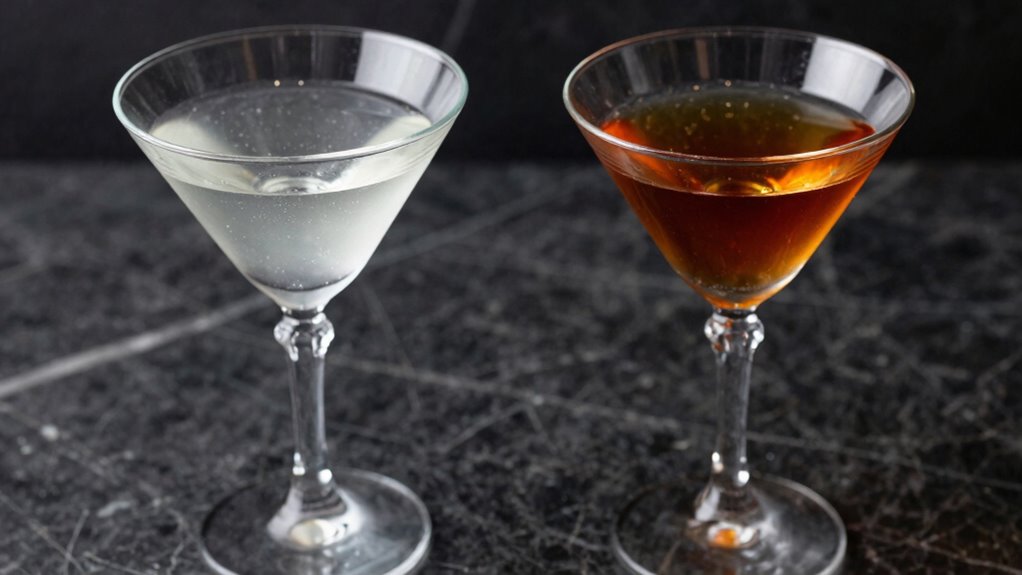
Vermouth is a versatile fortified wine that adds depth and complexity to many cocktails, but choosing between dry and sweet varieties can be confusing. To understand why, it helps to look at its historical origins. Vermouth originated in Italy during the 18th century, initially crafted as a medicinal tonic infused with herbs and botanicals. Its popularity quickly spread across Europe, especially in France and Italy, where bartenders began experimenting with different flavor profiles. Over time, the two main styles emerged: dry and sweet, each with distinct botanical ingredients that shape their tastes. Dry vermouth often has a lighter, more herbal profile, while sweet vermouth is richer, with prominent notes of caramel and spices.
Knowing the botanical ingredients is key to distinguishing these two types. Dry vermouth typically contains herbs like wormwood, chamomile, and dried herbs that lend a crisp, slightly bitter flavor. It’s less sweet, with a subtle herbal aroma that makes it perfect for cocktails like the classic Martini. Sweet vermouth, on the other hand, is infused with a different blend of botanicals—cinnamon, vanilla, citrus peels, and sometimes even dried fruits—creating a richer, more aromatic profile. Its sweetness balances the bitterness of the herbs, making it ideal for drinks like the Manhattan or Negroni. The botanical ingredients not only define their flavor but also influence how they interact with spirits and other ingredients in your cocktails.
When you choose between dry and sweet vermouth, you’re making a decision that can make or break your cocktail. If you accidentally swap a dry vermouth for a sweet one in a Martini, the result can be overly syrupy and cloying, ruining what should be a crisp, clean drink. Conversely, using dry vermouth in a Manhattan will result in a less balanced, more herbal cocktail that lacks the depth the sweet version provides. The right choice depends on the flavor profile you want to achieve. Dry vermouth offers a lighter, more refined taste, perfect for clear, crisp cocktails. Sweet vermouth adds richness and complexity, making it the go-to for more robust, spirit-forward drinks.
Understanding the roots and botanical makeup of vermouth helps you make informed decisions, ensuring your cocktails turn out just right. The historical context reminds you that these styles evolved through centuries of experimentation, each with a purpose. When you grasp what herbs and spices are involved, you can better appreciate how each variety enhances your drink. Additionally, recognizing the importance of trends in mixology can further elevate your cocktail crafting skills. Remember, using the correct type of vermouth isn’t just about tradition—it’s about balancing flavors and creating a harmonious cocktail. So next time you reach for a bottle, think about whether you’re aiming for a light, herbal note or a sweet, aromatic richness, and choose accordingly.

Martini & Rossi Vermouth Extra Dry, 750 Ml
Wine
As an affiliate, we earn on qualifying purchases.
As an affiliate, we earn on qualifying purchases.
Frequently Asked Questions
Can I Substitute Dry Vermouth With Sweet Vermouth in Cocktails?
You can substitute sweet vermouth for dry in cocktails, but be aware of the flavor profiles. Sweet vermouth has a richer, more robust taste with notes of caramel and spices, which can alter the intended flavor and cocktail pairings. For classic drinks like a Martini, sticking to dry vermouth is best. Using sweet vermouth works better in recipes that benefit from its sweeter, more complex profile.
How Long Does Opened Vermouth Stay Good?
Once opened, vermouth stays good for about 1 to 3 months if you store it properly. To guarantee flavor preservation, keep it in a cool, dark place or in the fridge. Proper vermouth storage prevents oxidation and maintains its quality. Always check for changes in aroma or taste before using, as spoiled vermouth can negatively impact your cocktails. Regularly sealing the bottle tightly helps prolong its freshness.
Does Vermouth Go Bad if Left Unrefrigerated?
Vermouth can go bad if left unrefrigerated after opening, but unopened vermouth typically has a longer shelf life and stays good for years when stored in a cool, dark place. Once opened, it’s best to refrigerate it to maintain freshness and flavor. While unrefrigerated, it may develop off-flavors or spoil sooner, so check for changes in smell or appearance before using. Proper storage extends your vermouth’s shelf life.
What Brands of Vermouth Are Best for Cocktails?
Ever wonder which vermouth brands elevate your cocktails? You should try Dolin, Carpano Antica, or Noilly Prat—they offer rich, balanced flavor profiles perfect for mixing. These brands excel because of their quality and distinct taste, enhancing your cocktail mixing techniques. Using a top-tier vermouth makes a noticeable difference, whether in a classic Martini or an inventive concoction. Don’t settle for less—your drinks deserve the best.
Is Vermouth Gluten-Free and Suitable for Allergies?
Vermouth is generally gluten-free, but you should check the label for any gluten-containing additives or cross-contamination risks. If you’re allergic to certain ingredients or sensitive to gluten, it’s crucial to choose brands that specify gluten-free on the packaging. Always read labels carefully to avoid allergic reactions, especially if you have gluten sensitivities or celiac disease. When in doubt, consult with the manufacturer for detailed ingredient information.

BLUTUL BIANCO NON-ALCOHOLIC ITALIAN SWEET VERMOUTH/Award-Winning Botanical Aperitif 1 Bottle (1x 750ml)/Made in Italy/Great as Mixer for Non-Alcoholic and Low-Alcoholic Cocktails
Authentic Italian Origin Premium Non-Alcoholic Vermouth Versatile & Creative – enjoy neat over ice, or as the perfect…
As an affiliate, we earn on qualifying purchases.
As an affiliate, we earn on qualifying purchases.
Conclusion
Ultimately, choosing between dry and sweet vermouth depends on your drink dreams. Immerse yourself in delicious decisions by discerning your desire for dryness or sweetness. Don’t let the wrong vermouth ruin your revelry—rely on your taste buds’ trusty tips. Remember, mastering martini magic means matching your mood with your mixer. Mix mindfully, savor success, and craft cocktails that enthrall and conjure. Cheers to creating countless engaging concoctions, one carefully chosen vermouth at a time!

Bittermilk Bourbon Barrel Aged Manhattan Mix – All Natural Handcrafted Cocktail Mixer – Manhattan Cocktail Mix – Just Add Whiskey, Makes 17 Cocktails
HANDCRAFTED BY BARTENDERS – Made by bartenders with real ingredients. The complex flavors in the craft cocktail mixer…
As an affiliate, we earn on qualifying purchases.
As an affiliate, we earn on qualifying purchases.
Martini & Rossi Vermouth Extra Dry, 750 Ml
Wine
As an affiliate, we earn on qualifying purchases.
As an affiliate, we earn on qualifying purchases.