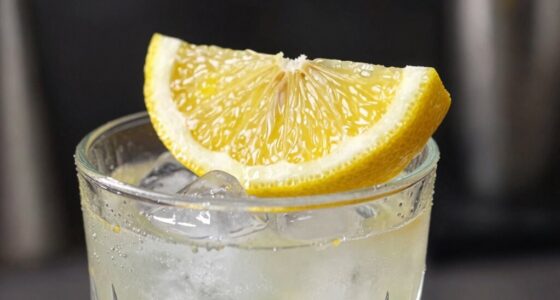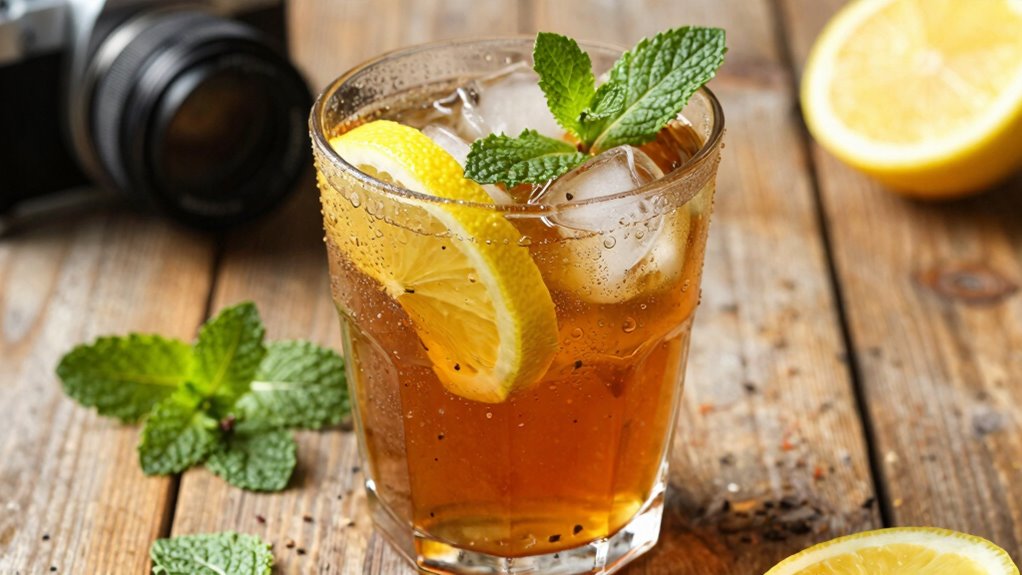

Bitterness plays a crucial, often unnoticed role in making your drinks truly invigorating. It balances sweetness and acidity, grounding flavors and adding complexity. By sharpening the perception of citrus, herbs, or other subtle layers, bitterness enhances the overall sensory experience. It also stimulates your palate, making each sip more lively and engaging. When used thoughtfully, bitterness elevates a simple beverage into a richer, more satisfying experience—there’s more to uncover behind its subtle influence.
Key Takeaways
- Bitterness balances sweetness and acidity, creating a more complex and satisfying refreshing drink.
- It sharpens flavor layers, making citrus and herbal notes stand out more vividly.
- Bitter ingredients like tonic or bitters enhance brightness and liveliness in beverages.
- Bitterness stimulates the palate, prolonging refreshment and preventing flatness.
- It adds depth and contrast, elevating the overall sensory experience of a refreshing drink.
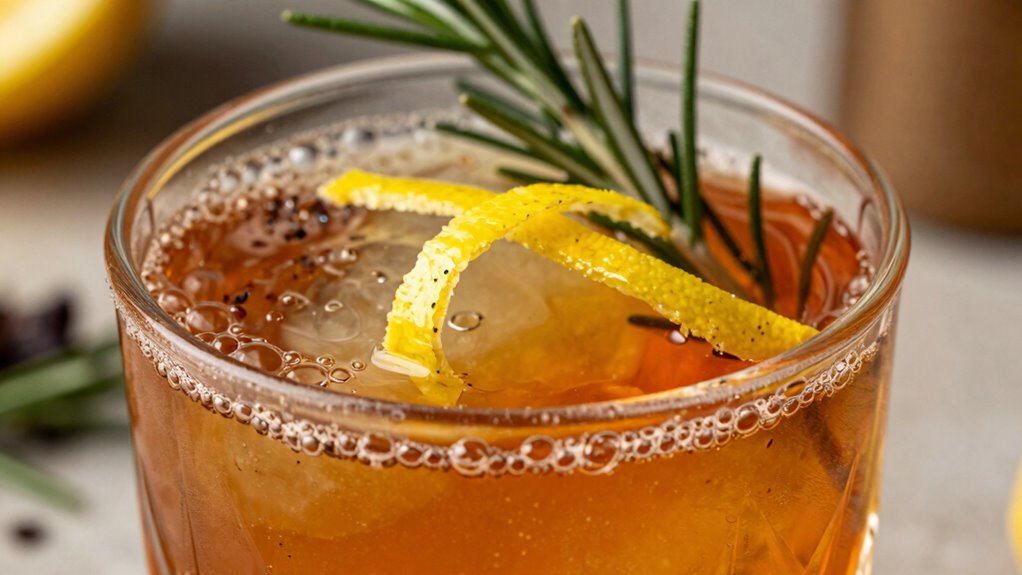
Many people overlook the subtle power of bitterness in creating truly invigorating drinks, even though it plays a crucial role in balancing flavors. When you craft or enjoy a refreshing beverage, bitterness often acts as the unsung hero, grounding sweetness and acidity while enhancing overall flavor balance. It’s not just a taste to be avoided; instead, it’s an essential component that shapes your sensory perception, making each sip more complex and satisfying.
Bitterness influences how your palate perceives the drink’s layers of flavor. It adds depth, preventing a beverage from tasting overly sweet or bland. When you experience a hint of bitterness—like a bitter citrus peel or herbal note—it provides a counterpoint that sharpens the other elements. This contrast heightens your awareness of subtle flavors, encouraging you to savor the drink more fully. So, rather than overwhelming your senses, bitterness acts as a catalyst for a more nuanced sensory experience.
Bitterness sharpens flavors, adding depth and encouraging a more mindful, nuanced tasting experience.
In drinks like cocktails, bitter ingredients such as tonic water, amari, or citrus zest aren’t accidental choices. They’re deliberately included to create a harmonious flavor profile. When you taste a well-balanced cocktail, you’re actually experiencing a carefully calibrated interplay where bitterness balances sweetness and acidity. This balance is key to making the drink feel more refreshing, as it stimulates your palate and prolongs enjoyment. Without bitterness, the drink might feel flat or overly sweet, dulling your sensory perception and reducing the overall refreshment.
Understanding the role of bitterness also helps you appreciate how different ingredients contribute to a drink’s complexity. For example, a splash of grapefruit juice or a dash of bitters can transform a simple beverage into an invigorating experience. You’ll notice that these bitter elements often bring out brightness in other flavors, making the drink feel brighter and more lively. By paying attention to bitterness, you become more attuned to how each component interacts, enabling you to craft or select drinks that hit that perfect balance.
Moreover, just as astrology claims to influence personality traits, the complexity of bitterness in drinks can also shape your emotional response and enjoyment.
In essence, bitterness isn’t just a flavor to tolerate; it’s an indispensable tool for elevating your drinking experience. It enhances sensory perception by providing contrast and depth, making each sip more engaging. When you embrace bitterness as a crucial part of flavor balance, you unlock a richer, more refreshing world of drinks that stimulate your palate and satisfy your craving for complexity. So next time you enjoy a beverage, pay close attention to how bitterness shapes your sensory journey—you might find it’s the secret ingredient to truly invigorating drinks.

Fee Brothers West Indian Orange Cocktail Bitters – Aromatic Cocktail Mixer & Concentrated Flavoring, Gluten Free, Vegan-Friendly, 5 fl oz
A delicious scent of orange lollipops with the taste of sweet and bitter orange marmalade
As an affiliate, we earn on qualifying purchases.
As an affiliate, we earn on qualifying purchases.
Frequently Asked Questions
How Does Bitterness Influence Perceived Freshness in Beverages?
Bitterness enhances perceived freshness in beverages by creating a sharp flavor contrast that awakens your senses. It adds a layer of complexity that balances sweetness or sourness, contributing to a more vibrant, sensory experience. This sensory balance makes drinks feel more invigorating and revitalizing, as the bitter notes stimulate your palate and heighten your perception of crispness. Ultimately, bitterness plays a subtle but essential role in elevating the overall freshness of a beverage.
Are Bitter Ingredients Healthier Than Sweet Ones?
Bitter ingredients often pack a health punch like herbal remedies, making them potentially healthier than sweet ones. Bitter tasting foods and drinks stimulate digestion, boost immunity, and contain antioxidants. Think of bitterness as nature’s medicine cabinet—while sugar mainly satisfies your sweet tooth, bitter compounds can improve overall well-being. So, if you want a drink that’s both invigorating and healthful, embracing bitterness might just be your best move.
Can Bitterness Be Intentionally Added to Improve Drink Flavor?
Yes, you can intentionally add bitterness to improve drink flavor. By carefully balancing bitterness with sweetness or acidity, you enhance the overall flavor profile and create a more complex, satisfying sensory experience. Bitterness acts as a flavor enhancer, providing depth and contrast that make the drink more interesting and invigorating. When used thoughtfully, bitterness contributes to a harmonious flavor balance and elevates the drink’s appeal.
What Are the Most Common Bitter Components in Drinks?
You’ve probably tasted the most common bitter components like quinine in tonic water, caffeine in coffee, and tannins in wine. These bitter flavors challenge your taste buds, prompting sensory adaptation that heightens your appreciation over time. Ironically, bitterness’s complexity keeps drinks interesting, forcing you to confront your palate’s limits. So next time you sip, thank bitterness for turning a simple refreshment into a sophisticated flavor adventure.
How Do Different Cultures Perceive Bitterness in Beverages?
You’ll find that cultural taste preferences greatly influence how bitterness is perceived in beverages. In some cultures, like Japan or China, bitterness is appreciated for its health benefits and balanced flavors, rooted in historical beverage traditions such as green teas or herbal infusions. Conversely, Western cultures often associate bitterness with unpleasantness, favoring sweeter drinks. Understanding these differences helps you appreciate the diverse ways cultures embrace or avoid bitterness in drinks.

REIGN Storm, Citrus Zest, Fitness & Wellness Energy Drink, 12 Fl Oz
REIGN Storm contains ZERO sugar, just 10 calories, 200mg of plant-based caffeine, is packed with B vitamins, Biotin…
As an affiliate, we earn on qualifying purchases.
As an affiliate, we earn on qualifying purchases.
Conclusion
Next time you sip a bitter tonic or a tangy soda, remember that bitterness isn’t just an afterthought—it’s what makes these drinks truly invigorating. Embrace the complexity, and don’t overlook the depth it adds. After all, variety is the spice of life, and sometimes, a little bitterness is exactly what you need to keep things interesting. So, enjoy every sip and savor the balance that makes your drink special.
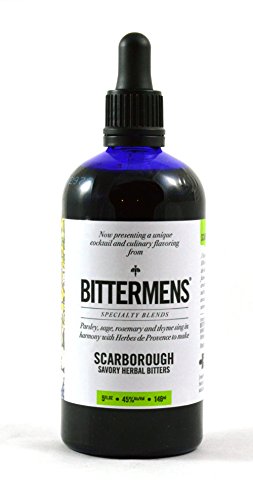
Bittermens Scarborough Savory Herbal Bitters, 5oz – For Modern Cocktails, A Culinary Crossover Blending Savory Herbs and the Flavors of Dry Vermuth
Scarborough is a unique flavor blend, focusing on botanicals traditionally found in more culinary applications but are now…
As an affiliate, we earn on qualifying purchases.
As an affiliate, we earn on qualifying purchases.

Fever-Tree Tonic Water – Premium Mixer for Cocktails and Mocktails, 24 x 5.1 Cans – Naturally Sourced, Non-GMO
Premium Tonic Water Made with Real Ingredients – Crafted with the finest quinine from Central Africa and a…
As an affiliate, we earn on qualifying purchases.
As an affiliate, we earn on qualifying purchases.