

Understanding malt types helps you craft better beers. Pilsner malt gives a clean, crisp flavor with subtle sweetness, perfect for lagers. Pale malt is a versatile base that provides fermentable sugars and a mild grain flavor. Munich malt adds richness with caramel and toasty notes, while Crystal malt offers sweetness and vibrant color, contributing caramel and dried fruit flavors. Knowing how each malt influences your brew will guide you to develop unique, balanced beers—if you continue, you’ll discover even more.
Key Takeaways
- Pilsner malt is light-colored, producing a clean, crisp taste with subtle sweetness, ideal for lagers and pilsners.
- Pale malt serves as a versatile base, providing fermentable sugars and a mild, grainy flavor for many beer styles.
- Munich malt offers richer, caramel, and toasty flavors with a darker color, adding maltiness and depth.
- Crystal malt is roasted at higher temperatures, imparting sweet, caramel, toffee, and deep amber hues to beers.
- Each malt type influences the beer’s flavor, color, and body, shaping the overall style and character.
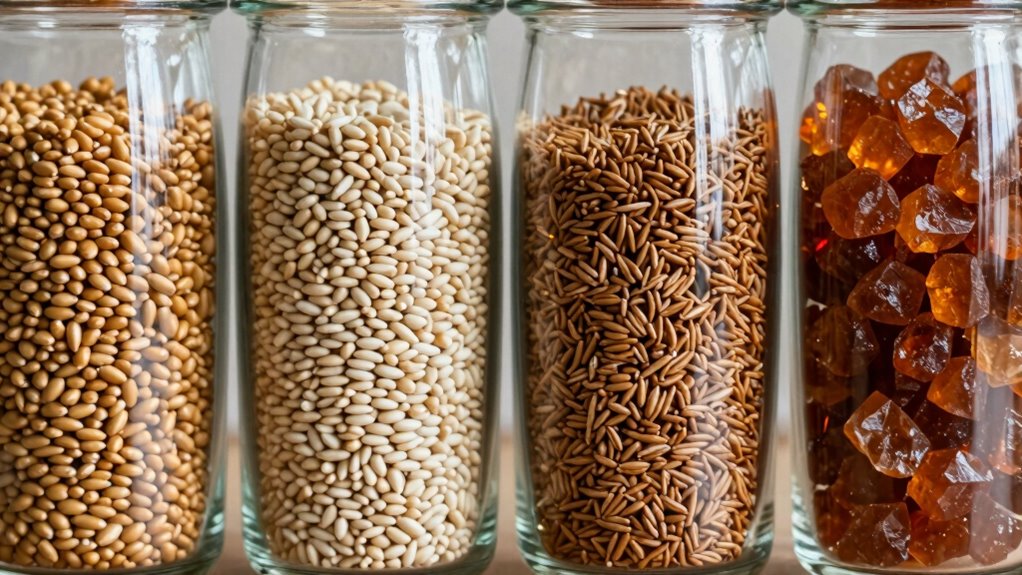
Ever wondered what makes different beers and whiskeys unique? It all starts with the brewing process and the types of malt you choose. Malt is the backbone of many drinks, providing essential sugars for fermentation and contributing distinct flavor profiles. When exploring malt types like Pilsner, Pale, Munich, and Crystal, you begin to see how each influences the final product’s character. Your journey into brewing involves understanding how these malts are processed and what flavors they bring to the table.
Pilsner malt, also known as Saaz or Bohemian malt, is a light-colored malt that undergoes a specific brewing process. Its primary role is to produce a clean, crisp taste with subtle sweetness and a delicate malt character. When you use Pilsner malt, you’re aiming for a beer with a light, invigorating profile — perfect for lagers and pilsners. The malting process for Pilsner malt involves carefully controlled kilning that preserves its pale color and mild flavor. Its malt flavor profiles are often described as cracker-like or bread-like, adding a gentle sweetness without overpowering the hop bitterness.
Pale malt, frequently called 2-row or base malt, forms the foundation of many beers. It’s made through a simple process that involves germinating barley, then drying it at a low temperature to retain the malt’s light color and mild flavor. When you incorporate Pale malt, you’re providing the fermentable sugars that define the beer’s body and alcohol content. Its flavor profile is typically malty with subtle, grainy notes, making it versatile for a wide range of beer styles. Pale malt’s lightness allows other ingredients like hops and specialty malts to shine, giving you more control over the final taste.
Munich malt is darker and richer, crafted through a longer kilning process that develops deeper caramel and toasty flavors. When you add Munich malt to your brew, you’re introducing maltiness with a hint of sweetness and a smooth, bread-like aroma. The brewing process for Munich malt involves a careful balance that enhances the malt character without overwhelming the beer’s balance. Its flavor profiles include notes of caramel, toasted bread, and sometimes even hints of chocolate or nuts, making it ideal for darker lagers and ales.
Crystal malt, also called caramel malt, is special because of its unique processing. It’s produced by roasting the malted barley at higher temperatures, which causes caramelization. This process results in a sweet, rich malt flavor with a vibrant amber or deep red color. When you use Crystal malt, you add complexity and sweetness to your brew, along with a sticky, syrupy mouthfeel. Its flavor profiles range from caramel and toffee to dried fruit, and it’s essential for creating full-bodied ales and porters. Each malt type, with its distinct brewing process and malt flavor profiles, plays a crucial role in shaping the character of your beer or whiskey.

My Brew Supply Distillers 2-Row Malt Beer Making Grain | Brew Your Own Beers, Pilsners, and Ales with 2-Row Grains | Grown in The United States | 10lb (2.4L) Crushed Grain
Premium 2-Row Grains: The My Brew Supply Distillers Malt is made using the finest 2-row malt grains to…
As an affiliate, we earn on qualifying purchases.
As an affiliate, we earn on qualifying purchases.
Frequently Asked Questions
How Does Malt Color Impact Beer Flavor?
Malt color substantially impacts your beer flavor by influencing its malt flavor profile and color influence. Darker malts, like Munich or Crystal, add roasted, caramel, or toasty notes, giving your beer richer, sweeter flavors. Lighter malts, such as Pilsner or Pale, offer a more delicate malt flavor, with subtle sweetness and a cleaner profile. So, the malt color you choose shapes both the taste and appearance of your beer.
What Are the Best Malt Types for Brewing Lagers?
For brewing lagers, you should select malt varieties with clean, subtle flavor profiles like Pilsner and Pale malt, which provide a light, crisp backbone. Munich malt adds a touch of sweetness and toastiness, enriching depth. Crystal malt offers color and subtle caramel notes. Your malt flavor profiles depend on your desired outcome, so choose malt types that complement each other, ensuring a balanced, smooth lager.
Can Malt Types Be Mixed for Unique Beer Profiles?
You can definitely mix malt types for unique beer profiles. For example, blending Pilsner and Munich malts can create a rich, malty lager with a balanced, layered flavor. Malt blending allows you to customize flavors, adding depth and complexity to your brew. Experimenting with different combinations gives you control over your beer’s character, making each batch a personalized creation tailored to your taste preferences.
How Does Malt Processing Affect Brewing Efficiency?
Malt processing considerably affects brewing efficiency by influencing malt enzyme activity, which is essential for converting starches into fermentable sugars. Variations in the malting process, like adjusting germination or kilning, can optimize enzyme activity, leading to better extract yields. When you select malts with specific malting process variations, you enhance efficiency, reduce waste, and improve overall beer quality. Proper processing guarantees your mash converts smoothly, saving time and resources.
Are Certain Malt Types Better for Gluten-Sensitive Drinkers?
For gluten-sensitive drinkers, certain malt types may not be suitable, but you can explore gluten-free malt alternatives like sorghum, rice, or buckwheat. These options help you brew with gluten sensitivity brewing in mind, ensuring you enjoy beer without adverse effects. Always check labels and look for dedicated gluten-free malts to keep your brewing safe and enjoyable. These alternatives are key to accommodating gluten sensitivities effectively.

My Brew Supply Pale Ale 2-Row (3.5L) Premium Malt Beer Making Grain | Brew Your Own Rich and Malty Pale to Dark Ale with Bulk Milled Barley Grains | Grown in Western Europe | 10lb Crushed Grain
2-Row Pale Ale Premium Malt: The My Brew Supply Pale Ale Malt is made using the finest two-row…
As an affiliate, we earn on qualifying purchases.
As an affiliate, we earn on qualifying purchases.
Conclusion
Understanding malt types like pilsner, pale, Munich, and crystal helps you appreciate the complexity behind every brew. Did you know that malt accounts for up to 70% of a beer’s flavor profile? With this knowledge, you can better distinguish the subtle differences in your favorite beers or even experiment with brewing your own. Next time you sip, remember that each malt type adds a unique touch, making every beer a crafted masterpiece.

Briess 2-Row Caramel Munich Malt 60L – 1 lb, Brown (1886A)
Malt Style: Caramel Malt
As an affiliate, we earn on qualifying purchases.
As an affiliate, we earn on qualifying purchases.

Muntons Crystal 60L Malt 1 lb.
Muntons Crystal 60 L malt 1 lb
As an affiliate, we earn on qualifying purchases.
As an affiliate, we earn on qualifying purchases.