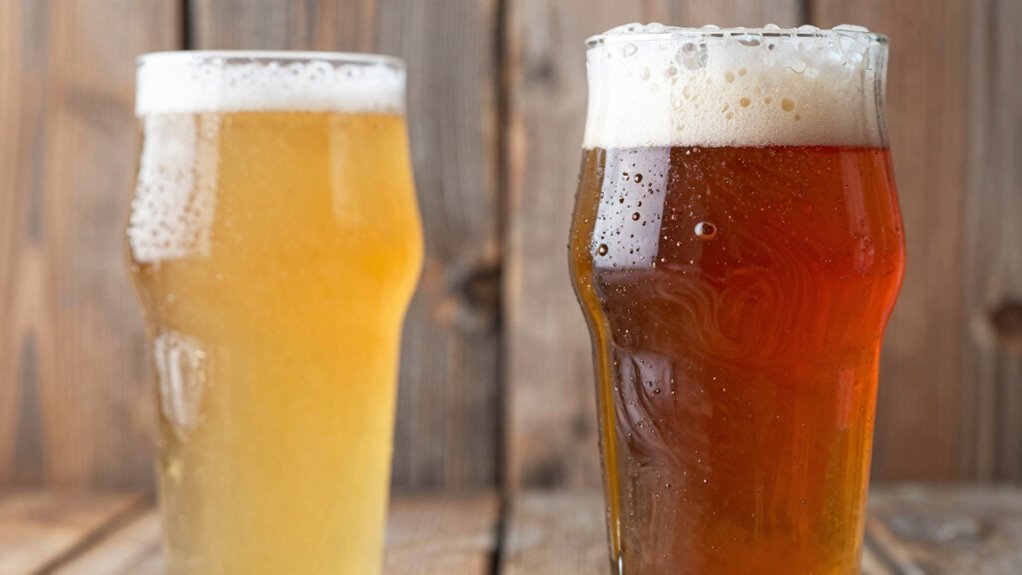

Kettle souring lets you quickly make tart beers by adding Lactobacillus to your hot wort, which sours in 24-48 hours and results in a clean, crisp flavor. Wild fermentation involves exposing your beer to natural yeasts and bacteria, taking months to develop complex, layered flavors like funk and barnyard notes. If you want consistent, fast results, kettle sours suit you. For deeper, unpredictable character, wild methods are the way. Keep exploring to discover how these techniques can shape your brews.
Key Takeaways
- Kettle souring is faster, using Lactobacillus for controlled tartness, while wild fermentation is lengthy and involves natural microbes.
- Kettle sours produce clean, consistent, and sharply tart beers, whereas wild ferments create complex, layered, and unpredictable flavors.
- Kettle souring occurs after brewing, souring in the kettle within 24-48 hours; wild fermentation takes months to develop.
- Kettle sours are ideal for quick, predictable results; wild ferments suit brewers seeking depth and complexity.
- Flavor profiles differ: kettle sours are crisp and invigorating, wild ferments may be funky, barnyard, or fruity.
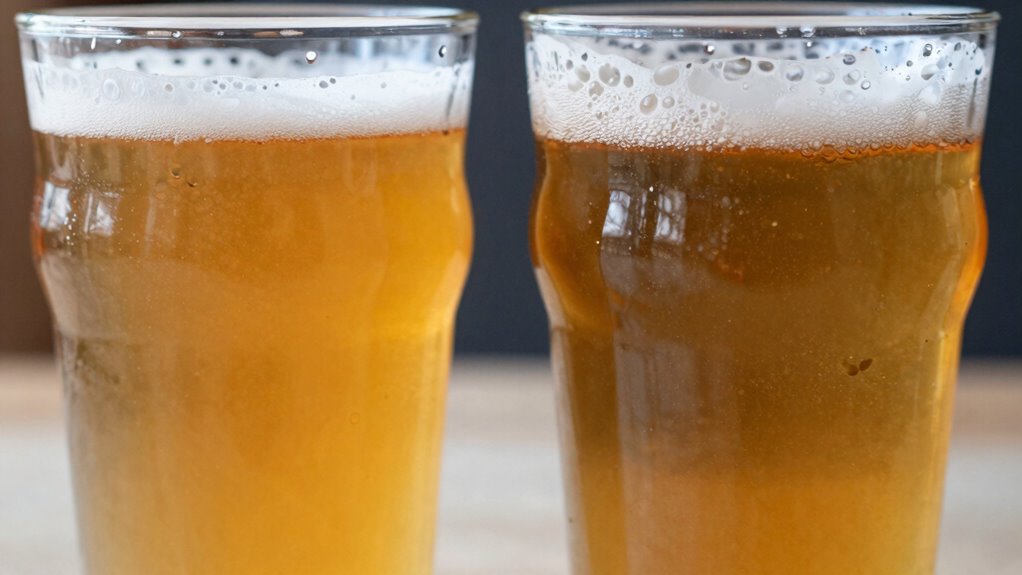
Sour beer has gained popularity for its unique tangy flavor and complex aroma, making it a favorite among craft beer enthusiasts. When exploring sour beers, you’ll discover two main approaches to fermentation techniques: kettle souring and wild fermentation. Each method influences the flavor profiles differently and requires specific processes. Understanding these differences helps you choose which style suits your taste and brewing goals.
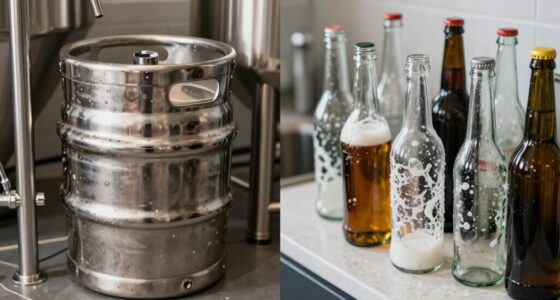
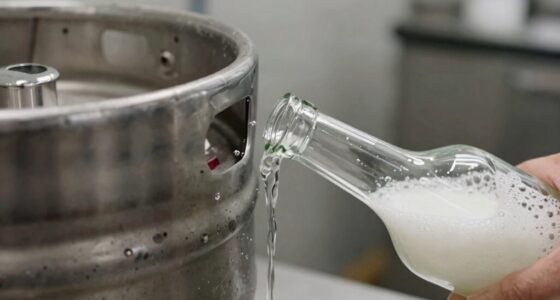
Kettle souring is a quicker, more controlled process. You start by brewing your wort as usual, then transfer it to the kettle to sour. In this stage, you introduce Lactobacillus bacteria, which ferment sugars into lactic acid, giving the beer its characteristic tartness. This process typically lasts between 24 to 48 hours, depending on how tart you want the final product. Since all fermentation occurs before boiling, you can easily halt the souring at your preferred level. The flavor profile of kettle-soured beers tends to be clean, crisp, and intensely tart, with an invigorating acidity that complements fruity or malty notes. Because of the controlled environment, you often get consistent results, making it a popular choice for brewers seeking predictability.
Wild fermentation, on the other hand, involves a more complex and lengthy process. You introduce wild yeast strains and a diverse mix of bacteria, often by fermenting the wort with naturally occurring microorganisms found in the air or through the use of a mixed culture. This method can take months, as these microorganisms produce a more layered and nuanced flavor profile. The wild fermentation technique typically results in beers with a broader spectrum of flavors—ranging from sour and funky to barnyard and fruity notes, depending on the microbial community involved. The spontaneous nature of this method creates a more unpredictable outcome, but it also allows for the development of unique, terroir-driven flavors that are difficult to replicate.
Ultimately, your choice between kettle sour and wild sour hinges on what kind of flavor profile you’re after and how much time you’re willing to invest. Kettle souring offers quick turnaround and consistency, producing a sharp, clean tartness. Wild fermentation provides a more complex, deeper flavor experience, but requires patience and careful management of fermentation conditions. Both methods highlight different aspects of sour beer’s character, and understanding these fermentation techniques enables you to craft beers that fit your palate and brewing style. Whether you prefer the straightforward tang of kettle sours or the layered complexity of wild ferments, mastering these techniques opens up a world of exciting sour beer possibilities.
Moreover, exploring the adaptable, long-term structure of these fermentation methods can lead to innovative brewing approaches and a deeper appreciation for the art of sour beer.

Eastern Shores Brewing Supplies 1 lb Amylase Enzyme – 1lb DADY Distillers Yeast – 1lb Fermax Nutrient
Use Amylase Enzyme in the mash when using high percentages of adjunct such as corn, rice, potatoes and…
As an affiliate, we earn on qualifying purchases.
As an affiliate, we earn on qualifying purchases.
Frequently Asked Questions
How Do I Choose Between Kettle Sour and Wild Sour Beer?
To choose between kettle sour and wild sour beer, consider your fermentation vessels and storage techniques. If you want quick, controlled souring, go for kettle sour, which involves souring in your vessel before boiling. For complex, layered flavors, wild sours involve spontaneous fermentation and longer storage techniques, often in special barrels. Your choice depends on whether you prefer a quick, consistent sour or a more nuanced, aged beer.
What Are the Key Flavor Differences in Kettle Vs Wild Sours?
You might be surprised to find that kettle sours offer a clean, sharp tartness with straightforward flavor complexity, making them more controlled and predictable. Wild sours, on the other hand, develop deeper, layered flavors with greater complexity and often a more pronounced tart intensity. This wild fermentation introduces funky, fruity, and barnyard notes, creating a richer, more unpredictable sensory experience.
How Long Does Each Souring Process Typically Take?
Kettle sours usually take about 24 to 48 hours for fermentation, resulting in quick, tart flavor profiles. Wild sours, on the other hand, can take several months—sometimes even years—due to their complex fermentation timelines. This extended process develops deeper, more nuanced flavors. So, if you want a faster, sharper sour, go for a kettle sour. For a more layered, intricate profile, wild sours are the way to go.
Are There Specific Foods That Pair Better With One Type?
You’ll find that kettle sours pair well with fruity dishes and fresh cheeses, as their bright acidity complements fruit flavors and cuts through creamy textures. Wild sours, on the other hand, work better with aged cheeses and dishes featuring complex, earthy flavors, enhancing their depth. For fruit pairings, consider citrus or berries with kettle sours, and for cheese complements, try aged Gouda or blue cheese alongside wild sours.
Can I Make Sour Beer at Home Using These Methods?
Yes, you can craft sour beer at home using fermentation techniques. Think of home brewing as your personal brewery playground—your tools and ingredients become your magic wand. By controlling fermentation, whether through kettle souring or wild fermentation, you steer the sourness to match your taste. With patience and practice, you’ll turn simple ingredients into a tangy masterpiece, proving that sour beer creation is well within your home brewing reach.
Sourdough Starter Kit – Live Wild Yeast Starter (90g) + 3 Dehydrated Backup Starters – Bake San Francisco-Style Artisan Sourdough Bread & Pizza Dough – Beginner Friendly – The Yeast We Can Do
✔ NEVER LOSE YOUR STARTER AGAIN Our unique dual-starter system includes 90g of live active sourdough starter plus…
As an affiliate, we earn on qualifying purchases.
As an affiliate, we earn on qualifying purchases.
Conclusion
Just as the legends of old speak of alchemists transforming simple ingredients into gold, your journey into sour beers is a blend of art and science. Whether you choose the boldness of kettle sour or the wild complexity of wild sour, remember that each method offers a unique story in every sip. Embrace the adventure, and like a bard weaving tales, craft your own masterpiece—your palate’s odyssey awaits. Cheers to your brewing saga!
kettle souring equipment
As an affiliate, we earn on qualifying purchases.
As an affiliate, we earn on qualifying purchases.

Craft A Brew – Sourvisiae® – Sour Ale Yeast – For Craft Lagers – Ingredients for Home Brewing – Beer Making Supplies – (1 Pack)
DRY YEAST – Calling all fans of sour beers – Try our Sourvisiae Sour Ale Dry Yeast, a…
As an affiliate, we earn on qualifying purchases.
As an affiliate, we earn on qualifying purchases.