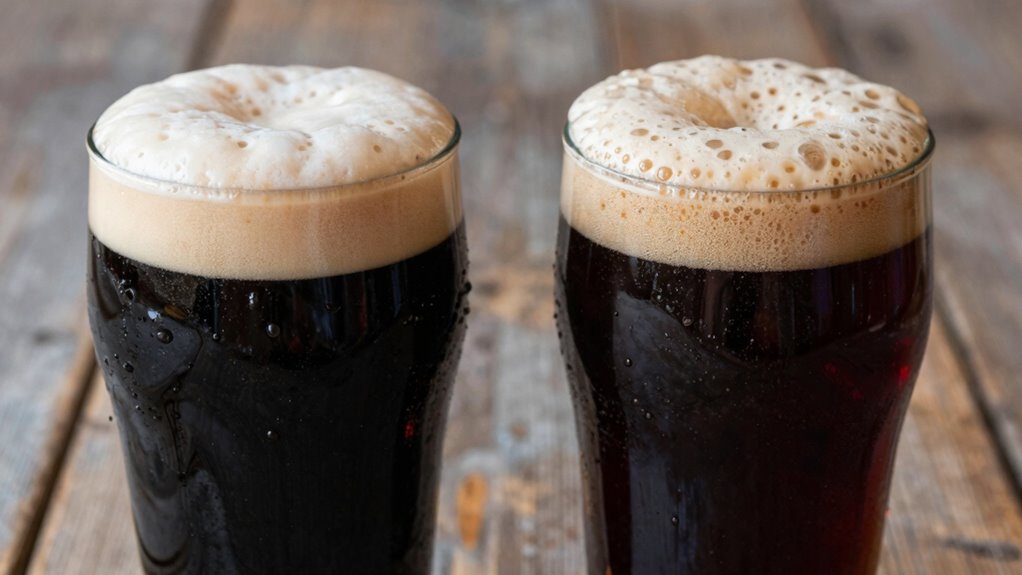

You’ll notice that porters have a smoother, milder roasted flavor with a touch of sweetness and a lighter body, making them approachable and balanced. Stouts, on the other hand, have a bolder, more intense roasted bitterness, often with coffee or chocolate notes that stand out. These differences come from the ingredients and brewing styles, giving each beer a unique taste profile. To truly appreciate what sets them apart, keep exploring their distinct flavors and characteristics.
Key Takeaways
- Stouts have a more intense roasted flavor, often with coffee or chocolate notes, compared to the milder, smoother porters.
- Porters typically taste sweeter and less bitter, with balanced malt sweetness and subtle roasted undertones.
- Stouts usually have higher alcohol content and a richer, fuller body than porters.
- The use of roasted barley in stouts creates a pronounced bitterness, whereas porters emphasize malt sweetness.
- Porters often have a lighter, more restrained roasted character, making them smoother and easier to drink.
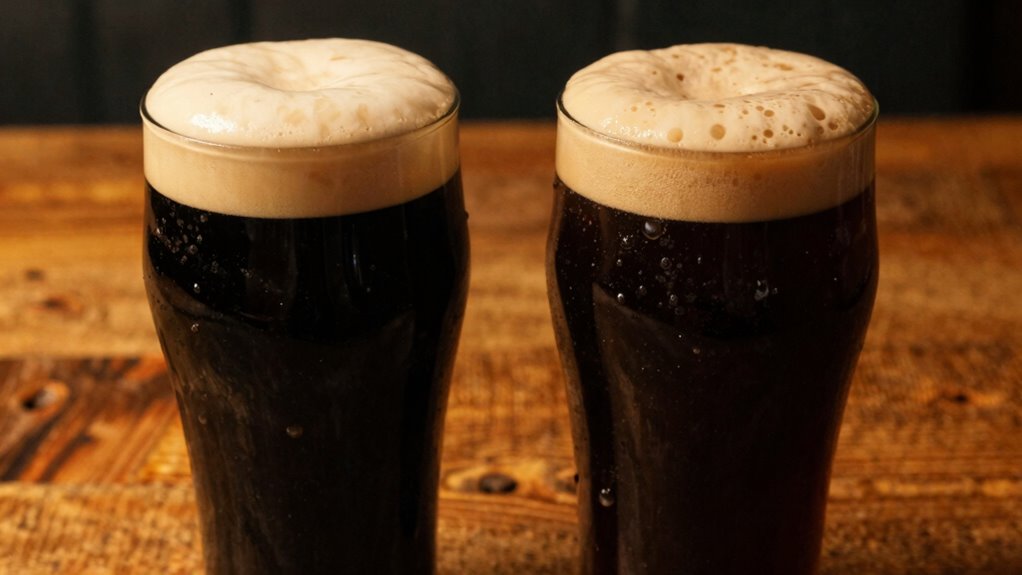
Have you ever wondered what sets stouts and porters apart? At first glance, they seem quite similar—both are dark beers with rich, roasted flavors. But delve a little deeper, and you’ll find distinctions rooted in brewing history and ingredient variations. Stouts and porters originated in Britain during the 18th and 19th centuries, evolving from the need to create flavorful, durable beers for workers and sailors. Initially, porters were the popular, everyday drink, known for their robust character and affordability. Over time, brewers began experimenting with ingredients, leading to the development of stouts, which are generally considered a more intense, fuller-bodied version of porters.
Porters appeared first as affordable, robust dark beers, later evolving into more intense, fuller-bodied stouts through ingredient experimentation.
When you compare the brewing history of these beers, you notice that porters appeared first, gaining popularity in London markets. They were made with a blend of roasted malts, creating a dark, slightly smoky flavor. As brewers sought to craft more potent and richer beers, stouts emerged as a variation of porters, often featuring a higher alcohol content and more pronounced roasted qualities. The term “stout” originally described a stronger version of porter, but over time, the styles diverged, with stouts developing their own unique identity. Today, the history ties these beers together, but modern brewers often reinterpret the styles, blending tradition with digital concepts.
Ingredient variations are where you start to notice the flavor differences. Porters traditionally use a mix of malted barley, sometimes including caramel and chocolate malts for added sweetness and color. Their roasted character is usually more subdued, with a balance between malt sweetness and roasted bitterness. Stouts, on the other hand, tend to emphasize roasted barley or roasted malt, which gives them a more intense, coffee-like bitterness. Some stouts incorporate additional ingredients like oats, which add creaminess, or lactose, which lends sweetness and smoothness. The choice of ingredients directly influences the beer’s texture, flavor profile, and aroma, making each a distinct experience.
In essence, if you’re tasting a porter, expect a lighter roasted flavor with subtle sweetness and a smooth body. When you sip a stout, prepare for bold roasted bitterness, often complemented by complex layers of flavor from added ingredients. While their histories are intertwined, ingredient variations have allowed brewers to craft beers that cater to different palates. Whether you prefer the more restrained charm of a porter or the intense richness of a stout, understanding their origins and ingredient differences helps you appreciate the nuances in each glass.
As an affiliate, we earn on qualifying purchases.
Frequently Asked Questions
Which Beer Pairs Best With Desserts?
You should go for a rich stout or porter when pairing with desserts, especially for chocolate pairing. These beers enhance the sweetness and depth of your desserts, creating an indulgent experience. Their roasted malt flavors complement chocolate and caramel desserts beautifully, making each bite more satisfying. When you’re looking to elevate your dessert, a stout or porter offers the perfect balance of bitterness and sweetness for dessert enhancement.
Are Stouts or Porters More Popular Globally?
You’ll find that stouts are more popular globally, thanks to their rich, bold flavors that appeal to craft brewing enthusiasts worldwide. Global trends show a growing appreciation for stouts, especially in markets embracing craft beer diversity. Porters, while still loved, tend to have a more regional following. As craft brewing expands, both styles are gaining fans, but stouts currently hold a slight edge in worldwide popularity.
How Does Aging Affect Stout and Porter Flavors?
Aging enhances stout and porter’s flavors, transforming them into sophisticated, complex masterpieces. You’ll find that the fermentation process mellows out harsh notes, while barrel aging introduces smoky, vanilla, and oak nuances. Think of it as a fine wine, but with more attitude. So, if you’re patient enough, aging rewards you with richer, deeper flavors, turning a simple brew into a memorable experience. Cheers to evolution in a glass!
Can You Make Gluten-Free Stouts or Porters?
Yes, you can make gluten-free stouts and porters using gluten-free brewing techniques. You’ll use alternative grains like millet, sorghum, rice, or buckwheat instead of barley. These grains provide similar flavors and textures, allowing you to enjoy rich, dark beers without gluten. Brewers often adapt traditional recipes with these grains, creating delicious, safe options for those with gluten sensitivities or celiac disease.
What Are Some Common Misconceptions About These Beers?
You might think stouts and porters are just dark beers, but many misconceptions exist. Some believe they’re identical, yet beer history shows subtle differences in origin and flavor. Brewing techniques influence their unique qualities, like the roasted malt in stouts versus the smoother profile of porters. People also assume they’re always heavy or high in alcohol, but many are light and sessionable. Understanding these nuances helps you appreciate their true distinctions.
As an affiliate, we earn on qualifying purchases.
Conclusion
Now that you’ve tasted the epic showdown between stout and porter, you’re officially equipped to conquer any beer list. Whether you choose the bold, coffee-laden fortress of stout or the smoother, chocolatey charm of porter, you’re stepping into a world of flavor so intense, it’ll blow your taste buds into another dimension. Get ready to impress friends, dominate beer tastings, and elevate your brewing game—because once you know these differences, your beer journey will never be the same!
As an affiliate, we earn on qualifying purchases.
As an affiliate, we earn on qualifying purchases.