
Maintaining the right fermentation temperature is essential for producing high-quality, consistent brews and avoiding subtle flaws that can harm your results. If temperatures are too high, you risk off-flavors from fusel alcohols and esters; too low, and fermentation stalls. Proper control helps develop desired styles and flavors while preventing spoilage. If you want to learn how to master temp management and keep your brewing on track, there’s more to uncover ahead.

Get the little things that make your day delivered free — and shop member deals
- Fast, free delivery on millions of items
- Access to Prime Big Deal Days deals on October 6–7
- Prime Video, Amazon Music and more included
Key Takeaways
- Inconsistent fermentation temperatures cause off-flavors and product variability, silently reducing quality.
- High temperatures produce undesirable fusel alcohols and esters, compromising taste and aroma.
- Low temperatures slow fermentation, risking incomplete processes and spoilage.
- Lack of temperature control can lead to harmful bacteria growth and product spoilage.
- Proper temperature management ensures consistent, high-quality fermentation outcomes.
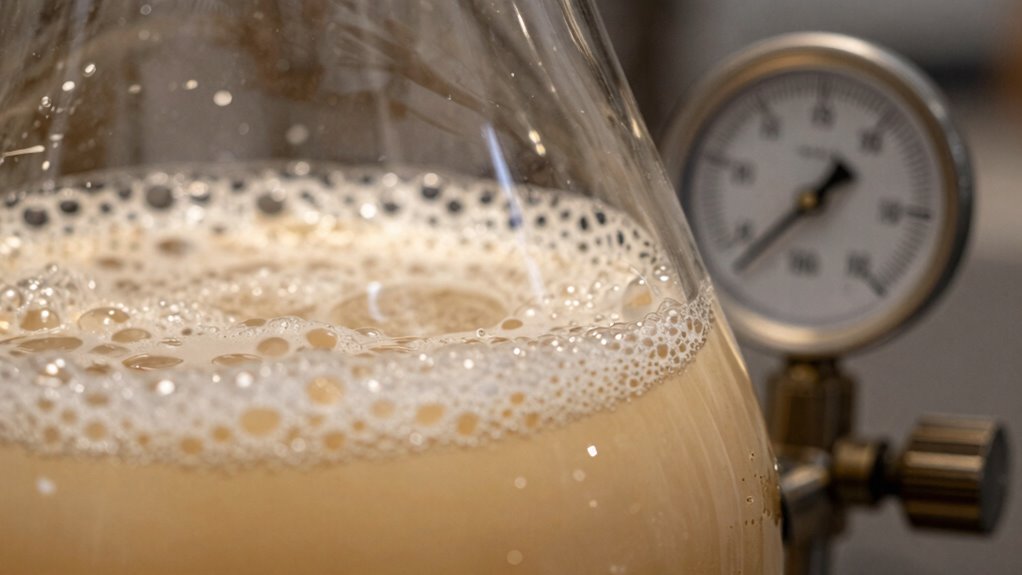
Fermentation Temperature
Have you ever wondered how fermentation temperature influences the quality of your brew or food? It’s a vital factor that often goes unnoticed but can make or break your creation. When you control fermentation temperature effectively, you directly influence yeast activity, which is the heart of the process. Yeast is responsible for converting sugars into alcohol, carbon dioxide, and flavors. If the temperature is too high or too low, yeast activity can slow down, stall, or produce undesirable byproducts. This is why temperature control isn’t just a minor detail—it’s indispensable for predictable, high-quality results.
Controlling fermentation temperature is key to ensuring consistent, high-quality flavors and avoiding off-flavors or stalled processes.
If you neglect to manage fermentation temperature, you risk producing off-flavors or inconsistencies. For instance, too high a temperature can cause yeast to become overly active, leading to the production of fusel alcohols and esters that give your brew or food an unpleasant taste. On the other hand, too low a temperature hampers yeast activity, resulting in sluggish fermentation or even complete stalling. This not only prolongs your process but can also compromise the final product’s flavor profile, aroma, and clarity. Whether you’re brewing beer, fermenting wine, or making sourdough, maintaining stable temperature conditions guarantees that yeast works at its best, producing the desired flavors and textures.
Temperature control becomes even more critical when trying to achieve specific styles or flavors. For example, ale fermentation typically occurs at warmer temperatures, around 65-75°F, to enhance the fruity and complex characteristics. Conversely, lagers require cooler temperatures, around 45-55°F, to develop their clean, crisp profile. In food fermentation, such as sauerkraut or kimchi, temperature influences the speed of fermentation and the development of flavors. Without precise temperature control, you risk uneven fermentation, spoilage, or the development of harmful bacteria.
You should pay close attention to your ambient environment and consider using tools like fermentation chambers, temperature-controlled refrigerators, or insulated containers to keep temperatures steady. Regularly monitoring temperature ensures that yeast activity remains consistent, preventing fluctuations that could lead to off-flavors or incomplete fermentation. Ultimately, understanding and controlling fermentation temperature empowers you to craft more consistent, flavorful, and high-quality products. It’s a silent but powerful influence—one that, when managed properly, guarantees your fermentation process is smooth, predictable, and successful. Additionally, employing standardized field programs can help ensure that your temperature control methods are both effective and repeatable.
fermentation temperature controller
As an affiliate, we earn on qualifying purchases.
As an affiliate, we earn on qualifying purchases.
Frequently Asked Questions
How Quickly Does Temperature Fluctuation Affect Fermentation Quality?
Temperature fluctuations can rapidly impact fermentation quality, often within hours. When temperature stability is compromised, fermentation kinetics slow down or become unpredictable, leading to off-flavors or incomplete fermentation. You might notice a dip in activity or unexpected changes in aroma and taste. To guarantee consistent quality, keep a close eye on temperature, maintain steady conditions, and avoid sudden shifts that can disrupt the delicate fermentation process.
Are There Specific Temperature Ranges for Different Types of Fermentation?
Yes, specific temperature ranges exist for different fermentation types. For beer, you should keep the fermentation vessel between 65-75°F for ales and 45-55°F for lagers, ensuring precise temperature control. For wine, maintain 55-75°F depending on the grape variety. You must monitor and regulate these ranges closely, as fluctuations can compromise quality. Proper temperature control in your fermentation vessel is essential to achieve the desired flavors and prevent off-flavors.
What Tools Can Effectively Monitor Fermentation Temperature?
You can effectively monitor fermentation temperature using digital temperature sensors like thermocouples or digital probes. Confirm sensor calibration for accuracy, regularly checking calibration against a known standard. Data logging devices help you record temperature fluctuations over time, giving you insights into your fermentation process. These tools let you maintain ideal temperatures, preventing quality issues caused by temperature swings, and give you confidence in consistent, high-quality fermentation results.
How Can Inconsistent Fermentation Temperature Impact Final Product Flavor?
When fermentation temperatures fluctuate, you might notice subtle shifts in your final product’s flavor. Inconsistent warmth can challenge yeast health, making it harder for yeast to produce the desired flavor development. Cooler temps might slow fermentation, dulling complexity, while higher temps can create off-flavors. Maintaining a steady temperature guarantees your yeast remains healthy, supporting consistent flavor profiles and a well-rounded, enjoyable product you’ll be proud of.
What Are the Signs of Fermentation Temperature Issues During Brewing?
You’ll notice signs of fermentation temperature issues through yeast stress, which often results in sluggish or stuck fermentation. Off-flavor development, like excessive sourness or a solvent-like smell, also indicates temperature problems. If your brew develops unusual aromas or tastes, it’s a clear sign that the temperature wasn’t ideal. Monitoring temperature closely helps prevent these issues, ensuring your yeast stays healthy and your final product maintains its desired flavor profile.
As an affiliate, we earn on qualifying purchases.
Conclusion
So, next time you’re fermenting, don’t overlook the temperature. It’s often the silent killer that can ruin your batch, but with proper control, you can guarantee quality and consistency. Some say a steady, moderate temperature is best, while others believe slight fluctuations can enhance flavors. The truth? It’s about finding that perfect balance for your specific brew. Keep experimenting and monitoring, and you’ll reveal the full potential of your fermentation process.
temperature regulated fermentation fridge
As an affiliate, we earn on qualifying purchases.
As an affiliate, we earn on qualifying purchases.
fermentation temperature monitor
As an affiliate, we earn on qualifying purchases.
As an affiliate, we earn on qualifying purchases.
Halloween Picks
halloween
As an affiliate, we earn on qualifying purchases.