
Choosing a smart home platform is less about picking a speaker than deciding how lights, plugs, cameras, thermostats, and voice controls will work together. Amazon Alexa and Google Home are two widely available ecosystems, and many devices support both, but their strengths differ: Alexa tends to offer broader device and skill compatibility, while Google Home fits more naturally into homes that already use Google services. That difference can shape what you can connect, how you create routines, and whether you need extra hardware. Choose Alexa if flexibility and a large range of compatible products matter most; choose Google Home if Google Assistant features and a simpler fit with your existing Google account matter more.

Get the little things that make your day delivered free with Prime
- Fast, free delivery on millions of items
- Prime Video, Amazon Music and more included
- Member-only deals all year

Amazon Echo Show 15 (2nd Gen), 15.6" Full HD Smart Display with Fire TV and Alexa
- ✔ Display: 15.6-inch Full HD (1920 x 1080)
- ✔ Dimensions: 16.1 x 10.1 x 1.4 inches
- ✔ Weight: 4.96 pounds
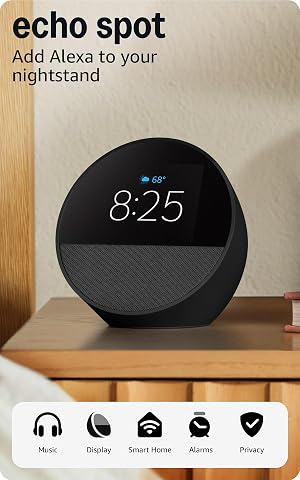
Amazon Echo Spot Smart Alarm Clock with Alexa (Black)
- ✔ Display: 2.83-inch touch screen (240 x 320)
- ✔ Dimensions: 4.5 x 4.1 x 4.4 inches
- ✔ Weight: 14.3 ounces (405 g)

Sonos Era 100 Wireless Smart Speaker (White)
- ✔ Model: Sonos Era 100
- ✔ Connectivity: Wi-Fi, Bluetooth, USB, line-in via adapter
- ✔ Voice assistant: Amazon Alexa
At a Glance
| Criteria | Amazon Alexa | Google Home | Winner |
|---|---|---|---|
| Device compatibility | Broad third-party support; check each product’s compatibility and features | Strong support for common brands, though some integrations may be narrower | A |
| Voice questions and services | Works with Amazon services and supported Alexa features | Fits Google services and Assistant features; capabilities can vary by device and region | B |
| Routines and automation | Routines can combine supported devices and actions | Google Home automations support compatible devices and triggers | Depends |
| Setup and app experience | Alexa app offers many controls and can take time to learn | Google Home app offers a more focused setup for supported products | Depends |
| Privacy controls | Controls vary by device; review voice history and settings | Controls vary by device; review activity and assistant settings | Depends |
| Cost and product choice | Wide range of Echo speakers and compatible devices at different prices | Nest speakers and displays span several price points; device choice is narrower than Alexa’s wider ecosystem | A |
Amazon Echo Show 15 (2nd Gen), 15.6" Full HD Smart Display with Fire TV and Alexa
The Echo Show 15 is the clearest choice when we want a visible control point for more than one person in the household. Its 15.6-inch Full HD display can show customizable widgets and a smart home dashboard, making routines and connected device controls easier to find than on a small bedside screen. Support for Zigbee, Matter, and Thread also gives it broader protocol coverage than the Echo Spot or Sonos Era 100 as described here.Compared with the Spot, this model is much better suited to a kitchen or shared living area than a nightstand: it offers room for information, Fire TV streaming, and video calls, while the Spot prioritizes a compact clock display. The 13 MP camera has auto-framing and zoom, and a physical shutter provides a direct privacy measure. However, this screen’s reach comes with a placement cost. At nearly five pounds and over 16 inches wide, it needs a wall mount or substantial counter space, so it is not a discreet addition. The Era 100 is easier to fit on a shelf and better focused on music, but it cannot replace the Show 15’s visual household dashboard.For buyers who want one Alexa-centered screen to organize shared routines and connect compatible devices, this is the strongest all-round option in the lineup. We would skip it if we mainly want a compact speaker, an alarm clock, or a device that can be tucked away. Its smart home breadth is the reason it ranks first; the size is the tradeoff we have to accept.
Pros:
- Large Full HD screen supports widgets and a shared smart home dashboard.
- Zigbee, Matter, and Thread support broaden compatible device options.
- Fire TV streaming and video calling add useful roles beyond device control.
- Physical camera shutter and microphone-off button provide direct privacy controls.
Cons:
- Its large footprint requires dedicated wall or countertop space.
- Does not support ad-hoc (IBSS) Wi-Fi networks.
- Bluetooth hands-free voice control is not supported for Mac OS X devices.
Best for: Households that want a shared, wall-mounted or countertop Alexa dashboard with broad smart device protocol support.
Not ideal for: Buyers with limited display space or those who mainly need a compact alarm clock or music speaker.
Bottom line: We rank the Echo Show 15 first for its unusually complete combination of household control, broad protocol support, and a useful shared display, provided we have space for it.
“We rank the Echo Show 15 first for its unusually complete combination of household control, broad protocol support, and a useful shared display, provided we have space for it.”
Amazon Echo Spot Smart Alarm Clock with Alexa (Black)
When we want Alexa within reach but do not want a tablet-sized display, the Echo Spot makes more sense than the Show 15. Its 2.83-inch touch screen is geared toward quick glances at time, weather, and song information, while voice commands can manage compatible smart home devices. That makes it a practical bedside or desk companion, although its screen is too small to serve as the household dashboard the Show 15 provides.The Spot’s most distinctive extra is eero Built-in, which can extend compatible eero Wi-Fi coverage by up to 1,000 square feet. That may help a home with a weak signal near the device, but it is conditional: we need a compatible eero router and account linkage. Without that setup, its core value is the clock, speaker, and Alexa access. Unlike the Sonos Era 100, it is not designed around richer room-filling audio; its single full-range speaker keeps the package compact. A physical mic-off button and the absence of a camera suit a bedside placement, and the use of recycled materials is a useful design detail.This is our compact pick for buyers who value alarms, glanceable updates, and simple voice-controlled routines in a small footprint. Choose the Show 15 if we want to browse a dashboard or control a broader set of smart home protocols from a screen. Choose the Era 100 if music quality matters more than clock functions. The Spot’s small display and eero dependency are the main reasons it is a focused secondary device rather than the best central hub.
Pros:
- Compact form fits nightstands, desks, and kitchen counters.
- Touch screen shows time, weather, and song information at a glance.
- eero Built-in can extend coverage when paired with compatible eero equipment.
- No camera, plus a physical microphone-off button.
Cons:
- Wi-Fi extension requires a compatible eero router and account linkage.
- Small display cannot match the Show 15 as a shared control surface.
- Does not support ad-hoc Wi-Fi networks or Mac OS X hands-free voice control over Bluetooth.
Best for: Alexa users looking for a small bedside or desk device for alarms, quick updates, and basic smart home commands.
Not ideal for: Buyers who want a large control dashboard, richer stereo audio, or Wi-Fi extension without a compatible eero setup.
Bottom line: We recommend the Echo Spot for compact Alexa access and bedside routines, with eero extension as a bonus only for households that already have compatible equipment.
“We recommend the Echo Spot for compact Alexa access and bedside routines, with eero extension as a bonus only for households that already have compatible equipment.”
Sonos Era 100 Wireless Smart Speaker (White)
The Sonos Era 100 is the pick for a room where we want a smart speaker to make music the priority. Its dual-tweeter design and larger midwoofer are intended to deliver stereo separation and fuller bass from a compact enclosure. Wi-Fi and Bluetooth give us flexible ways to stream, and built-in Alexa adds voice control for supported requests. Trueplay tuning adjusts the speaker’s EQ to the room, which can help it adapt to different placements.In smart home terms, the Era 100 plays a narrower role than either Echo. It is a multi-room speaker with Alexa, not a visual hub: there is no display for a dashboard, and the supplied details do not list Zigbee, Matter, or Thread support. Compared with the Echo Spot, it is the more music-oriented device; compared with the Show 15, it is easier to place on a shelf but offers less at-a-glance household control. A line-in connection is available through a separate adapter, which adds a purchase and setup step for wired sources. It also needs corded power and is not water resistant, so it is less flexible for outdoor or moisture-prone spots.We would choose the Era 100 when audio and multi-room listening are central to the room’s smart home setup, and we would pair it with a separate hub or display if we need a broad control surface. Buyers looking for an all-purpose Alexa dashboard should favor the Show 15; those who mainly need a clock and simple commands can save space with the Spot. The Era 100 earns its place through audio focus, but its smart home controls are less comprehensive than the Echo alternatives.
Pros:
- Dual tweeters and a larger midwoofer prioritize stereo detail and bass.
- Wi-Fi, Bluetooth, and optional line-in support multiple audio sources.
- Trueplay tuning adjusts EQ based on room acoustics.
- Compact form is easier to place on a shelf than the Show 15.
Cons:
- Line-in requires a separate adapter.
- Corded power means it cannot move freely like a portable speaker.
- Not water resistant and lacks the Echo Show 15’s display and stated protocol support.
Best for: Listeners building a Wi-Fi multi-room setup who want Alexa voice control and a compact speaker with flexible streaming.
Not ideal for: Buyers who need a visual dashboard, broad smart home protocol hub, portable speaker, or moisture-resistant device.
Bottom line: We recommend the Era 100 when music is the main smart room use, while treating Alexa as a useful addition rather than a substitute for a dedicated smart home hub.
“We recommend the Era 100 when music is the main smart room use, while treating Alexa as a useful addition rather than a substitute for a dedicated smart home hub.”
As an Amazon Associate we earn from qualifying purchases.
Key Differences
The biggest practical difference is the range of equipment and integrations available. Alexa has a large ecosystem of compatible products and third-party skills, which can help when a household owns devices from several brands or wants to add less common equipment. That breadth does not guarantee every feature works across every product: confirm the exact model and capabilities before buying. Google Home also supports many popular smart devices, but buyers should check compatibility closely when building around niche products.
Google Home has the clearer advantage for households already organized around Google services. Alexa has a stronger fit for Amazon services and a wide selection of Echo hardware. Both platforms can control common lights, plugs, and thermostats, and both support routines, but the experience depends on the devices, region, and app version. Neither platform is automatically the better choice for every home: the best fit is the one that supports the equipment and daily habits that matter to you.
For value, compare the complete setup rather than the price of one speaker. An inexpensive hub or speaker is a poor deal if it forces you to replace compatible devices or buy extra bridges. Alexa’s larger device selection can make it easier to find products at different price points. Google Home can be better value if its integration with services you already use reduces friction and you find the Nest hardware you need at a suitable price. Paying more makes sense only when the additional device features or compatibility solve a real need.
Detailed Comparison
Device compatibility (Amazon Alexa wins — moderate)
Alexa wins by a moderate margin for households mixing brands or shopping beyond the most common device categories. Its broad ecosystem gives buyers more options, but compatibility labels and feature support still need checking. Google Home supports many mainstream products, so for a home built around common bulbs, plugs, and thermostats, the gap may be minor. In practice, choose by the specific devices you own or plan to buy, not by platform counts alone.
Voice questions and services (Google Home wins — moderate)
Google Home has a moderate edge if the household depends on Google services and frequently asks information-focused questions. Alexa is a better match for Amazon services and supported Alexa functions. The benefit depends on what you use every day, and assistant capabilities vary by device and region. For basic commands such as turning lights on, the difference is usually minor.
Routines and automation (moderate difference)
This is a close comparison, so the winner depends on the devices and actions involved. Both platforms let users group supported actions into routines or automations, but available triggers and integrations can differ. The gap is minor for a simple schedule that turns on lights, and may become moderate if a household relies on a specific sensor or third-party service. Check that the exact sequence works before choosing a platform around it.
Setup and app experience (minor difference)
There is no universal winner. Google Home may feel more straightforward for people already using Google accounts and supported Nest products. Alexa offers more integrations and controls, which gives flexibility but can make initial setup less direct. This is a minor difference for someone comfortable managing devices in an app; it matters more to households that want to make changes rarely and keep the control experience simple.
Privacy controls (moderate difference)
Neither ecosystem is a clear winner across all devices and settings. Both involve microphones and account-linked activity, and available controls depend on hardware and software. Review voice-history options, microphone mute controls, account settings, and the data practices for connected devices. The practical gap is minor if the household is comfortable adjusting settings on either platform; privacy expectations may be a deciding factor for people who prefer not to use voice assistants.
Cost and product choice (Amazon Alexa wins — moderate)
Alexa wins on breadth of hardware choice, which makes it easier to compare Echo models and compatible products across price levels. Google Home and Nest also have options at different prices, but the ecosystem is narrower. This is a moderate advantage when a buyer is starting from scratch or needs several speakers. It matters less if a suitable Google Home device is already owned or discounted.
Amazon Alexa: Pros and Cons
Pros:
- Broad selection of compatible third-party devices
- Wide choice of Echo hardware and price points
- Useful for homes that rely on Amazon services
Cons:
- Many integrations and settings can take time to manage
- Compatibility does not mean every advanced feature is supported
- Alexa-specific skills and controls may add complexity
Google Home: Pros and Cons
Pros:
- Natural fit for households using Google services
- Supports many popular smart home device categories
- Focused experience for compatible Nest products
Cons:
- Niche device compatibility may be more limited
- Hardware selection is narrower than the wider Alexa ecosystem
- Some assistant features vary by device and region
Who Should Choose What
Choose Amazon Alexa if:
- You own devices from several brands or want the widest choice of compatible products.
- You use Amazon services or want to compare several Echo devices at different price points.
- You are willing to check compatibility and spend time configuring a flexible system.
Choose Google Home if:
- Your household already relies on Google services and accounts.
- You mainly need mainstream devices such as lights, plugs, and thermostats.
- You prefer a system centered on Google Home and compatible Nest products.
Skip both if: You want to avoid voice assistants, account-linked services, or app-based cloud controls. Consider devices with local controls or a platform that meets your privacy and connectivity requirements.
Value for Money
Paying more for a platform is worthwhile only when its specific integrations, hardware features, or services improve your daily use. Alexa often offers stronger value for a new setup that needs a wide range of compatible products or several speakers at different price levels. Google Home can offer better value when you already use Google services and the devices you want work well with it. Avoid paying a premium for a more capable speaker if your needs are limited to simple voice commands; put the budget toward compatible lights, sensors, or a reliable network instead.
Final Verdict
For most buyers starting with a varied or growing smart home, Amazon Alexa is the safer default because its device ecosystem and hardware choice are broader. Choose Google Home if Google services are central to your household or if your existing devices make it the more direct fit. The deciding factor is compatibility with the exact devices and routines you will use. Check those first, then buy the least expensive speaker or hub that provides the features you need.
Frequently Asked Questions
Are Alexa and Google Home compatible with the same smart devices?
Many popular devices support both, but support is not universal and some features may differ. Check the product’s compatibility information for its exact model and the functions you plan to use.
Which is easier to set up?
Google Home may feel simpler if you already use Google accounts and compatible Nest products. Alexa offers a wider range of integrations, which can mean more choices and more settings to manage. Your existing devices will often determine which setup feels easier.
Can I use Alexa and Google Home in the same house?
Yes, but operating two ecosystems can split routines and controls across apps. It can make sense when a device or service requires one platform, though a single primary system is usually easier to manage.
Which smart home platform is better value?
Alexa is often better for broad device choice and hardware at different price points. Google Home can be better value if you already use Google services and your planned devices are supported. Compare the cost of the complete setup, including any hubs or bridges.