Beer lines get dirty quickly because residual yeast, sugars, and bacteria from your brewing process cling to the interior surfaces. Organic residues create an environment for microbial buildup, especially if lines aren’t cleaned regularly. Microbes form biofilms that stick stubbornly, and warm temperatures speed up the process. If you don’t maintain a proper cleaning schedule, these issues escalate fast, affecting beer quality and safety. Keep going to discover how to keep your lines clean and serving great beer.
Key Takeaways
- Organic residues like yeast and sugars cling to line surfaces, promoting microbial growth over time.
- Microbial colonies form biofilms that adhere tightly, making lines prone to contamination.
- Warm temperatures accelerate microbial buildup and biofilm formation.
- Infrequent cleaning allows organic matter and microbes to accumulate rapidly.
- Residual beer left in lines after use provides a food source for bacteria, speeding contamination.
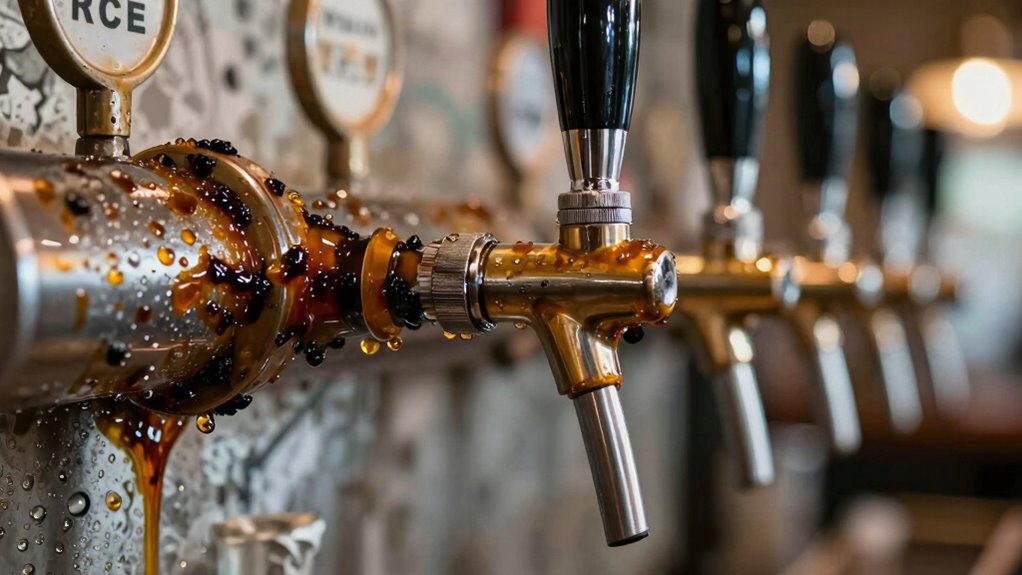
Beer lines get dirty because they constantly carry residual yeast, sugars, and bacteria from the brewing process, which can cling to the interior surfaces. These leftover substances create an ideal environment for microbial buildup, making your lines a breeding ground for unwanted bacteria if not cleaned regularly. The more frequently you clean, the less likely it is for these microbes to establish a stronghold. Cleaning frequency is crucial—you should aim to clean your beer lines at least every two weeks, especially if you’re serving a high volume of beer or switching between different styles. Neglecting this schedule allows residual organic matter to accumulate, leading to increased microbial buildup that can quickly compromise the quality of your beer.
When microbial buildup happens, it doesn’t just affect taste; it can also pose health risks. Bacteria like Pseudomonas or lactic acid bacteria can produce off-flavors, sourness, and even cause health concerns for your customers or guests. Over time, these bacteria form a biofilm—a slimy film that adheres to the interior surfaces of your lines. Once biofilms develop, they’re much harder to remove and require more intensive cleaning procedures. That’s why consistent cleaning is essential to prevent these stubborn formations from taking hold.
The rate at which your beer lines get dirty depends on how often you clean them and the conditions in your setup. If your lines go uncleaned for longer than two weeks, microbial buildup accelerates significantly. Warm temperatures, residual sugars, and organic matter all contribute to faster microbial growth. Conversely, if you stick to a strict cleaning schedule, you can slow down this process considerably. Using proper cleaning solutions and methods—such as caustic cleaners and proper rinsing—helps dissolve and remove organic residues before they turn into microbial colonies.
In addition to regular cleaning, good practices like flushing lines with clean water after each use and avoiding cross-contamination between different beer styles help keep microbial levels low. Remember, even small amounts of residual beer left in the lines can quickly become a source of microbial growth if not promptly cleaned. It’s a continuous cycle: the more you invest in proper cleaning frequency, the less microbial buildup occurs, preserving the integrity of your beer and ensuring a fresh, quality pour every time. Ignoring these steps only increases the risk of dirty lines, off-flavors, and potential health issues, so sticking to a routine is always your best defense. Additionally, maintaining a clean co-parenting environment can foster better relationships and communication, mirroring the importance of cleanliness in your beer lines.

Beer Line Standard Beer Draft Keg Cleaning kit with 4oz Beer Line Powder Cleaner PBW compatible- Hand Pump Pressurized – Easy Safe to Use Keg Cleaner – w/Brush, Faucet Brush, Instruction Manual
FOR A SEAMLESS BEER LINE CLEANING using Beer Line hookup- This Fermtech beer line cleaning kit has every…
As an affiliate, we earn on qualifying purchases.
As an affiliate, we earn on qualifying purchases.
Frequently Asked Questions
Can Dirty Beer Lines Affect the Taste of the Beer?
Dirty beer lines definitely affect the taste of your beer. Flavor contamination occurs as residual beer, mold, and bacteria build up, altering its original flavor. Microbial buildup causes off-flavors and a sour or stale taste, compromising quality. If you don’t clean your lines regularly, these issues worsen quickly, leading to a less enjoyable drinking experience. Maintaining lines clean ensures fresh, crisp beer and prevents unwanted flavor changes.
How Often Should I Clean Beer Lines for Optimal Quality?
Like tending a garden, your beer lines need regular care. You should clean them at least every two weeks for ideal quality, ensuring fresh, tasty pours. Establishing a consistent maintenance schedule prevents buildup and preserves flavor. Skipping cleanings risks off-flavors and spoilage. Regular cleaning isn’t just maintenance; it’s a commitment to your customers’ experience and the integrity of your beer. Stay diligent, and your taps will thank you.
What Tools Are Best for Cleaning Beer Lines Effectively?
For effective beer line maintenance, you need the right tools. Use a dedicated beer line cleaning kit with a brush, cleaning solution, and a pump to guarantee thorough cleaning. These tools help maintain proper cleaning frequency, preventing buildup. Regularly using a cleaning brush and cleaning solution keeps lines sanitary, preserving beer quality. Incorporate these tools into your routine to make beer line maintenance efficient and effective, ensuring fresh-tasting beer every time.
Are There Specific Cleaning Solutions Recommended for Beer Lines?
You’ll want to use specifically designed cleaning solutions for beer lines—nothing too fancy, but effective enough to battle stubborn grime. Regular cleaning schedules demand solutions that cut through yeast and beer residues without damaging the lines. Opt for foaming or caustic cleaners recommended by manufacturers. Skipping proper cleaning solutions risks a brewery’s reputation, turning your tap into a bacteria breeding ground faster than you can say “draft disaster.”
What Signs Indicate My Beer Lines Need Cleaning Immediately?
If your beer tastes off, there’s excessive foaming, or you notice a sour smell, your lines likely need cleaning immediately. These are clear signs of line contamination. Regular cleaning frequency is essential to prevent buildup, but if these signs appear, don’t delay—clean your lines promptly. Ignoring these indicators can lead to poor quality beer, health risks, and equipment issues. Stay vigilant and clean your lines regularly for the best beer experience.

Safecid Alkaline Beer Line Cleaner 32 Fl Oz – Powerful & Safe – Biodegradable Draft System Cleanser
Professional-Grade Alkaline Beer Line Cleaner – Pro-grade formulation for draft systems, kegerators, and beverage lines; removes organic residues,…
As an affiliate, we earn on qualifying purchases.
As an affiliate, we earn on qualifying purchases.
Conclusion
Think of your beer lines as a garden hose. If you don’t clean it regularly, dirt and grime build up, blocking the flow and tainting your drink. Just like neglecting a hose leads to clogged, dirty water, ignoring your lines let bacteria and residue accumulate, spoiling your beer. Stay vigilant with cleaning, and your beer will flow smoothly, like a pristine stream—fresh, clean, and full of life. Keep your lines clear, and your beer will thank you.

Hilangsan Draft Beer Faucet Beer Line Shank Kit Kegerator Parts Beer Tower Dispenser Replacement Set Self-Closing Beer Tap Wrench I.D.3/16” Beer Tubing 1/4”Keg Coupler Barb Cleaning Brush Tap Cover
Build A Kegerator Dispenser: This kegerator replacement parts kit includes a standard self-closing beer faucet, a beer shank…
As an affiliate, we earn on qualifying purchases.
As an affiliate, we earn on qualifying purchases.
Safecid Alkaline Beer Line Cleaner 32 Fl Oz – Powerful & Safe – Biodegradable Draft System Cleanser
Professional-Grade Alkaline Beer Line Cleaner – Pro-grade formulation for draft systems, kegerators, and beverage lines; removes organic residues,…
As an affiliate, we earn on qualifying purchases.
As an affiliate, we earn on qualifying purchases.