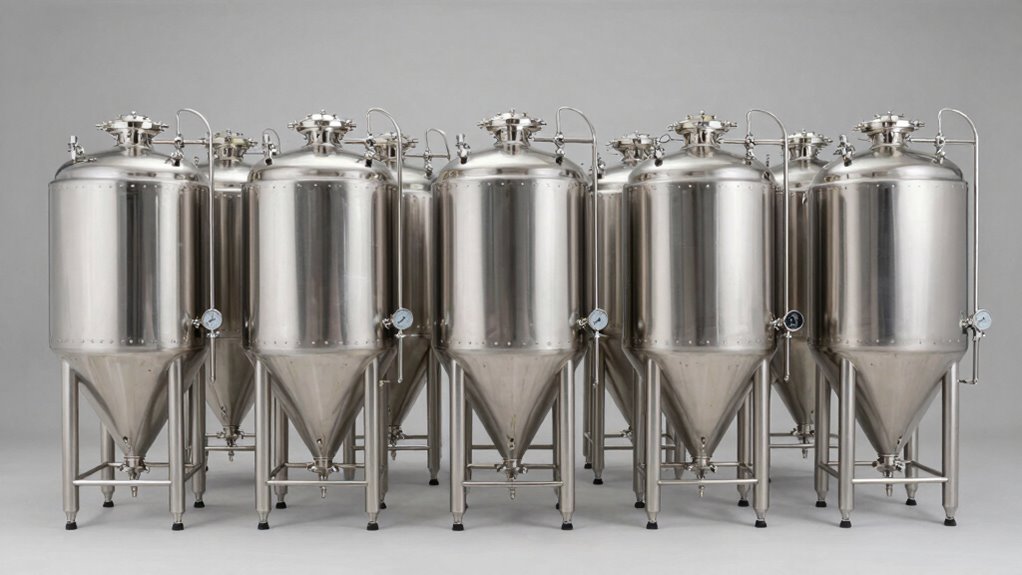

A stainless steel conical fermenter can simplify yeast and trub separation, but capacity, pressure capability, and cleaning access vary widely across this lineup. My best overall pick is the VEVOR 8-Gallon Stainless Steel Conical Fermentation Tank for its practical middle-ground capacity and straightforward, non-pressure design. The VEVOR 16-Gallon Pressure Fermenter with Cooling Coil stands out for larger batches and temperature control, while the 30 L 304 Stainless Steel Set adds useful starter accessories. The main tradeoffs are footprint versus batch size, ordinary versus pressure-rated fermentation, and convenience features versus simpler maintenance. Read on for the full comparison and guidance on choosing a fermenter that fits your brewing process.

Get the little things that make your day delivered free with Prime
- Fast, free delivery on millions of items
- Prime Video, Amazon Music and more included
- Member-only deals all year
Key Takeaways
The 8-gallon VEVOR tank is the most balanced starting point in this group: it offers more headroom than compact 20 L and 6-gallon options without requiring the space of a 16-gallon vessel.
Pressure and cooling are specialized features, not automatic upgrades. The 16-gallon VEVOR pressure model combines both, while the 8-gallon pressure model may suit brewers who want pressure capability without scaling up batch volume.
Steel grade deserves attention, but does not tell the whole story. The 316 models may appeal to buyers prioritizing corrosion resistance, while the 304 option and other stainless models still need evaluation by construction, fittings, and care instructions.
Accessories can reduce setup friction. The 30 L set includes a bottle filler and mash paddle, but buyers who already own compatible tools may prefer to prioritize vessel design over bundled items.
Capacity labels are not interchangeable with usable batch volume. Leave headspace for active fermentation and check dimensions, outlet position, and refrigerator or chamber fit before choosing between the 6-, 8-, 13-, and 16-gallon options.
| VEVOR 8-Gallon Stainless Steel Conical Fermentation Tank |  | Best for Straightforward Yeast Collection | Capacity: 8 gallons / 30 L | Material: Food-grade 304 stainless steel | Barrel thickness: 0.5 mm | VIEW ON AMAZON | See Our Full Breakdown |
| 316 Stainless Steel Conical Home Brewing Fermenter, 35 L |  | Best for Corrosion Resistance and Flexible Use | Capacity: 35 L | Available capacities: 12 L, 20 L, 35 L, 60 L, and 115 L | Material: 316 stainless steel | VIEW ON AMAZON | See Our Full Breakdown |
| VEVOR 16-Gallon Stainless Steel Pressure Fermenter with Cooling Coil |  | Best for Large Batches with Temperature Control | Capacity: 16 gal / 60 L | Material: Food-grade 304 stainless steel | Steel thickness: 0.5 mm | VIEW ON AMAZON | See Our Full Breakdown |
| VEVOR 8-Gallon Stainless Steel Pressure Fermenter |  | Best Compact Pressure-Fermentation Pick | Capacity: 8 gal / 30 L | Material: 304 stainless steel | Steel thickness: 0.5 mm | VIEW ON AMAZON | See Our Full Breakdown |
| Northern Brewer Reactor Conical Fermentor |  | Best for Racking and Drainage Control | Material: 304 stainless steel | Maximum volume: 8.5 gal | Graduations: 4–8 gal / 15–30 L | VIEW ON AMAZON | See Our Full Breakdown |
| 13-Gallon Stainless Steel Conical Fermenter |  | Best for Larger Homebrew Batches | Capacity: 13 gallons | Material: 304 stainless steel | Gasket material: Platinum-cured silicone | VIEW ON AMAZON | See Our Full Breakdown |
| 8-Gallon Stainless Steel Conical Fermenter |  | Best for Compact, Fitting-Rich Setups | Capacity: 8 gallons | Material: 304 stainless steel | Interior finish: Mirror polished | VIEW ON AMAZON | See Our Full Breakdown |
| VEVOR 16 Gallon Stainless Steel Conical Fermentation Tank |  | Best for Built-In Temperature Reading | Capacity: 16 gallons / 60 liters | Material: 304 stainless steel | Dimensions: 18.9 × 16.73 × 30.51 inches | VIEW ON AMAZON | See Our Full Breakdown |
| 30 L (6 gal) 304 Stainless Steel Conical Fermenter Set with Bottle Filler and Mash Paddle |  | Best Accessory Bundle | Capacity: 30 L (6 gal) | Material: 304 stainless steel | Finish: Brushed | VIEW ON AMAZON | See Our Full Breakdown |
| 316 Stainless Steel Conical Fermenter, 20 L |  | Best for Corrosion Resistance and Multi-Use | Capacity: 20 L | Material: 316 stainless steel | Barrel wall thickness: 1 mm | VIEW ON AMAZON | See Our Full Breakdown |
| stainless steel conical fermenter | Material | Capacity | Dimensions | Weight |
|---|---|---|---|---|
| VEVOR 8-Gallon Stainless Steel | Food-grade 304 stainless steel | 8 gallons / 30 L | 24.61 × 14.96 × 14.76 inches | 9.04 lb |
| 316 Stainless Steel Conical Ho | 316 stainless steel | 35 L | — | — |
| VEVOR 16-Gallon Stainless Stee | Food-grade 304 stainless steel | 16 gal / 60 L | 18.9 × 16.93 × 42.91 inches | 29.3 lb |
| VEVOR 8-Gallon Stainless Steel | 304 stainless steel | 8 gal / 30 L | 17.13 × 16.73 × 38.19 inches | 16.09 lb |
| Northern Brewer Reactor Conica | 304 stainless steel | — | — | — |
| 13-Gallon Stainless Steel Coni | 304 stainless steel | 13 gallons | — | — |
| 8-Gallon Stainless Steel Conic | 304 stainless steel | 8 gallons | 15 × 15 × 40 inches | 35 pounds |
| VEVOR 16 Gallon Stainless Stee | 304 stainless steel | 16 gallons / 60 liters | 18.9 × 16.73 × 30.51 inches | 14.33 pounds |
| 30 L | 304 stainless steel | 30 L (6 gal) | — | — |
| 316 Stainless Steel Conical Fe | 316 stainless steel | 20 L | — | — |
More Details on Our Top Picks
VEVOR 8-Gallon Stainless Steel Conical Fermentation Tank
The VEVOR 8-Gallon Stainless Steel Conical Fermentation Tank makes sense for homebrewers who want the basic benefits of a conical setup without moving to a pressure-focused model. Its separate yeast slurry and beer valves let you collect sediment and draw beer through different outlets, while the silicone-sealed lid and one-way exhaust port support controlled fermentation. Compared with the VEVOR 8-Gallon Stainless Steel Pressure Fermenter, this model gives more explicit yeast-and-beer valve functions, but the other VEVOR is designed for pressure fermentation and includes capacity markings. The 304 stainless body is practical for routine cleaning, though its 0.5 mm wall is relatively light, and the 0–40°C thermometer range may not cover every process. At nearly 25 inches tall, it also asks for dedicated storage space.
Pros:- Separate yeast slurry and beer valves support sediment collection and beer dispensing.
- Silicone-sealed lid and one-way exhaust port support controlled fermentation.
- Built-in thermometer displays Celsius and Fahrenheit.
- Adjustable feet help stabilize the conical tank.
Cons:- The 0.5 mm barrel is relatively light compared with the 316 stainless 35 L fermenter’s thicker construction.
- Its 24.61-inch height can make storage awkward.
- The thermometer is limited to 0–40°C / 32–104°F.
Best for: Homebrewers making batches around 8 gallons who want separate yeast and beer valves and a built-in temperature readout.
Not ideal for: Brewers seeking pressure fermentation, a compact fermenter, or a thermometer that reads above 40°C.
- Capacity:8 gallons / 30 L
- Material:Food-grade 304 stainless steel
- Barrel thickness:0.5 mm
- Dimensions:24.61 × 14.96 × 14.76 inches
- Weight:9.04 lb
- Thermometer range:0–40°C / 32–104°F
- Design:Conical bottom with adjustable feet
- Included features:Lid, handles, exhaust pipe, yeast slurry valve, beer valve, and thermometer
Our verdict“Choose this VEVOR if separate yeast and beer outlets matter more to you than pressure capability or compact storage.”
316 Stainless Steel Conical Home Brewing Fermenter, 35 L
For buyers who put material choice and broader liquid-handling uses ahead of built-in brewing conveniences, this 35 L 316 stainless steel fermenter is the lineup’s material-focused pick. Its 316 steel is more corrosion resistant than the 304 stainless VEVOR 8-Gallon Stainless Steel Conical Fermentation Tank, and its 1 mm wall with a 1.2 mm bottom is heavier than that VEVOR’s 0.5 mm barrel. The listed uses extend beyond fermentation to storage, aging, and distillation, although distillation requires installing a still. Its accessories are comparatively simple: a temperature patch, silicone plug, one-way valve, and ring, rather than a built-in thermometer or the pressure and cooling equipment found on VEVOR’s 16-gallon pressure model. The fixed 35 L version may also be the wrong fit if your batch size differs.
Pros:- 316 stainless steel offers greater corrosion resistance than the 304 steel used in the VEVOR models.
- A 1 mm wall and 1.2 mm bottom provide thicker construction than the 0.5 mm VEVOR tanks in this lineup.
- Listed for fermentation, storage, aging, and distillation.
- Includes a one-way valve and silicone accessories.
Cons:- The 35 L capacity may not match a brewer’s batch size.
- Temperature monitoring is via a patch rather than a built-in thermometer.
- Distillation requires fitting a still, which is not included in the listed accessories.
Best for: Homebrewers and beverage makers who want a thicker 316 stainless vessel for fermentation, aging, or storage and already know 35 L suits their batches.
Not ideal for: Buyers who need an integrated thermometer, cooling coil, pressure-fermentation setup, or a capacity other than 35 L.
- Capacity:35 L
- Available capacities:12 L, 20 L, 35 L, 60 L, and 115 L
- Material:316 stainless steel
- Barrel wall thickness:1 mm
- Bottom thickness:1.2 mm
- Item weight:16 lb
- Package dimensions:23 × 15 × 15 inches
- Included accessories:Temperature patch, silicone plug, one-way valve, and silicone ring
- Listed functions:Fermentation, storage, aging, and distillation
Our verdict“Pick this model if 35 L fits your workflow and 316 steel with thicker construction matters more than integrated temperature or cooling features.”
VEVOR 16-Gallon Stainless Steel Pressure Fermenter with Cooling Coil
This is the most feature-loaded choice here for brewers who need 60 L capacity and want pressure fermentation alongside active cooling. The listed 15 PSI maximum pressure, cooling coil, thermometer, and yeast collection bottle give it a more equipped setup than the smaller VEVOR 8-gallon pressure fermenter, which does not list a cooling coil or pressure rating in its supplied specs. The coil can help manage fermentation temperature, but it needs a separate chiller connection, so it is not a self-contained cooling system. Compared with the 316 Stainless Steel Conical Home Brewing Fermenter, 35 L, this VEVOR offers twice the stated capacity and more integrated brewing accessories, while using 0.5 mm 304 steel rather than thicker 316 construction. Its 42.91-inch height also demands substantial space.
Pros:- 60 L capacity suits larger batches than the 30 L VEVOR pressure fermenter.
- Supports pressure fermentation up to 15 PSI.
- Cooling coil, thermometer, and yeast collection bottle provide useful process equipment.
- Casters and reinforced handles help with moving this large tank.
Cons:- The cooling coil requires a separate chiller connection.
- At 42.91 inches tall and 29.3 lb, it can be difficult to store or maneuver.
- Its 0.5 mm 304 steel is thinner than the 316 fermenter’s listed wall and bottom.
Best for: Experienced homebrewers making large beer, wine, or fruit-wine batches who have a compatible chiller and need pressure fermentation.
Not ideal for: Small-batch brewers, buyers without a chiller, or anyone short on storage space or seeking thicker 316 steel.
- Capacity:16 gal / 60 L
- Material:Food-grade 304 stainless steel
- Steel thickness:0.5 mm
- Maximum pressure:15 PSI
- Cooling:Cooling coil connects to a chiller
- Thermometer range:0–40°C / 32–104°F
- Dimensions:18.9 × 16.93 × 42.91 inches
- Weight:29.3 lb
- Included accessory:Yeast collection bottle
Our verdict“Choose this VEVOR when large-batch pressure fermentation and chiller-based temperature control justify its height and added equipment needs.”
VEVOR 8-Gallon Stainless Steel Pressure Fermenter
This 30 L VEVOR is the smaller pressure-focused alternative to the VEVOR 16-Gallon Stainless Steel Pressure Fermenter with Cooling Coil. Its pressure and secondary fermentation design suits brewers who want a pressure-capable vessel without stepping up to a 60 L tank, while the built-in thermometer and dual liter-and-gallon markings make routine checks and batch measurement more direct. Reinforced handles and adjustable legs add practical support for positioning it. Unlike the larger VEVOR, though, this model does not list a cooling coil or yeast collection bottle; buyers wanting those features should look to the 16-gallon version. The 0.5 mm 304 steel is also relatively light, and the thermometer’s 0–40°C range limits its usefulness outside common fermentation temperatures.
Pros:- Designed for pressure and secondary fermentation.
- Built-in thermometer provides a real-time liquid temperature reading.
- Dual liter and gallon markings simplify batch-volume checks.
- Reinforced handles and adjustable legs support positioning.
Cons:- A yeast collection bottle is not included.
- The 0.5 mm steel is relatively light compared with the thicker 316 stainless option.
- The thermometer range is limited to 0–40°C / 32–104°F.
Best for: Homebrewers with roughly 30 L batches who want pressure and secondary fermentation capability, clear volume markings, and a built-in thermometer.
Not ideal for: Brewers needing a cooling coil, included yeast collection bottle, or a larger 60 L capacity.
- Capacity:8 gal / 30 L
- Material:304 stainless steel
- Steel thickness:0.5 mm
- Temperature range:0–40°C / 32–104°F
- Dimensions:17.13 × 16.73 × 38.19 inches
- Weight:16.09 lb
- Fermentation type:Pressure and secondary fermentation
- Model:DM-NF350-B
Our verdict“Choose this model for a 30 L pressure-fermentation setup, but step up to the 16-gallon VEVOR if you need a cooling coil or yeast bottle.”
Northern Brewer Reactor Conical Fermentor
The Northern Brewer Reactor Conical Fermentor is the most process-focused option for brewers who value controlled transfer and drainage over bundled temperature or pressure features. Its adjustable racking arm lets the user draw from different points in the vessel, while the bottom-drain ball valve supports draining and cleaning. Embossed graduations from 4 to 8 gallons are easier to read than unmarked capacity estimates, but they do not help much below a 4-gallon fill. Compared with the VEVOR 8-Gallon Stainless Steel Conical Fermentation Tank, the Reactor lists a bottom-drain valve and adjustable racking arm rather than separate yeast and beer valves, thermometer, and exhaust hardware. It is a strong fit for transfer control, but the 1/2-inch male NPT outlet requires compatible fittings, and no pressure or cooling features are listed.
Pros:- Adjustable racking arm supports controlled beer transfer.
- Bottom-drain ball valve can serve draining and cleaning tasks.
- Embossed graduations from 4 to 8 gallons provide visible volume references.
- 304 stainless steel is light-proof and suited to homebrewing use.
Cons:- Graduations begin at 4 gallons, limiting volume guidance for smaller batches.
- The 1/2-inch male NPT valve requires compatible fittings.
- No thermometer, pressure rating, or cooling equipment is listed.
Best for: Homebrewers who routinely rack, sample, package, or clean through a bottom drain and can use a 1/2-inch NPT connection.
Not ideal for: Brewers making batches under 4 gallons, or those who need a built-in thermometer, pressure fermentation, or included cooling equipment.
- Material:304 stainless steel
- Maximum volume:8.5 gal
- Graduations:4–8 gal / 15–30 L
- Drain valve:1/2-inch male NPT bottom-drain ball valve
- Racking arm:Adjustable
- Model:Reactor Conical Fermentor
- Manufacturer:Northern Brewer
Our verdict“Pick the Reactor if transfer and bottom-drain control are your priorities and its fitting standard and 4-gallon minimum markings suit your setup.”
13-Gallon Stainless Steel Conical Fermenter
For brewers who routinely split a larger volume across fermentations, this 13-gallon capacity leaves room for two 5-gallon batches with headspace. Its 304 stainless body, included valves, and four tri-clover ports make it a more configurable setup than the smaller 8-Gallon Stainless Steel Conical Fermenter. A removable lid and mirror-polished interior also make access for cleaning easier than on a vessel that can only be cleaned through its ports. The tradeoff is the 88.8-pound weight, which makes moving or positioning it a serious planning task. It also lacks an included thermowell, so temperature monitoring through that port means sourcing an additional part. I’d choose it for capacity and fittings, not portability or an all-in-one temperature setup.
Pros:- 13-gallon capacity can accommodate two 5-gallon batches with headspace.
- 304 stainless construction includes two stainless steel valves.
- Removable lid and mirror-polished interior support cleaning access.
- Includes five clamps and gaskets plus a side-port plate.
Cons:- At 88.8 pounds, it is difficult to reposition compared with the 8-gallon model.
- Thermowell is optional and not listed among the included accessories.
Best for: Homebrewers who ferment two 5-gallon batches together or want substantial headspace in one vessel.
Not ideal for: Brewers who need to move a fermenter frequently or want a thermowell included in the box.
- Capacity:13 gallons
- Material:304 stainless steel
- Gasket material:Platinum-cured silicone
- Interior finish:Mirror polished
- Valves:2 stainless steel valves included
- Ports:Four 1.5-inch tri-clover ports
- Included accessories:5 clamps and gaskets; 1 side-port plate
- Item weight:88.8 pounds
Our verdict“Choose this fermenter if batch capacity and tri-clover connections matter more to you than easy handling.”
8-Gallon Stainless Steel Conical Fermenter
This model keeps the 304 stainless construction and four tri-clover ferrules of its 13-gallon sibling while taking up less space and weighing 35 pounds. That makes it a practical middle ground for brewers who want separate drain and racking valves without committing to the heavier 13-Gallon Stainless Steel Conical Fermenter. The removable lid and mirror-polished interior help with cleaning, while the top and side ports allow an airlock and optional thermowell arrangement. Its main compromise is capacity: eight gallons can constrain larger batches or leave less room for generous headspace than the 13-gallon vessel. The thermowell is also not included, so the ports do not make temperature monitoring a complete out-of-box feature. I’d pick this for a small brewing space where fittings matter more than maximum volume.
Pros:- Four 1.5-inch tri-clover ferrules offer several connection points.
- Includes stainless steel drain and racking valves.
- Removable lid and mirror-polished interior aid cleaning and sanitizing.
- At 35 pounds, it is easier to handle than the 13-gallon model.
Cons:- Eight-gallon capacity may limit larger batches and available headspace.
- Thermowell is optional rather than included.
Best for: Homebrewers making moderate batches who want stainless drain and racking valves with tri-clover connections.
Not ideal for: Brewers who regularly ferment larger batches or want a thermowell supplied with the vessel.
- Capacity:8 gallons
- Material:304 stainless steel
- Interior finish:Mirror polished
- Dimensions:15 × 15 × 40 inches
- Weight:35 pounds
- Gaskets:Platinum-cured, high-temperature-tolerant silicone
- Connections:Four 1.5-inch tri-clover ferrules
- Included fittings:2 stainless steel valves, 5 tri-clover clamps and gaskets, 1 side-port plate
Our verdict“Pick this model if you want useful tri-clover fittings in a smaller fermenter and can work within its eight-gallon capacity.”
VEVOR 16 Gallon Stainless Steel Conical Fermentation Tank
The strongest distinction here is the combination of a 16-gallon capacity, built-in thermometer, and one-way airlock. Those features give it a more ready-to-monitor setup than the 13-Gallon Stainless Steel Conical Fermenter, which has ports for optional equipment but no thermowell listed as included. The conical bottom and dedicated valves are intended to collect sediment for removal, while the silicone-sealed lid and clasps address sealing. At 0.5 mm wall thickness, though, its body is notably specified as thin, so buyers seeking a heavier-duty vessel may prefer the Moonshine Distiller models, despite their much greater listed weight. The fixed capacity also offers less flexibility for smaller batches. I’d shortlist this VEVOR when integrated monitoring and larger volume take priority over a thicker-wall specification or modular tri-clover fittings.
Pros:- 16-gallon capacity provides room for larger fermentation volumes.
- Built-in thermometer supports at-a-glance temperature checks.
- One-way airlock and silicone-sealed lid are included.
- Conical bottom and valves support sediment and yeast removal.
Cons:- Specified 0.5 mm wall thickness is thinner than buyers seeking a heavier-duty body may prefer.
- Fixed 16-gallon capacity may be excessive for smaller batches.
- Listed weight is 14.33 pounds, which may not convey the handling demands of a filled vessel.
Best for: Brewers who want a larger vessel with an included thermometer and one-way airlock rather than sourcing those parts separately.
Not ideal for: Buyers seeking a thick-walled, heavy-duty fermenter or a vessel sized for varied smaller batches.
- Capacity:16 gallons / 60 liters
- Material:304 stainless steel
- Dimensions:18.9 × 16.73 × 30.51 inches
- Weight:14.33 pounds
- Wall thickness:0.5 mm
- Temperature range:0–40°C / 32–104°F
- Included monitoring:Integrated thermometer and one-way airlock
- Model number:DM-F600
Our verdict“Choose the VEVOR if you want a larger fermenter with temperature reading and an airlock included, and accept its thin-wall specification.”
30 L (6 gal) 304 Stainless Steel Conical Fermenter Set with Bottle Filler and Mash Paddle
This six-gallon Fermtech set is the most appealing choice for someone assembling a basic brewing workflow, since it pairs a 304 stainless conical fermenter with a mash paddle, bottle filler, and tubing. Separate beer-out and yeast-removal valves give it a clearer transfer-and-cleanup setup than the 316 Stainless Steel Conical Fermenter, 20 L, whose listed accessories focus on fermentation rather than bottling. A built-in thermometer adds a quick temperature reference, though its stated 0–40°C range may not cover every brewing need. Capacity is also modest beside the 16-gallon VEVOR, and the listing gives a brushed finish but no wall thickness or tri-clover connection details. I’d favor this kit when included tools reduce the number of separate purchases; brewers who already own those tools may get more value from a vessel with greater capacity or more connection information.
Pros:- Includes a 26-inch stainless steel mash paddle, bottle filler, and six feet of tubing.
- Separate beer-out and yeast-removal valves support transfer and sediment handling.
- Built-in thermometer provides a temperature reading.
- 304 stainless steel body has a brushed finish.
Cons:- Six-gallon capacity is smaller than the 13- and 16-gallon options.
- Thermometer range is specified only as 0–40°C.
- No wall thickness or tri-clover connection details are provided in the product data.
Best for: Newer homebrewers who want a small conical fermenter and several basic transfer and brewing accessories together.
Not ideal for: Brewers with larger batch needs, existing brewing tools, or a requirement for specified wall thickness and tri-clover fittings.
- Capacity:30 L (6 gal)
- Material:304 stainless steel
- Finish:Brushed
- Thermometer range:0–40°C
- Lid locks:4
- Valves:Beer-out valve and yeast-removal valve
- Accessories:26-inch stainless steel mash paddle, bottle filler, 6 feet of brewing-grade tubing
- Item weight:17.38 pounds
Our verdict“Choose this set if you need a compact fermenter plus basic brewing and bottling accessories in one package.”
316 Stainless Steel Conical Fermenter, 20 L
Among these picks, this 20-liter vessel stands out for its 316 stainless steel, a material choice associated with greater corrosion resistance than the 304 steel used in the Moonshine Distiller and VEVOR models. Its stated uses also extend beyond fermentation to storage, aging, and distillation, making it the most versatile on paper. The included one-way valve, silicone plug, ring, and temperature patch provide a basic accessory set, though the patch is not the same as the built-in thermometer on the VEVOR 16 Gallon Stainless Steel Conical Fermentation Tank. At 20 liters, it is far smaller than that VEVOR, and the product data warns of multiple capacity and material options, so the selected configuration needs checking. Its 1 mm barrel wall is also thinner than its 1.2 mm bottom. I’d choose it for material preference and varied uses, not maximum batch size.
Pros:- 316 stainless steel offers greater corrosion resistance than the 304 steel used by several alternatives.
- Listed for fermentation, storage, aging, and distillation.
- Includes a one-way valve, silicone plug, silicone ring, and temperature patch.
- At 10 pounds, it is lighter than the 13-gallon Moonshine Distiller model.
Cons:- 20-liter capacity is much smaller than the 13- and 16-gallon options.
- Product information describes multiple capacity and material options, so the selected configuration needs confirmation.
- The 1 mm barrel wall is thinner than the 1.2 mm bottom.
Best for: Brewers or fermenters prioritizing 316 stainless steel and a vessel listed for fermentation, storage, aging, and distillation.
Not ideal for: Buyers who need a large batch vessel, a built-in thermometer, or unambiguous configuration details without checking the selected option.
- Capacity:20 L
- Material:316 stainless steel
- Barrel wall thickness:1 mm
- Bottom thickness:1.2 mm
- Included accessories:Temperature patch, silicone plug, one-way valve, silicone ring
- Package dimensions:20 × 13 × 13 inches
- Item weight:10 pounds
- Listed uses:Fermentation, storage, aging, and distillation
Our verdict“Pick this 20-liter model if 316 stainless and multiple vessel uses matter more than larger capacity or an integrated thermometer.”

How We Picked
I ranked these fermenters by how well their stated designs address real home-brewing needs: suitable working capacity, useful conical separation, build and steel details, pressure or cooling features where specified, and the effort involved in cleaning and handling. I also weighed included accessories and versatility against added complexity. A feature only helps when it matches the brewer’s process; pressure hardware and cooling coils are less compelling for someone who ferments in a simple temperature-controlled room.
The ranking favors adaptable options with a clear use case and a reasonable balance of capacity and complexity, then places more specialized, compact, or less fully specified models according to the buyer they serve. Product names alone do not establish working volume, pressure certification, fitting compatibility, or finish quality, so I treat those as details buyers should confirm with the seller rather than assume. That keeps a pressure-rated or higher-grade-steel label from automatically outranking a simpler fermenter that may better fit a typical home setup.
Factors to Consider When Choosing Stainless Steel Conical Fermenter
Before choosing a vessel, I would map it to the way you brew, clean, and store equipment—not just the batch size on the label. These broader checks can prevent a fermenter from becoming awkward to use even when its headline features look appealing.
Match Nominal Capacity to Your Actual Batch
Fermentation creates foam and needs headspace, so the vessel’s advertised capacity should not be treated as a safe fill volume. Work backward from your usual packaged batch and allow extra room for vigorous fermentation, especially with high-gravity beers or warm-fermenting yeasts. A compact 20 L or 6-gallon vessel may suit smaller batches, while an 8-gallon tank gives more room for a common home-brew scale. Larger 13- and 16-gallon models make sense when you regularly brew bigger volumes, but they take more storage space and can be harder to move when full. Check whether a seller states total vessel capacity or recommended working volume before comparing sizes.
Buy Pressure Capability Only for a Defined Process
A pressure fermenter can support pressure fermentation or closed transfers, but pressure capability introduces equipment and safety requirements beyond those of a standard vessel. Confirm the manufacturer’s working-pressure rating, included pressure-relief hardware, and compatibility of valves and connections; a product title that says “pressure” is not a substitute for those specifics. Pressure systems also need suitable hoses, regulators, and cleaning practices. If you mainly ferment at atmospheric pressure and transfer with gravity, a simpler conical may be easier to maintain and less costly to equip. Avoid applying pressure to any vessel unless its documented rating and instructions support that use.
Treat Cooling as a System, Not a Standalone Feature
A cooling coil can help manage fermentation temperature, but it needs a compatible source of chilled water or coolant and a way to control flow. Check coil connections, placement, and whether your planned temperature controller can work with the setup. A coil does not replace insulation or a stable cooling supply, and it may add surfaces that need careful cleaning. Brewers who already use a fermentation chamber may get more value from a vessel that fits the chamber than from an additional cooling system. Compare the complete temperature-control setup, not just whether a coil appears in the product description.
Choose Steel and Construction for Your Cleaning Routine
Stainless steel is durable, but alloy grade, weld quality, surface finish, and fitting design all affect long-term care. A 316 designation may appeal to buyers seeking greater corrosion resistance, while 304 stainless is also widely used for brewing equipment; neither label removes the need for proper cleaning and drying. Ask whether the interior is smooth and whether welds, ports, and valves are accessible to a brush or cleaning solution. Avoid abrasive tools and cleaning chemicals that conflict with the manufacturer’s instructions. A vessel that is easy to inspect and rinse can be a better everyday choice than one with a more impressive material label but awkward fittings.
Plan for Drainage, Yeast Removal, and Transfer
The cone is useful only if its outlets make yeast, trub, and finished beer manageable to remove. Look at the number and position of ports, valve type, outlet clearance, and whether a collection jar or hose can fit below the vessel. A low stand or cramped shelf can make draining difficult even when the cone itself is well shaped. Check whether fittings are included or sold separately, and confirm that their sizes match equipment you already own. If you intend to transfer beer without exposing it to air, verify that the vessel and your transfer tools support the closed-transfer method you plan to use.
Account for Footprint, Weight, and Bundled Tools
Measure the full height and width, including lid hardware, handles, valves, and any stand, then compare those figures with your fermentation chamber and storage route. A larger vessel can be difficult to carry through doorways or clean in a small sink, even when its batch capacity is attractive. Bundled tools such as the bottle filler and mash paddle in the 30 L set may help a new brewer, but they should not outweigh vessel fit or construction. If you already own compatible accessories, a simpler package can mean fewer duplicate parts. Think through where the fermenter will be filled, moved, cleaned, and stored before settling on a size.
Frequently Asked Questions
Should I choose a pressure fermenter or a standard conical?
Choose a pressure model if you have a specific plan for pressure fermentation or closed transfers and can confirm its rated working pressure and included safety hardware. It can add flexibility, but also requires compatible regulators, connections, and careful operating practices. If your usual process is open fermentation followed by gravity transfer, a standard conical may be simpler to clean and use. The lineup includes both 8-gallon and 16-gallon pressure options, so batch size matters alongside pressure features. I would not pay for pressure capability unless it supports a process you intend to use.
Is a 316 stainless fermenter automatically a better choice than a 304 model?
Not automatically. The 316 models in this roundup may appeal to buyers who prioritize added corrosion resistance, but the grade alone does not tell you about weld quality, surface finish, fitting design, or the manufacturer’s care guidance. A well-built 304 vessel can be a sensible brewing choice when it suits the intended use and is cleaned correctly. Compare the details that affect daily maintenance, and ask the seller to confirm the exact alloy if the listing is unclear. Steel grade is one part of the decision, not a stand-in for overall construction.
How much headspace should I leave in a conical fermenter?
There is no single fill line that works for every recipe, yeast, or fermentation temperature. High-gravity wort and highly active yeast can produce more krausen, so leave more room than you would for a calm, lower-gravity fermentation. Check whether the manufacturer gives a recommended working capacity, since nominal vessel volume may include space you should not fill. When choosing between nearby sizes, think about your most vigorous regular batch rather than your average batch. If you frequently brew recipes that rise aggressively, extra capacity can help avoid messy blowoff.
Will a conical fermenter fit in a standard fermentation chamber?
Do not rely on the vessel’s listed height alone. Measure the chamber’s interior width and height, then account for the lid, airlock or pressure fittings, handles, valves, and room needed to connect hoses. Also check whether the fermenter’s stand or outlet extends beyond the tank body. A wide 13- or 16-gallon model can be a poor fit even if there is enough vertical clearance. Confirm dimensions with the seller and compare them with your chamber’s usable space, not its exterior measurements.
Are bundled accessories worth choosing over a bare fermenter?
A bundle is useful when its tools match your process and you would otherwise need to buy them separately. The 30 L set includes a bottle filler and mash paddle, which may reduce setup work for a brewer building an equipment kit. Those accessories matter less if you already own similar tools or need different fittings for your transfer setup. Check the material, dimensions, and compatibility of each included item rather than assuming every part will work with your existing gear. For an established brewer, vessel capacity, cleaning access, and fitting compatibility are usually stronger decision points.
Conclusion
For most home brewers, I would start with the VEVOR 8-Gallon Stainless Steel Conical Fermentation Tank as the best overall balance of capacity and straightforward use. The best value depends on what is included and confirmed in the listing; the 8-gallon VEVOR pressure fermenter is a sensible candidate for buyers who will use pressure, while a simpler non-pressure model may be the better buy for everyone else. For a best premium-style choice, the 16-gallon VEVOR pressure fermenter with cooling coil fits larger-batch brewers who want both pressure and temperature-control options and have room for the setup. The best pick for beginners is the 30 L 304 stainless set if its bottle filler and paddle suit the rest of their equipment; otherwise, a simpler 6- or 8-gallon vessel avoids features they may not need. For specific needs, choose a compact 20 L or 6-gallon model for smaller batches, a 316 option if that alloy is a priority, or the 13- and 16-gallon vessels for larger brewing runs. Before ordering, verify working capacity, dimensions, fittings, and any pressure rating that matters to your process.