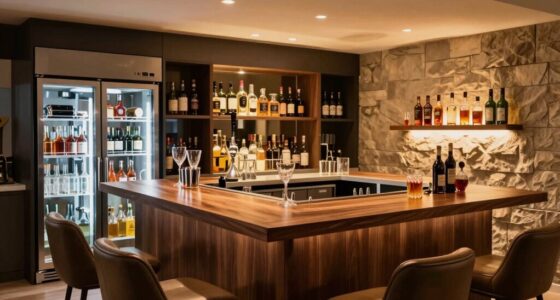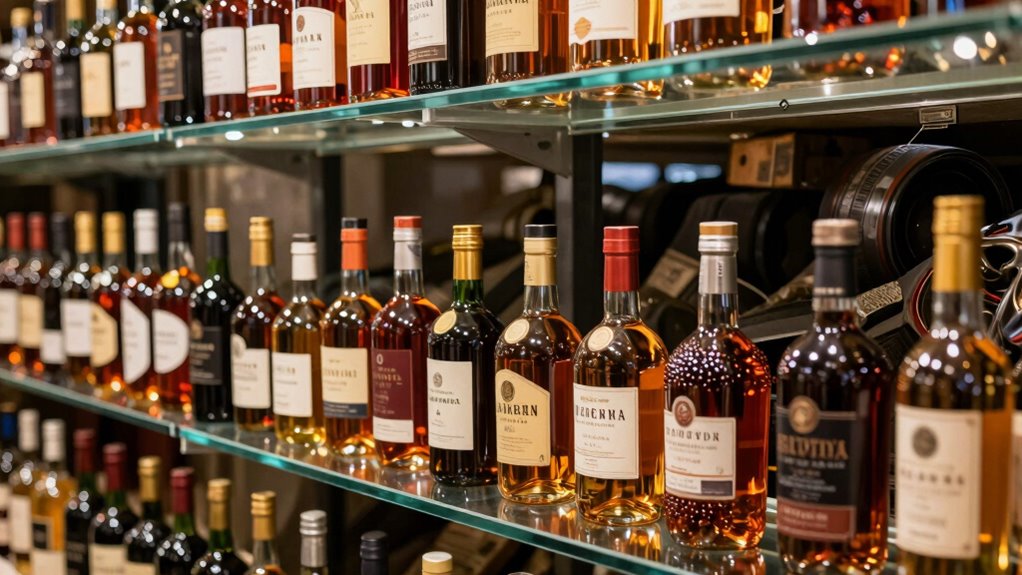

When managing liquor display and storage, you should be mindful of light and heat exposure. Display areas want lighting that enhances the bottles’ colors and labels but avoid direct sunlight or harsh lights that can cause fading and damage. Storage should be kept in cool, dark environments with stable temperatures to preserve quality and labels over time. Understanding how to balance visibility with protection helps your collection stay pristine—if you’re curious, you’ll find more tips on keeping your bottles in top condition.

Get the little things that make your day delivered free with Prime
- Fast, free delivery on millions of items
- Prime Video, Amazon Music and more included
- Member-only deals all year
Key Takeaways
- Displays use lighting to highlight bottles, but excessive or direct light can damage liquor over time.
- Storage areas should be dark and cool to prevent light-induced degradation and preserve bottle quality.
- Proper display lighting emphasizes aesthetics without exposing bottles to harmful heat or UV rays.
- Storage environments prioritize temperature stability and minimal light exposure to maintain aging conditions.
- Balancing visual appeal and preservation involves using indirect lighting and controlling environmental factors.
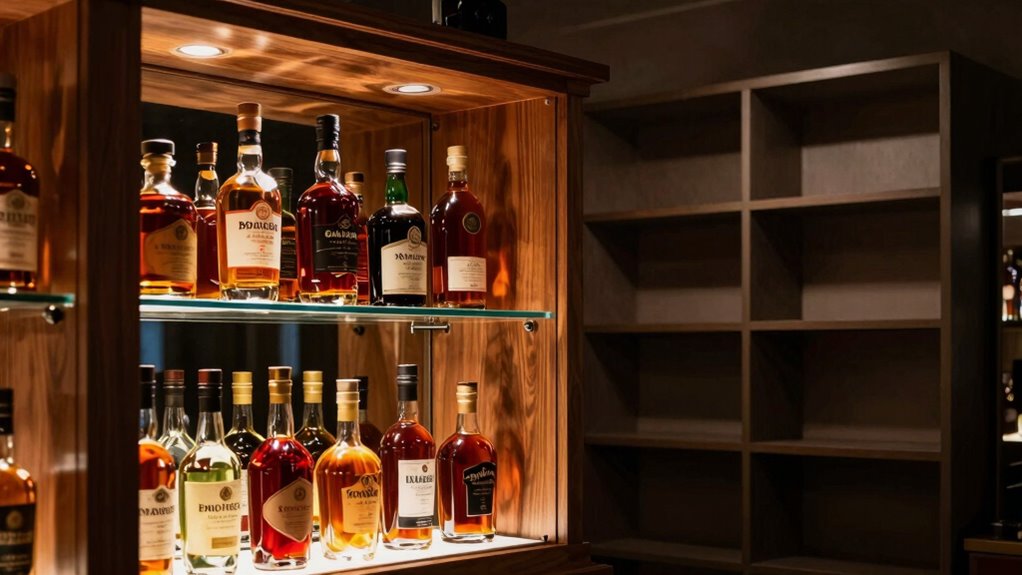
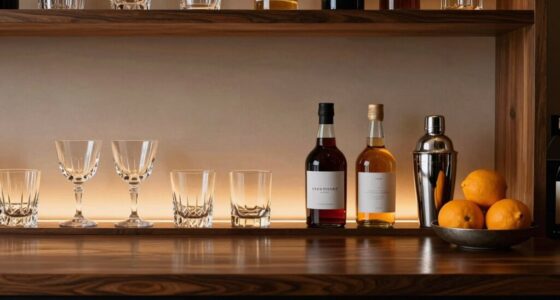
When it comes to managing your liquor collection, understanding the difference between display and storage is essential. If you want your bottles to look appealing while still maintaining their quality, how you arrange them matters. Glass shelf placement plays a critical role here. When you position your bottles on open shelves at eye level, you create an inviting display that showcases your collection’s diversity and character. But be mindful of how you arrange bottles—grouping similar types or brands can make your display more attractive and easier to browse. The clarity of glass shelves allows light to pass through, highlighting the bottles and drawing attention to their labels and colors. However, this setup isn’t just about aesthetics; it’s also about the ambient lighting effects. Proper lighting can turn your liquor display into a focal point, emphasizing the richness of the bottles and creating an inviting atmosphere. Soft, warm lights can enhance the amber hues of whiskey or the deep reds of wine, making your collection look more vibrant. But be cautious—exposure to direct sunlight or harsh lighting can damage your bottles over time, causing labels to fade and liquids to degrade. Using indirect or adjustable lighting helps you strike the right balance, illuminating your collection without exposing it to harmful rays.
On the other hand, when you think about storing your liquor, practicality and preservation take precedence over aesthetics. Proper storage involves keeping bottles in a cool, dark place, where temperature fluctuations are minimized. Here, the focus is on preventing heat and light from damaging the alcohol or labels. If you’re stacking bottles on shelves, make sure they are stored horizontally or upright, depending on the type of bottle and closure, to prevent corks from drying out or leaks. Unlike display setups, storage areas don’t require high visibility or ambient lighting effects; instead, they benefit from being tucked away in a wine cellar, closet, or basement with stable conditions. The key is avoiding exposure to heat sources, direct sunlight, or humidity that could compromise your collection’s integrity. While glass shelf placement may look appealing for display, it’s less suitable for storage unless the environment is carefully controlled. Proper storage ensures your bottles age gracefully and retain their quality over time, whereas a display is more about showcasing their beauty and character. Additionally, consider how proper lighting techniques can enhance the overall appeal of your space while still protecting your collection.
As an affiliate, we earn on qualifying purchases.
Frequently Asked Questions
How Does Lighting Specifically Affect Liquor Quality Over Time?
Lighting, especially UV radiation, can degrade liquor quality over time by breaking down delicate compounds in the alcohol. When exposed to constant light, temperature fluctuations can accelerate this process, causing flavor loss and spoilage. You should store liquor away from direct light to prevent UV damage and maintain its quality, as consistent, cool conditions help preserve the original taste and aroma.
What Types of Lighting Are Safest for Liquor Displays?
You should choose shelf illumination with LED lighting for liquor displays, as it’s the safest option. LED lights emit minimal heat and UV rays, which can degrade liquor over time. They also provide bright, even lighting without causing light damage. By using LED lighting, you protect your liquor’s quality while showcasing your products effectively, ensuring they stay fresh and appealing for longer periods.
Can Improper Storage Cause Chemical Changes in Liquor?
It’s no coincidence that improper storage can cause chemical changes in liquor, affecting its flavor and quality. When you neglect proper storage techniques, such as avoiding excessive heat and light, you risk disrupting the liquor’s chemical stability. Exposure to heat, sunlight, or fluctuating temperatures accelerates oxidation and can alter taste. To preserve the original quality, you must follow sound storage techniques, keeping bottles in cool, dark, and stable environments.
How Often Should Liquor Storage Conditions Be Checked?
You should check your liquor storage conditions at least once a month. Regular inspections help you monitor temperature fluctuations and humidity control, which are vital for preserving quality. Keep an eye out for any changes in storage environment, such as rising temperatures or excessive moisture, that could harm the liquor. Consistent checks guarantee your bottles stay in peak condition, preventing spoilage and maintaining the liquor’s flavor profile over time.
Are There Any Legal Regulations on Liquor Display Lighting?
Yes, there are legal restrictions on liquor display lighting. You need to follow display regulations that often limit the type, brightness, and placement of lights to prevent excessive exposure. These rules aim to reduce heat and light damage to the liquor, maintaining quality and complying with local laws. Make sure to check your specific jurisdiction’s regulations, as they vary, and always adhere to licensing requirements for responsible display practices.
As an affiliate, we earn on qualifying purchases.
Conclusion
When choosing between liquor display and storage, remember that appearances can be deceiving. While displays catch the eye, they can also trap light and heat, risking spoilage. Storage areas, though less glamorous, often provide a more stable environment to preserve quality. Don’t put all your eggs in one basket—balance both approaches to protect your collection. After all, a little caution can go a long way in ensuring your liquor remains in top shape for the long haul.
As an affiliate, we earn on qualifying purchases.
temperature controlled wine cellar
As an affiliate, we earn on qualifying purchases.
As an affiliate, we earn on qualifying purchases.
Halloween Picks
halloween
As an affiliate, we earn on qualifying purchases.