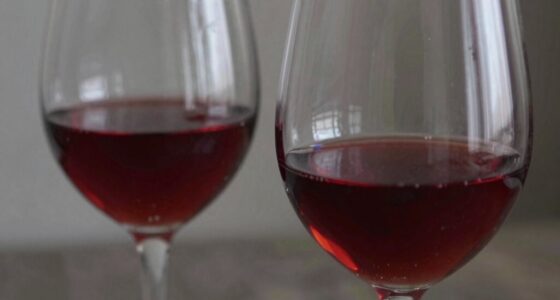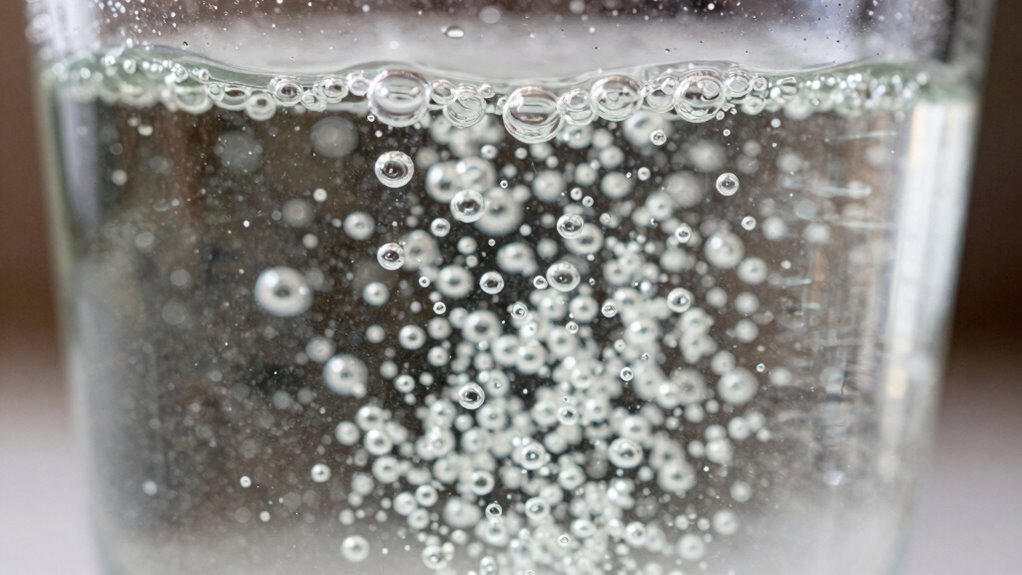
Nucleation is the process that forms tiny bubbles in your glass of soda or beer, starting at microscopic imperfections like scratches or dust. When conditions like temperature or pressure change, these imperfections help vapor molecules cluster together, creating small bubbles called nuclei. If these nuclei reach a critical size, they grow into visible bubbles; if not, they shrink away. Understanding this hidden process shows how tiny flaws and fluctuations lead to the bubbles you see. Keep exploring to discover more fascinating details behind this bubbly science.

Get the little things that make your day delivered free with Prime
- Fast, free delivery on millions of items
- Prime Video, Amazon Music and more included
- Member-only deals all year
Key Takeaways
- Nucleation is the process where tiny vapor bubbles form from liquid due to surface imperfections or disturbances.
- Surface imperfections like scratches or dust act as starting points, lowering the energy needed for bubble formation.
- Molecular clustering around imperfections creates nuclei that can grow into visible bubbles under favorable conditions.
- Bubble growth depends on factors like temperature, pressure, and surface conditions, influencing whether bubbles expand or collapse.
- Nucleation explains phenomena in beverages, boiling, cloud formation, and other natural or industrial processes.
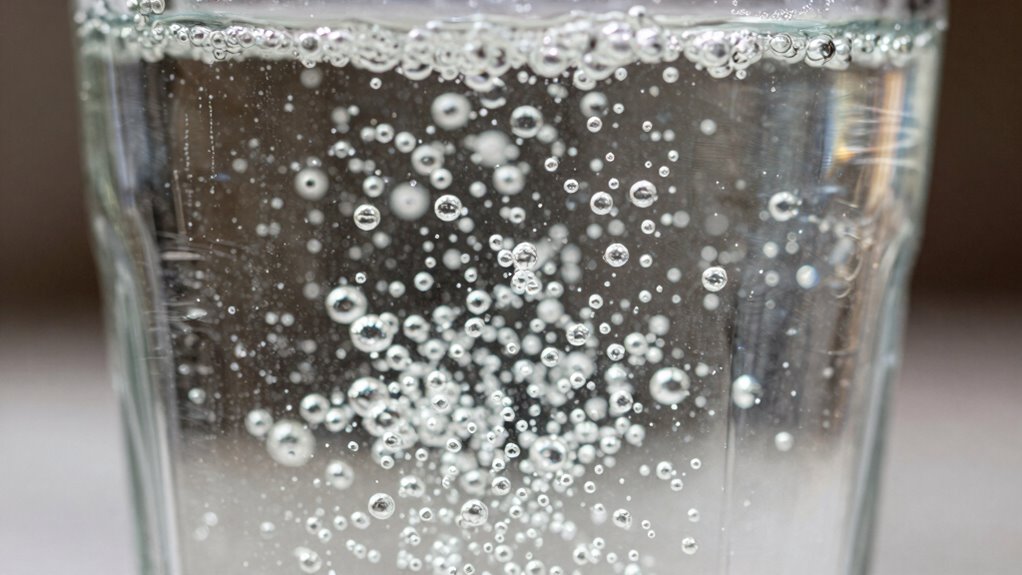
Nucleation Explained
Have you ever wondered how tiny droplets or particles begin to form from a liquid or vapor? It’s a fascinating process called nucleation, and it’s what leads to bubble formation in your glass of soda or beer. When the liquid is disturbed—say, by shaking or a sudden change in temperature—small pockets of vapor or gas start to appear within the liquid. These initial pockets are called nuclei, and they serve as the foundation for larger bubbles to grow. But what triggers these nuclei to form? It all comes down to surface imperfections and the way molecules interact at the microscopic level.
Surface imperfections play a vital role in nucleation. Imagine the surface of your glass or the inside of a bottle—tiny scratches, dust particles, or microscopic defects act as tiny starting points for bubble formation. These imperfections reduce the energy barrier needed for a new phase—like a vapor bubble—to develop. Without these imperfections, the formation of bubbles would require much higher energy, such as a significant increase in temperature or pressure. Instead, these surface irregularities provide a foothold, allowing vapor molecules to cluster more easily and form stable nuclei. Once these nuclei reach a critical size, they rapidly grow into bubbles, visibly rising through the liquid.
Surface imperfections act as starting points, lowering energy barriers for bubble formation and enabling rapid growth into visible bubbles.
The process begins when molecules in the vapor or liquid experience fluctuations, and some start to cluster around these surface imperfections. This clustering lowers the energy needed for the molecules to stay together as a bubble rather than dispersing back into the liquid. When enough molecules gather, a tiny bubble forms. If conditions are right—like having enough vapor pressure or lowering the external pressure—these bubbles expand. Conversely, if the conditions aren’t favorable, the bubbles shrink and disappear. This delicate balance between formation and collapse hinges on the temperature, pressure, and surface conditions within your glass.
Understanding bubble formation through nucleation isn’t just about liquids; it’s fundamental in many fields, from climate science to industrial processes. Whether it’s boiling water, carbonating beverages, or even the formation of clouds in the atmosphere, nucleation explains how tiny beginnings turn into visible phenomena. Home theater projectors can also demonstrate the principles of nucleation in unique ways, such as when creating visual effects that mimic bubbles rising. So, the next time you see bubbles rising in your drink, remember that they started from minuscule surface imperfections and molecular fluctuations—a tiny but powerful process shaping what you see and experience. Nucleation reveals how the smallest imperfections and fluctuations can lead to the big, bubbly spectacle you enjoy in your glass.
beer and soda glass nucleation science kit
As an affiliate, we earn on qualifying purchases.
As an affiliate, we earn on qualifying purchases.
Frequently Asked Questions
How Does Temperature Affect Bubble Formation During Nucleation?
Temperature dynamics play a vital role in bubble formation during nucleation. As you increase the temperature, bubble kinetics accelerate because warmer liquid lowers surface tension, making it easier for bubbles to form and grow. Conversely, cooler temperatures slow down bubble formation, resulting in fewer and smaller bubbles. So, by adjusting temperature, you directly influence how quickly and effectively bubbles nucleate and evolve in your drink.
Can Nucleation Occur in Liquids Other Than Soda or Beer?
You might be surprised, but nucleation can happen in many liquids beyond soda or beer. During fermentation processes, tiny bubbles form as carbon dioxide is released, and carbonation techniques rely on this natural process. Whether it’s sparkling wine, kombucha, or even carbonated water, bubbles nucleate when dissolved gases escape. These fascinating reactions make your drinks fizzy and lively, showing how nucleation is a universal phenomenon across various liquids and processes.
What Role Do Impurities Play in Bubble Nucleation?
Impurities play a vital role in bubble nucleation by serving as nucleation sites, where bubbles can form more easily. Different impurity types, like dust particles or rough surfaces, create tiny imperfections that trap gas and initiate bubble formation. When these impurities are present, they lower the energy needed for nucleation, making bubbles form more readily. So, your beverage’s purity level directly influences how and where bubbles appear.
Is Nucleation the Same in Natural and Synthetic Beverages?
Nucleation isn’t exactly the same in natural and synthetic beverages, but it’s close enough to make your drink sparkle like a jewel box. In both, bubbles form around impurities or added nucleation sites, enhancing flavor and boosting visual aesthetics. Natural beverages rely on natural impurities, while synthetic ones often include engineered nucleation agents. This process makes your drink more visually appealing and amplifies the flavor experience, whether natural or synthetic.
How Do Pressure Changes Influence Bubble Nucleation in Drinks?
Pressure changes directly influence bubble nucleation by altering supersaturation dynamics and surface tension effects. When you lower the pressure, the dissolved gases become less stable, increasing supersaturation and encouraging bubble formation. Conversely, increasing pressure suppresses nucleation by stabilizing dissolved gases. These pressure fluctuations modify the surface tension effects, making it easier or harder for bubbles to form and grow, which is why you see more fizz when opening a bottle of soda.
bubble formation science experiment set
As an affiliate, we earn on qualifying purchases.
As an affiliate, we earn on qualifying purchases.
Conclusion
Understanding nucleation helps you see why bubbles form in your glass and how they influence your drinking experience. Did you know that even tiny impurities can create thousands of bubbles, enhancing flavor and aroma? Recognizing this process lets you appreciate your beverage more deeply. So next time you enjoy a fizzy drink, remember that nucleation is the secret behind those lively bubbles, making every sip a fascinating science experiment. Cheers to science in your glass!
As an affiliate, we earn on qualifying purchases.
nucleation and bubble growth demonstration
As an affiliate, we earn on qualifying purchases.
As an affiliate, we earn on qualifying purchases.
Fall Picks
fall essentials
As an affiliate, we earn on qualifying purchases.