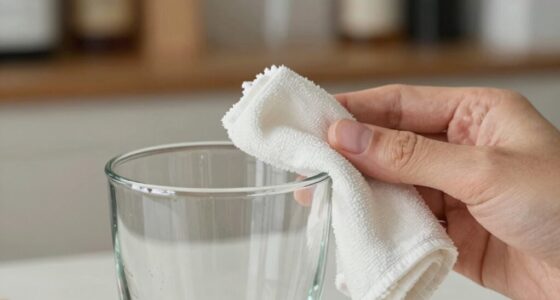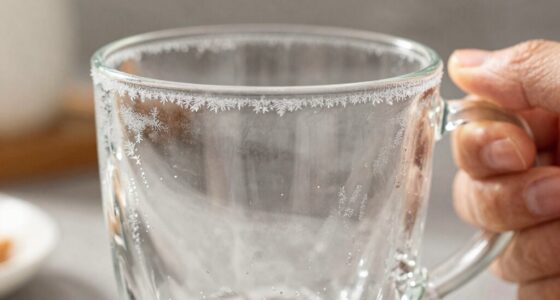
When you pour hot liquids into a cold glass, rapid heat transfer causes uneven expansion, creating stress that can crack or shatter the glass instantly. This is called warm glass shock, and it happens because the glass can’t expand gradually enough to handle the sudden temperature change. To avoid this, it’s important to warm the glass before pouring hot drinks. If you want to understand what makes this happen, keep exploring the science behind thermal expansion.

Get the little things that make your day delivered free with Prime
- Fast, free delivery on millions of items
- Prime Video, Amazon Music and more included
- Member-only deals all year
Key Takeaways
- Pouring hot liquids into cold glass causes rapid temperature transfer, leading to thermal stress and potential cracking.
- Uneven heating from sudden temperature changes prevents even expansion, increasing the risk of glass shattering.
- Cold or unpreheated glasses are more susceptible to thermal shock when exposed to hot liquids.
- Gradual warming of the glass reduces thermal expansion mismatch and prevents cracks.
- Proper heat management ensures the glass withstands hot liquids without breaking quickly.

When working with warm glass, sudden temperature changes can cause what’s known as “warm glass shock,” a frustrating phenomenon where the glass cracks or breaks unexpectedly. This happens because the glass undergoes rapid thermal expansion, which occurs when heated material expands quickly due to temperature transfer. If the heat isn’t applied gradually, the outer layers of the glass expand faster than the interior, creating stress that the material can’t handle. That stress leads to cracks, sometimes spreading quickly enough to shatter the entire piece.
Understanding thermal expansion is key to preventing warm glass shock. When glass heats unevenly, different parts of it expand at different rates, which means the surface and core are no longer in sync. The temperature transfer process—the movement of heat from the warmer outer layers to the cooler interior—must be controlled carefully. If heat is transferred too rapidly, the outer surface becomes much hotter than the inside, increasing the risk of stress fractures. You need to guarantee that heat spreads evenly throughout the glass by gradually increasing the temperature, giving the material a chance to adjust without sudden expansion.
Controlling heat transfer ensures even expansion, preventing cracks and breaking caused by thermal stress in glass.
This is especially important when you’re pouring hot liquids into a glass. If the glass isn’t preheated or designed to withstand thermal stress, the sudden contact with hot liquid causes rapid temperature transfer. The glass’s molecules are forced to move quickly, and if the expansion isn’t uniform, cracks form. That’s why pouring hot drinks into a cold glass often results in shattering—your glass isn’t evenly heated, and the thermal expansion mismatch causes stress.
To minimize this risk, you should warm your glass gradually before pouring hot liquids. For example, rinse it with warm water first, or let it sit at room temperature for a few minutes. When heating glass in an oven or microwave, do so slowly, avoiding sudden temperature jumps. This controlled heating allows heat to transfer evenly, reducing the likelihood of thermal stress.
Ultimately, the key to avoiding warm glass shock lies in controlling how heat moves through the glass. By understanding thermal expansion and managing temperature transfer carefully, you prevent uneven stresses that lead to cracks or breaks. This way, your drinks stay intact, and your glass remains unbroken—saving you the frustration of unexpected shattering. Additionally, similar principles apply to electric dirt bikes, where managing power output is crucial for optimal performance.
As an affiliate, we earn on qualifying purchases.
Frequently Asked Questions
Can Warm Glass Shock Occur With Plastic Cups?
Warm glass shock doesn’t happen with plastic cups because their plastic durability and heat resistance differ from glass. Plastic cups are designed to withstand temperature changes, so they’re less likely to crack or shatter when hot liquids are poured in. However, if the plastic isn’t high-quality or isn’t labeled as heat-resistant, it could warp or become deformed. Always check the plastic’s heat resistance before pouring hot drinks to avoid any damage.
How Quickly Does Glass Typically Crack From Thermal Shock?
Think of your glass as a delicate dance partner, reacting swiftly to sudden changes. When exposed to thermal expansion, cracks can propagate in moments—sometimes in seconds, sometimes minutes. The speed depends on the glass’s thickness, temperature difference, and material quality. Rapid temperature shifts cause stress that quickly leads to cracking, making it essential to warm glasses gradually. Otherwise, the shock can shatter your confidence—and your glass—in an instant.
Does Room Temperature Affect the Likelihood of Glass Shock?
Yes, room temperature affects the likelihood of glass shock. If the ambient temperature is markedly different from the glass’s previous temperature, thermal conductivity causes rapid heat transfer, increasing the risk of cracking. When you pour a hot or cold drink into a glass at room temperature, the temperature difference strains the material. To prevent shock, let the glass reach room temperature or gradually adjust the temperature of your drink.
Are Certain Glass Types More Resistant to Thermal Shock?
Some glass types are like seasoned warriors against thermal shock, thanks to their material composition and surface treatment. Borosilicate glass, in particular, acts like a shield, resisting rapid temperature changes. Its composition with silica and alumina forms a resilient armor, while surface treatments can add extra layers of defense. You’ll find these glasses more capable of surviving the fiery dance of hot and cold, keeping your drinks intact and your moments worry-free.
Can You Repair a Glass Damaged by Thermal Shock?
You can’t really repair a glass damaged by thermal shock because its glass composition has been compromised, making it structurally weaker. Thermal resilience varies among glass types, but once cracks or breaks occur, the damage is generally irreversible. Instead, focus on preventing thermal shock by choosing glasses with higher thermal resilience and avoiding rapid temperature changes. Proper handling and selecting heat-resistant glass can help you avoid such damage altogether.
As an affiliate, we earn on qualifying purchases.
Conclusion
Remember, your glass is more than just a vessel—it’s a mirror of your care. When it’s warm, it’s like a fragile heart, easily shattered by neglect. Keep your drinks cool and your glasses steady, and you’ll preserve their spirit and your moment. Don’t let the warmth betray you; instead, cherish the small details that guard your pleasures. Like a well-tended garden, it’s the little things that keep your happiness alive and thriving.
As an affiliate, we earn on qualifying purchases.
As an affiliate, we earn on qualifying purchases.
Fall Picks
fall essentials
As an affiliate, we earn on qualifying purchases.