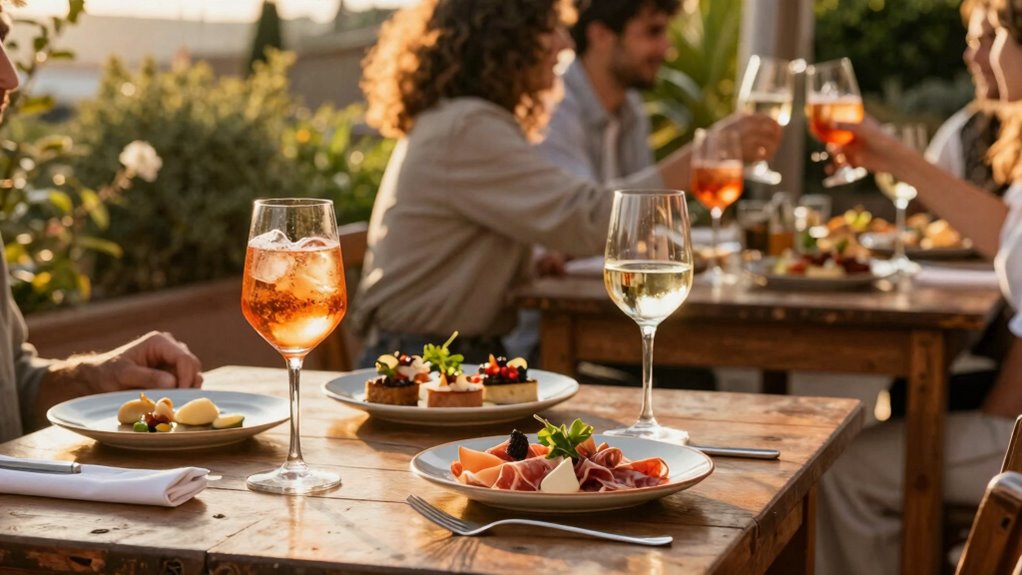
You’ll notice that aperitif timing varies across regions because it reflects local customs, lifestyle, and climate. In Italy, late afternoons mark a shift from work to socializing, while France prefers a later, more refined approach. Spain starts earlier with lively gatherings, and Greece keeps things flexible, blending with daily life. Understanding these differences offers insight into each culture’s values around food, drink, and community. Keep exploring, and you’ll discover how these traditions deepen your appreciation of local social bonds.

Get the little things that make your day delivered free with Prime
- Fast, free delivery on millions of items
- Prime Video, Amazon Music and more included
- Member-only deals all year
Key Takeaways
- Regional aperitif timings reflect local social routines and cultural norms, shaping how communities gather and socialize.
- The timing indicates the social atmosphere, from lively Spanish evenings to refined French late afternoons.
- Food pairings and customs are aligned with regional timing, enhancing cultural identity and shared experiences.
- Early or late hours mirror broader values like work-life balance, moderation, and community spontaneity.
- Understanding timing deepens appreciation of regional traditions and enhances social interactions during aperitif moments.
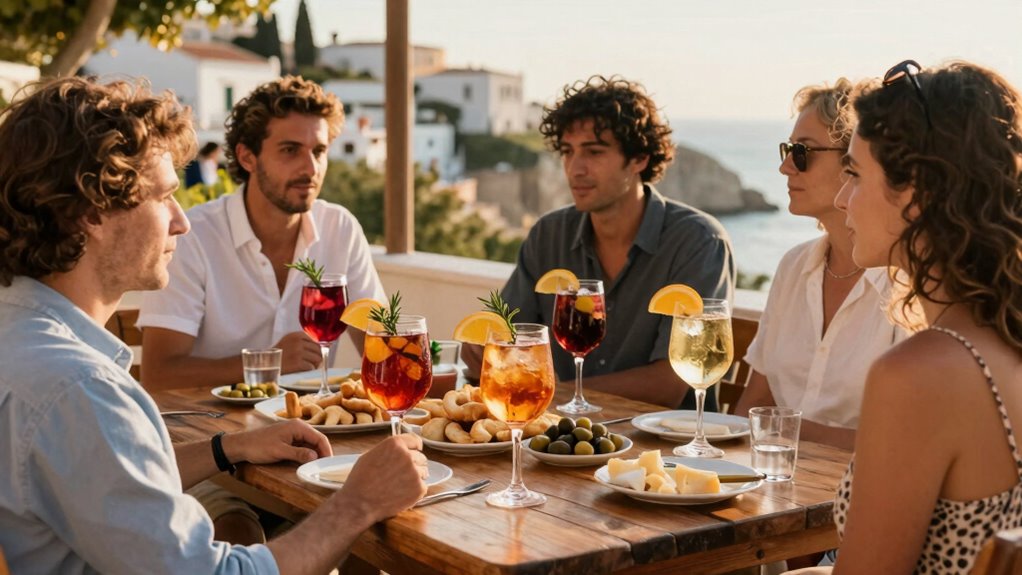
Have you ever wondered how the tradition of enjoying aperitifs varies across different regions? It’s fascinating to see how local beverage traditions and social drinking customs shape the way people approach this pre-meal ritual. In some places, aperitifs are more than just a drink; they’re a cultural expression that reflects local history, climate, and social norms. The timing of when you enjoy these drinks isn’t random—it’s embedded in the rhythm of daily life and social interactions. For example, in Italy, aperitifs often start around 6 or 7 p.m., serving as a bridge between work and dinner. Here, the focus isn’t just on the drink itself but on the convivial atmosphere it creates. People gather at local bars or cafes, sharing small bites and lively conversations, emphasizing the importance of social drinking customs. The Italian tradition highlights how aperitifs function as a communal activity, encouraging connections and relaxation before the evening meal.
In France, aperitif hours tend to be slightly later, around 7 or 8 p.m., often accompanied by cheese, charcuterie, or olives. The French approach emphasizes elegance and moderation, aligning with their broader appreciation for culinary refinement and balance. This regional variation underscores how the timing of aperitivos can reflect cultural attitudes toward food, drink, and social interaction. Meanwhile, in Spain, the concept of “tapas” often overlaps with aperitif culture, and social drinking occurs earlier, sometimes starting around 7 p.m., with lively gatherings that extend into the night. The Spanish prioritize shared plates and lively conversation, making the timing of their aperitifs integral to their festive, family-oriented social customs.
In contrast, in some Mediterranean countries like Greece, aperitifs might be enjoyed at more flexible times, often in the late afternoon or early evening, depending on local routines. Here, the emphasis is on relaxed, spontaneous gatherings that blend with daily life. Across these regions, you see that the timing of enjoying aperitifs isn’t just about digestion or appetite stimulation; it’s deeply tied to local customs and the social fabric of the community. Whether it’s the early evening in Italy, the late afternoon in Greece, or the slightly later hours in France, each region’s approach to timing reveals a lot about their social values and cultural identity. Additionally, understanding these cultural expressions can enhance our appreciation for diverse drinking customs. So, next time you raise a glass, remember that the timing and tradition behind it are what make the experience truly meaningful.
As an affiliate, we earn on qualifying purchases.
Frequently Asked Questions
How Do Aperitif Customs Differ Between Urban and Rural Areas?
In urban areas, you’ll notice aperitifs lean towards urban elegance, with sophisticated cocktails and stylish settings. In contrast, rural communities emphasize rural authenticity, often favoring local wines or simple drinks shared among friends. You might find more formal, timed aperitif hours in cities, while in rural places, the tradition is more relaxed and spontaneous. Your experience varies based on these regional nuances, reflecting the different social and cultural vibes.
Are There Specific Foods Traditionally Paired With Aperitifs in Each Region?
You’ll find that regional food pairings with aperitifs vary, reflecting local flavors and cultural dining traditions. In France, you might enjoy cheeses and charcuterie, while in Spain, olives and tapas are common. Italy often pairs aperitifs with small bites like bruschetta or nuts. These traditional pairings enhance the drinking experience, showcasing regional ingredients and customs that make each area’s aperitif culture unique and memorable.
How Have Modern Lifestyles Influenced Traditional Aperitif Timing?
Modern lifestyles have shifted the traditional timing of aperitifs, driven by cultural shifts and changing beverage preferences. You now find yourself snacking or sipping sooner or later than customary, often influenced by busy schedules and casual settings. This flexible approach reflects how contemporary routines disrupt classic aperitif timings, allowing for spontaneous socializing and personalized drinking moments, ultimately reshaping the age-old art of anticipation and timing in aperitif culture.
What Role Does Climate Play in Shaping Aperitif Practices Regionally?
Climate influence and seasonal variations notably shape your regional aperitif practices. In warmer regions, you might enjoy lighter, invigorating drinks during hot summers, while cooler climates call for richer, warming beverages in winter. These climate-driven adaptations guarantee your aperitif experience remains enjoyable and appropriate throughout the year. Regional weather patterns dictate the timing and type of drinks you savor, highlighting how climate shapes your local aperitif customs and traditions.
Are There Regional Variations in Aperitif Etiquette or Social Norms?
Think of aperitif etiquette as a tapestry woven with vibrant cultural influences and deep-rooted historical traditions. You’ll find that regional variations are like different flavors in a recipe, each with unique social norms shaping how and when you enjoy your drinks. In France, for example, it’s about elegance and conversation, while in Spain, it’s lively and communal. These customs reflect local history, making every aperitif experience rich and distinct.
French cheese and charcuterie platter
As an affiliate, we earn on qualifying purchases.
As an affiliate, we earn on qualifying purchases.
Conclusion
Understanding aperitif culture by region helps you appreciate the timing, the tradition, and the social ritual behind each sip. It’s about more than just drinks; it’s about connection, conversation, and community. Embrace the diversity, enjoy the moments, and savor the customs. Whether you’re in France, Italy, or Spain, you’re part of a shared experience. So, toast to the timing, cherish the tradition, and celebrate the culture—because every sip tells a story.
As an affiliate, we earn on qualifying purchases.
Mediterranean wine and snack set
As an affiliate, we earn on qualifying purchases.
As an affiliate, we earn on qualifying purchases.
Halloween Picks
halloween
As an affiliate, we earn on qualifying purchases.