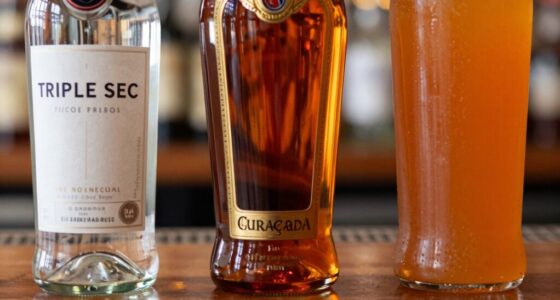
Even though both cocktails share gin, citrus, simple syrup, and soda water, they give very different vibes. A Collins is elegant, served tall in a slender glass, offering a smooth, leisurely sip that highlights presentation and tradition. In contrast, a Fizz feels more casual and lively, with a bubbly, spontaneous feel, often in a highball glass. Exploring these differences reveals the unique history and style behind each drink—there’s more to uncover if you keep going.

Get the little things that make your day delivered free with Prime
- Fast, free delivery on millions of items
- Prime Video, Amazon Music and more included
- Member-only deals all year
Key Takeaways
- Collins is served in a tall, slender glass for an elegant, leisurely experience, while Fizz uses versatile glasses for a casual, bubbly feel.
- Collins emphasizes presentation and sophistication, whereas Fizz prioritizes quick, lively refreshment.
- Both drinks share ingredients but differ in historical context and traditional preparation standards.
- Collins offers a structured, refined sipping experience; Fizz provides a spontaneous, effervescent burst of flavor.
- Glassware and garnishes reinforce Collins’ elegance versus Fizz’s casual, spontaneous vibe.

When it comes to invigorating citrus-based cocktails, Collins and Fizz often get lumped together, but their differences are more than just in name. Both drinks share ingredients like gin, lemon or lime juice, simple syrup, and soda water, yet they deliver distinct experiences. To understand why, it’s helpful to look at their historical origins and glassware variations. The Collins, for instance, traces back to the late 19th century, originating from a bartender’s mistake or perhaps a variation of earlier gin drinks. Its creation is often linked to a bartender named John Collins, who supposedly served a mixture of gin, lemon, sugar, and soda in a tall glass. Over time, this evolved into the classic Tom Collins, with specific preparation and presentation standards. Meanwhile, the Fizz has even older roots, dating back to the 19th century as well, but it was primarily associated with the use of carbonated water to create a refreshing, effervescent drink. The Fizz was initially more of a general term for cocktails with a foamy or fizzy quality, and it often featured a wider variety of spirits beyond gin.
When it comes to glassware variations, these drinks also differ. The Collins is typically served in a tall, slender Collins glass, which emphasizes its length and carbonation. Its shape helps maintain the drink’s effervescence while showcasing the vibrant colors of citrus and garnishes like cherries or lemon slices. On the other hand, Fizzes can be served in various glassware, including highball glasses or even smaller, more compact options. The key is that Fizzes emphasize a quick, bubbly refreshment, and the glass choice often reflects that intention. Some bartenders prefer a more versatile glass for Fizzes, while others stick to the classic highball to accentuate the drink’s light, airy feel.
Despite sharing ingredients, the historical context and glassware choices give each drink a unique identity. The Collins feels more elegant and structured, perfect for leisurely sipping in a tall glass that highlights its sophistication. The Fizz, however, leans toward a casual, bubbly burst of refreshment, often served in versatile glassware that emphasizes its spontaneous, lively nature. When you understand these subtle differences, you’ll appreciate not just what’s in your glass but the story and tradition behind each pour.
Products Worth Considering

Roborock Qrevo S Pro Robot Vacuum and Mop, 18,500 Pa Suction

Philips Hue Play HDMI Sync Box 4K + 65 Play Gradient Smart TV Strip Light

Hisense 43-Inch S5 DécoTV Series 4K UHD Smart Fire TV with Hi-QLED Color, Dolby Vision and Atmos (43S5QF, 2026 Model)
As an affiliate, we earn on qualifying purchases.
Frequently Asked Questions
Which Cocktail Is More Popular Among Bartenders?
You’ll find bartenders often favor the Collins over the Fizz, mainly due to its historical origins and balanced flavor profile. The Collins has a longer tradition, making it a classic choice, while the Fizz’s bubbly texture offers a invigorating twist. If you ask bartenders, they tend to prefer the Collins for its versatility and historic appeal, though both drinks serve different moods and occasions.
Can Collins and Fizz Be Made Alcohol-Free?
Can you make Collins and Fizz cocktails alcohol-free? Absolutely. Non-alcoholic adaptations are easy, swapping spirits for flavorful juices or soda. You’ll notice flavor profile differences—without alcohol, these drinks tend to be more invigorating and citrus-forward. Do you prefer a tangy, bubbly drink? Then try a mock Collins or Fizz using sparkling water, lemon juice, and your favorite fruit juices for a delightful, alcohol-free experience.
How Do Glassware Choices Affect the Drink’s Feel?
Your choice of glassware impacts the drink’s feel by influencing the overall experience. Consider glass texture—smooth or textured glasses can change the way you perceive the drink. Using proper pouring techniques, like gentle tilting, helps maintain carbonation and presentation. A tall, slender Collins glass feels light and invigorating, while a fizz served in a rounded glass offers a more substantial, bubbly sensation, enhancing the drink’s character and enjoyment.
Are There Regional Variations of These Drinks?
You’ll find regional variations of these drinks, shaped by local ingredients and cultural influences that give each a unique charm. In coastal areas, fresh herbs and fruits add brightness, while in other regions, richer spirits or regional sweeteners subtly alter the flavor. These differences evoke a sense of place, making each sip a journey into local traditions. Embrace these variations—they deepen your appreciation for the diverse, vibrant world of cocktails.
What Are Some Recommended Garnishes for Each?
For a Collins, you might add fruit twists like a lemon or cherry, along with herb garnishes such as mint or basil, to enhance its bright, citrusy flavor. For a Fizz, consider a lime wedge or cucumber slice as a fruit twist, and fresh herbs like thyme or rosemary to add aromatic depth. These garnishes not only elevate the drinks visually but also complement their unique, invigorating profiles.
Conclusion
So, when you choose between a Collins and a Fizz, remember they’re like two sides of the same coin—sharing ingredients but offering entirely different experiences. One invites refreshment, the other a sparkling surprise. It’s a gentle reminder that even with the same elements, your perception shapes the whole. Like life itself, it’s all about how you mix and serve what you’ve got—sometimes, the magic lies in the unexpected twist.