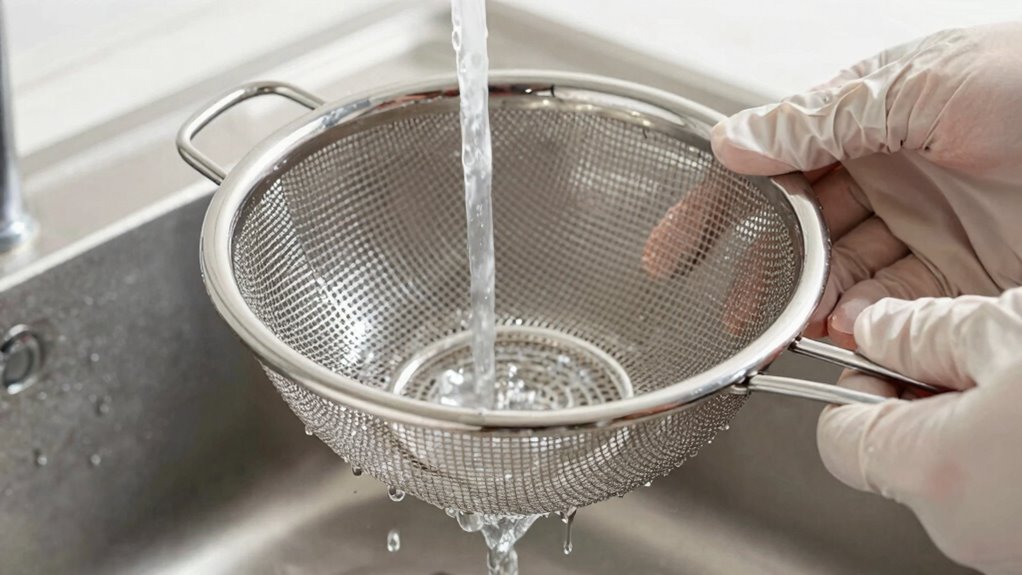

To clean a strainer without bending it, handle it gently by soaking it in warm water with a little dish soap to loosen debris. Use a soft-bristled toothbrush or a delicate cleaning brush and work in circular motions, avoiding harsh scrubbing. Rinse thoroughly, then pat dry with a soft towel to prevent rust. Store it in a dry place to maintain its shape—keep going for more tips on keeping your strainer in top condition.
Open a free Amazon Business account
Business pricing, bulk buying and tax-exempt orders.
As an affiliate, we earn on qualifying purchases.
Key Takeaways
- Use warm water with a small amount of dish soap and soak the strainer to loosen debris gently.
- Clean with a soft-bristled toothbrush or delicate brush in circular motions to avoid bending.
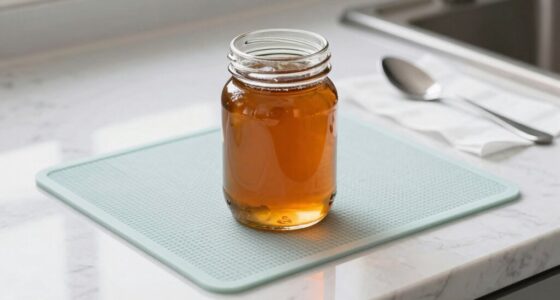
- Consider soaking in a vinegar and water solution for stubborn residue, then rinse thoroughly.
- Shake off excess water and pat dry with a soft towel, avoiding air drying in direct sunlight.
- Handle the strainer gently during cleaning and drying to maintain its original shape and prevent damage.
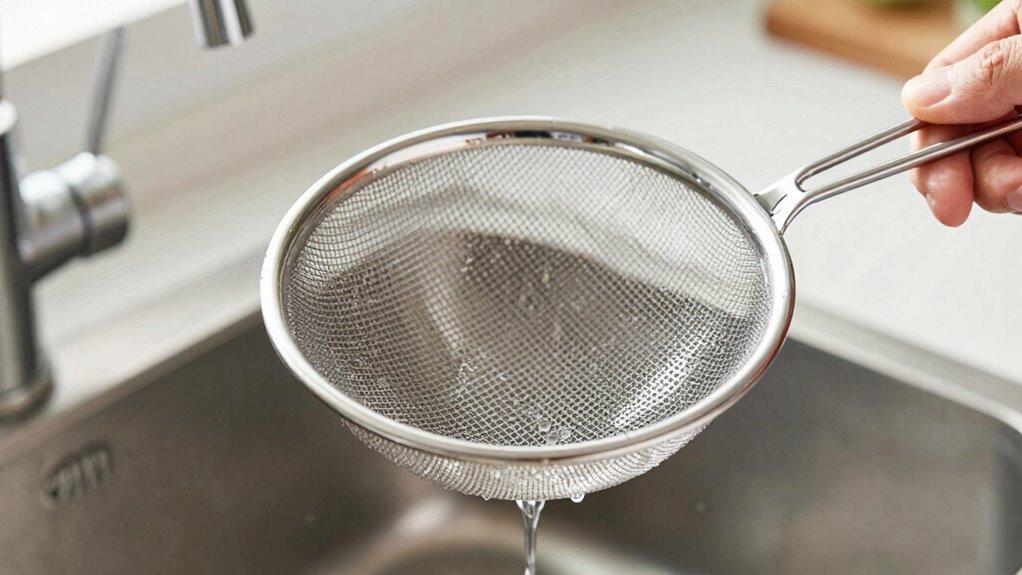
Cleaning a strainer without bending it can be tricky, especially if you want to maintain its shape and effectiveness. When you’re handling kitchen cleaning, it’s essential to preserve your tools so they continue to work properly. A bent or damaged strainer won’t filter as effectively, making it harder to keep your cookware and ingredients clean. Proper equipment maintenance is key to extending the lifespan of your tools and ensuring your kitchen stays hygienic.
To start, avoid using harsh brushes or abrasive scrubbers that could warp or damage the fine mesh. Instead, opt for gentle cleaning methods that focus on removing trapped debris without applying too much force. Fill a basin or sink with warm water, adding a small amount of dish soap. Submerge the strainer and let it soak for several minutes. This loosens dried-on food particles and grease, making them easier to remove without scrubbing aggressively. If stubborn residue remains, you can use a soft-bristled toothbrush or a dedicated cleaning brush designed for delicate mesh. Always work gently in a circular motion, and steer clear of anything that could bend or stretch the wire.
Avoid harsh brushes; use gentle soaking and soft brushes to clean delicate mesh without bending.
For more stubborn buildup, consider using a mixture of vinegar and water. Vinegar acts as a natural degreaser and helps dissolve mineral deposits, ensuring your strainer remains in top shape. Soak the strainer in this solution for 10–15 minutes, then rinse thoroughly with warm water. This process not only cleans the mesh but also helps in maintaining the strainer’s original shape, preventing warping over time. When rinsing, make sure to remove all soap and vinegar residues to avoid any lingering odors that could transfer to your food. Additionally, using gentle cleaning methods can significantly reduce the risk of damage to your strainer.
Drying your strainer properly is just as important as cleaning it. After rinsing, shake off excess water and pat it dry with a soft towel. Avoid air drying in direct sunlight or using a rough cloth, as these can cause warping or damage. Keeping your strainer dry and stored in a safe, dry place helps prevent rust and deterioration, which are common issues in kitchen cleaning and equipment maintenance.
delicate mesh strainer cleaning brush
As an affiliate, we earn on qualifying purchases.
As an affiliate, we earn on qualifying purchases.
Frequently Asked Questions
Can I Use a Dishwasher to Clean My Strainer?
Yes, you can use a dishwasher to clean your strainer, but it depends on the strainer material. Check if it’s dishwasher safe to avoid damage. Dishwasher safety varies with materials like stainless steel or silicone, which usually handle the heat and detergent well. Avoid putting delicate or plastic strainers that aren’t dishwasher safe in the dishwasher to prevent warping or damage. Always follow manufacturer instructions for the best results.
How Often Should I Clean My Strainer?
You should clean your strainer after each use or at least once a week to prevent buildup. Regular cleaning with simple techniques like rinsing under hot water and scrubbing with a soft brush keeps it in good shape. Incorporate these maintenance tips into your routine to avoid bending or damaging the mesh. Consistent cleaning guarantees peak performance and extends your strainer’s lifespan, making your kitchen chores easier and more effective.
What Household Items Are Best for Cleaning a Strainer?
Ever wonder what household items work best for cleaning a strainer? You should try gentle brushing with a soft toothbrush or a sponge to avoid bending it. Natural remedies like baking soda and vinegar are great for dissolving stubborn grime. These methods are safe, effective, and don’t damage your strainer. So, next time it’s clogged, remember that simple household items can restore your strainer’s cleanliness without bending or damaging it.
Will Cleaning Solutions Damage the Strainer Material?
Cleaning solutions can damage your strainer if they’re too harsh or incompatible with its material. For effective strainer maintenance, use gentle cleaning techniques like soaking in warm soapy water or vinegar solution. Avoid abrasive cleaners or steel wool, which can scratch or warp the material. Always check the manufacturer’s instructions to confirm your chosen cleaning method won’t cause damage, helping your strainer stay in good condition longer.
How Do I Prevent My Strainer From Clogging Frequently?
Think of your strainer as a loyal guard dog—regular training keeps it alert and effective. To prevent frequent clogging, practice good strainer maintenance by rinsing it after each use and removing debris promptly. Use a fine mesh to catch smaller particles and avoid overloading it. Clogging prevention also involves checking for buildup and clearing it out regularly, so your strainer stays efficient and ready to serve without unnecessary hassle.
soft-bristled toothbrush for kitchen strainer
As an affiliate, we earn on qualifying purchases.
As an affiliate, we earn on qualifying purchases.
Conclusion
So, next time you need to clean your strainer without bending it, try soaking it in warm, soapy water first. This softens stubborn debris and makes removal easier, proving the theory that gentle methods often work best. Don’t rely solely on scrubbing; instead, use a brush or toothbrush for delicate cleaning. This approach confirms that patience and proper tools are key to maintaining your strainer’s shape and effectiveness—no bending required.
vinegar and water cleaning solution for strainers
As an affiliate, we earn on qualifying purchases.
As an affiliate, we earn on qualifying purchases.
As an affiliate, we earn on qualifying purchases.
NFL season / tailgating Picks
team gear
As an affiliate, we earn on qualifying purchases.