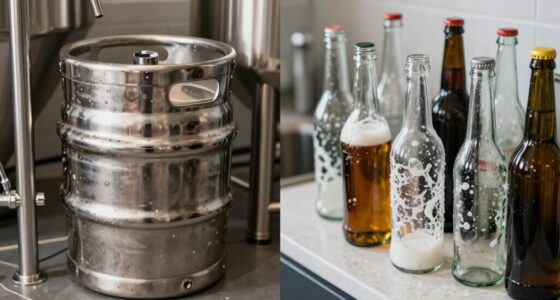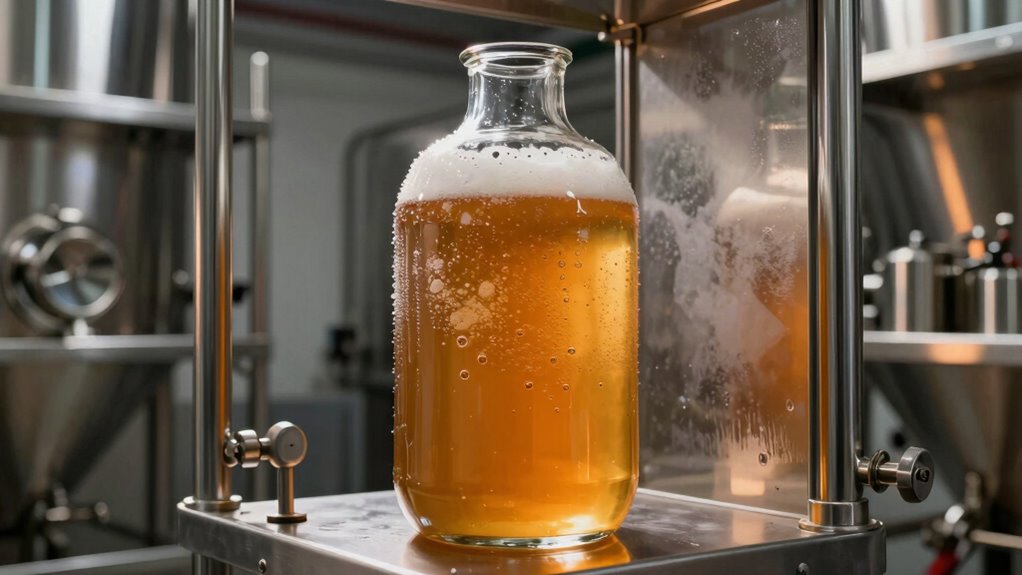

Cold crashing is a technique where you lower the temperature of your beer after fermentation slows to help clear it up by making yeast and debris settle out faster. It usually lasts 1-2 days and results in a cleaner, crisper final product. You might skip cold crashing if you’re kegging with filters, want some yeast in your beer for flavor, or plan to keep it hazy. Want to find out more? Keep exploring to discover when and how to use this method.
Key Takeaways
- Cold crashing lowers fermentation temperature to promote yeast and particulates to settle, improving beer clarity.
- It is typically done after fermentation slows to avoid stalling yeast activity.
- Cold crashing enhances clarity, sedimentation, and removes unwanted flavors and hop particles.
- Skip cold crashing if using fine filtration, aiming for hazy beer, or if timing/equipment prevent it.
- Proper timing ensures effective cold crashing without compromising fermentation or flavor goals.
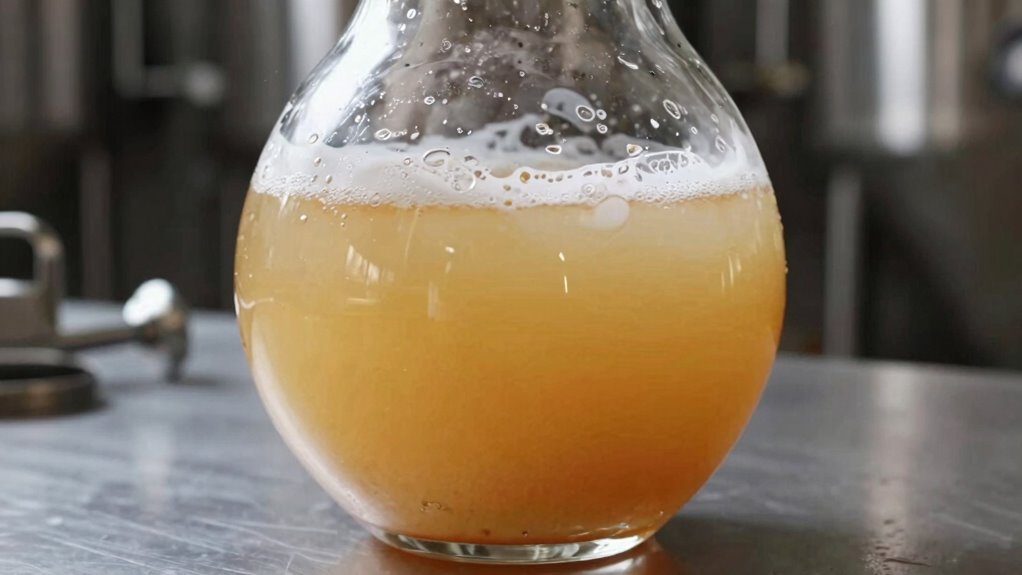
Cold Crash Explained
Ever wondered what cold crashing in brewing really entails? It’s a technique that involves lowering the fermentation temperature markedly after your primary fermentation has slowed down. The goal is to clarify your beer by encouraging yeast and other particulates to settle out more rapidly. When you cold crash, you typically reduce the temperature to near-freezing levels for a day or two. This process doesn’t just improve clarity; it also helps remove unwanted flavors and hop particles, resulting in a cleaner, more polished final product. But knowing the right time and how to do it properly hinges on understanding what’s happening behind the scenes with fermentation temperature and yeast activity.
During fermentation, yeast activity is at its peak when the fermentation temperature is kept within the ideal range for your yeast strain. This is when yeast consumes sugars and produces alcohol and carbon dioxide. Once fermentation slows, usually after the most vigorous phase, yeast activity diminishes. Cold crashing is usually done at this point, when fermentation has nearly completed, to help yeast and solids settle out more efficiently. If you cold crash too early, you risk stalling fermentation because the yeast may become dormant or less active at lower temperatures. Conversely, waiting too long might mean missing out on the benefits of clearer beer.
When you decide to cold crash, you lower the temperature gradually or directly, aiming for just above freezing. This encourages yeast and other particulates to flocculate and sink to the bottom of your fermenter. The process is swift—often within 24 to 48 hours, your beer should look noticeably clearer. This is especially useful if you plan to bottle or keg your beer soon, as it reduces sediment and minimizes the amount of yeast that could cause off-flavors in the package. However, some brewers prefer to skip cold crashing altogether, especially if they’re kegging and can perform a fine filtration, or if they like a bit of yeast in the beer for flavor and carbonation. Additionally, understanding the importance of yeast activity can help you make more informed choices about when to implement cold crashing in your brewing process.

Draft Brewer® Cold Crash Keezer Kit (2 Pack) – Complete Beer Faucet Kit with Tubing for Building a Homemade Kegerator or Keezer
2 PACK – Cold Crash, the first-ever essential kit for building your own keezer.
As an affiliate, we earn on qualifying purchases.
As an affiliate, we earn on qualifying purchases.
Frequently Asked Questions
Can Cold Crashing Be Done With All Beer Styles?
Cold crashing can be done with most beer styles, but it’s especially useful for those with yeast sediment or delicate flavors. By chilling your beer, you help the yeast and sediment settle faster, making it easier to clarify the beer. It also helps preserve flavors by reducing unwanted sediment and off-flavors. However, some styles, like barrel-aged beers, might not benefit from cold crashing, so consider the style and desired outcome before doing it.
How Long Should Cold Crashing Last for Best Results?
You should cold crash your beer for about 24 to 48 hours to optimize fermentation stability and preserve flavor. This timeframe allows the yeast and particles to settle without risking flavor loss. Longer cold crashing can lead to clearer beer, but if you go too long, you might impact delicate flavors. Keep an eye on your beer’s clarity and profile, adjusting the duration based on your desired outcome.
Does Cold Crashing Affect Beer Clarity Over Time?
Yes, cold crashing improves beer clarity over time by promoting yeast sedimentation, which helps remove particles that cloud your brew. It also aids in flavor preservation by reducing unwanted fermentation byproducts. As a result, your beer becomes clearer and cleaner, enhancing its overall profile. To get the best results, cold crash for about 24-48 hours, ensuring maximum clarity without compromising flavor.
Is Cold Crashing Necessary for Homebrewing?
Cold crashing is like hitting pause on your brew’s fermentation, helping yeast sedimentation and clarity. It’s not strictly necessary, but it can improve your beer’s appearance and taste. By slowing fermentation speed, cold crashing encourages yeast and particles to settle faster, making cleanup easier. If you’re aiming for a clear, professional look, cold crashing is worth trying. Otherwise, you can skip it without compromising your brew’s flavor.
What Are Common Mistakes to Avoid During Cold Crashing?
During cold crashing, avoid disrupting fermentation by lowering the temperature too quickly, which can stress the yeast. Don’t open the fermenter unnecessarily, as this can introduce oxygen and cause contamination. Make sure your temperature drop promotes proper yeast flocculation without agitation, preventing fermentation disruption. Also, don’t rush the process; give yeast time to settle properly for clearer beer. These mistakes can impact clarity, flavor, and overall quality of your brew.

Craft A Brew – Gelatin Finings – For Wine & Beer Brewing – Reduces Haze & Cloudiness – Effective Clarifier – 1 oz Package
CLARIFY YOUR BREWING – Try our Gelatin Finings to reduce haze and cloudiness when brewing beer and wine….
As an affiliate, we earn on qualifying purchases.
As an affiliate, we earn on qualifying purchases.
Conclusion
Understanding cold crashing helps you achieve clearer, more refined beer by settling unwanted particles. It’s an essential step, especially if you’re aiming for a professional-quality brew. However, skipping it can save time, though it might result in a slightly cloudier final product. Did you know that cold crashing can remove up to 90% of residual yeast and sediment? That’s a significant improvement, making your brew not only look better but taste cleaner too.

Inkbird ITC-308 Digital Temperature Controller 2-Stage Outlet Thermostat Heating and Cooling Mode Carboy Homebrew Fermenter Greenhouse Terrarium 110V 10A 1100W
【Easy to use】 Supports °C/°F display.
As an affiliate, we earn on qualifying purchases.
As an affiliate, we earn on qualifying purchases.

Inline Beer Filter, 100 Mesh 150 Micron Water Filter Plastic T Strainer Filtration Device, Gravity Feeding of Siphon Tube Brewing for Home Brewing Supplies (100 Mesh 150 Micron)
TASTE UPGRADE WITHOUT THE FUSS: This inline beer filter is your secret weapon for smoother sips. It traps…
As an affiliate, we earn on qualifying purchases.
As an affiliate, we earn on qualifying purchases.