To prevent bottle bombs, you need to accurately calculate your priming sugar based on your beer volume and desired carbonation level. Use formulas or calculators to determine the right amount, considering factors like temperature and sugar type. Too much sugar causes over-carbonation, risking explosions, while too little results in flat beer. Fine-tuning these calculations guarantees safe, consistent carbonation. Keep going to discover the key steps to perfect priming without accidents.
Key Takeaways
- Calculate priming sugar based on beer volume, desired CO2 levels, and temperature using precise formulas or calculators.
- Use the correct type and amount of priming sugar to achieve consistent carbonation without over-pressurization.
- Ensure fermentation is complete before bottling to prevent excess residual sugars that cause over-carbonation.
- Properly sanitize bottles and equipment to prevent contamination that could affect yeast activity and carbonation.
- Allow adequate bottle conditioning time for yeast to convert priming sugar, reducing the risk of bottle bombs.
Have you ever wondered how brewers determine the right amount of priming sugar to achieve perfect carbonation? It’s a vital step in brewing that balances the right level of fizz without risking bottle bombs. The key lies in understanding yeast fermentation and the types of priming sugar you choose. Yeast fermentation continues even after bottling, converting residual sugars into carbon dioxide (CO2), which dissolves into the beer, creating carbonation. The amount of sugar you add influences how much CO2 your beer produces. Too little, and your beer might be flat; too much, and it could explode under pressure.
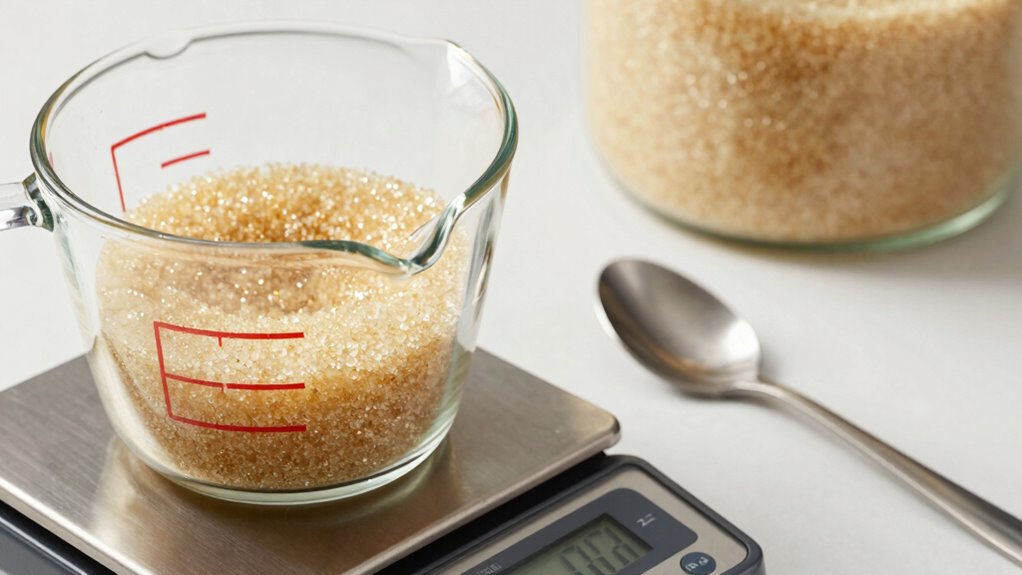
Priming sugar types vary, and each affects carbonation differently. Common options include corn sugar (dextrose), cane sugar, honey, or even malt extract. Corn sugar is popular because it’s pure fermentable sugar that produces predictable results, making it easier to calculate the right amount. Honey or malt extracts contain additional flavors and nutrients, which can influence yeast activity and fermentation rate. When choosing a priming sugar, consider how much carbonation you want and how your yeast strain reacts to different sugars.
Different priming sugars, like honey or malt extract, influence carbonation and flavor, so choose based on your desired fizziness and yeast response.
Calculating the correct amount begins with understanding your beer’s volume and desired carbonation level, usually measured in volumes of CO2. For most homebrewers, 2.4 to 2.8 volumes of CO2 work well for ales, while lagers often need slightly less. Once you know the target, you can use simple formulas or priming sugar calculators to determine how much sugar to add. These tools factor in your beer’s volume, temperature, and sugar type, providing precise measurements to avoid over-carbonation.
Yeast fermentation continues during bottle conditioning, so it’s essential to account for residual sugars and yeast activity. If your yeast is healthy and active, it will convert the priming sugar efficiently, producing CO2 without excessive pressure. Proper sanitation and precise calculations help prevent over-priming, which is the main cause of bottle bombs. Always make certain your bottles can withstand the pressure and be patient—allow enough time for fermentation to complete before chilling and consuming.
In essence, understanding yeast fermentation and priming sugar types empowers you to control carbonation accurately. Using the right amount of priming sugar based on your beer’s style, volume, and yeast activity ensures you get a perfectly carbonated brew every time—no explosions, just the satisfying effervescence you desire.

Craft A Brew – Priming Sugar – Dextrose – Corn Sugar – For At Home Beer Brewing – Prepares Homebrew For Carbonation – Primer For Bottle Conditioning – Beer & Hard Cider – No Added Flavor – 5 oz Bag
PRIMING SUGAR – Priming Sugar for beer is used to prepare your homebrew for carbonation in bottles. Yeast…
As an affiliate, we earn on qualifying purchases.
As an affiliate, we earn on qualifying purchases.
Frequently Asked Questions
How Does Temperature Affect Priming Sugar Calculations?
Temperature affects priming sugar calculations because it influences yeast activity and fermentation temperature. When it’s warmer, yeast becomes more active, producing more CO2, so you need less priming sugar to reach desired carbonation. Conversely, colder temperatures slow yeast activity, requiring more sugar. Always consider your fermentation temperature to accurately calculate priming sugar, ensuring proper carbonation without over-pressurization or flat beer.
Can I Use Honey or Other Sugars for Priming?
Yes, you can use honey or other alternative sugars for priming. Imagine pouring golden honey into your brew, adding a natural sweetness and subtle flavor. Honey substitution works, but it’s trickier because honey contains other sugars that affect carbonation levels differently. When using alternative sugars, adjust your calculations carefully to avoid over-carbonation or under-carbonation. Experimenting with these options lets you craft unique, flavorful beers or ciders with a natural twist.
What Are the Signs of Over-Carbonation in Bottles?
You’ll notice over-carbonation by signs like excessive foaming when opening bottles or gushing, which increases bottle explosion risks. Tasting carbonation too aggressively can also signal over-priming. If bubbles are persistent or the pressure feels high when opening, it’s best to chill the bottles slowly and handle them carefully. To prevent bottle explosions, always monitor fermentation times and priming sugar levels closely, and avoid over-carbonating your brew.
How Long Should I Wait Before Checking Carbonation Levels?
You should wait about 1 to 2 weeks before checking carbonation levels after priming. During this time, your priming techniques allow the yeast to produce enough CO₂, which gets absorbed into the beer. Use proper packaging options like bottles with secure caps to prevent over-carbonation. After this period, gently open a bottle to test; if it’s not fizzy enough, give it a few more days and check again.
Is It Safe to Reuse Priming Sugar From Previous Batches?
You can reuse priming sugar from previous batches, but with caution. Coincidentally, reusing priming sugar affects bottle safety, as the sugar’s residual activity might cause over-carbonation or bottle bombs. Always check the sugar’s condition—if it’s stored properly and shows no signs of spoilage, reuse it sparingly. To be safe, consider measuring the sugar accurately and monitoring carbonation levels closely during bottle conditioning.
Craft A Brew – Priming Sugar – Dextrose – Corn Sugar – For At Home Beer Brewing – Prepares Homebrew For Carbonation – Primer For Bottle Conditioning – Beer & Hard Cider – No Added Flavor – 5 oz Bag
PRIMING SUGAR – Priming Sugar for beer is used to prepare your homebrew for carbonation in bottles. Yeast…
As an affiliate, we earn on qualifying purchases.
As an affiliate, we earn on qualifying purchases.
Conclusion
So, next time you think you’ve cracked the perfect priming sugar calculation, remember—your careful math could still surprise you with a bottle bomb. Irony’s a funny thing; it keeps us humble even in our most calculated moments. Just when you think you’ve got it all figured out, a little extra sugar or a miscalculation can remind you that brewing’s part science, part art—and always a dash of unpredictability. Cheers to safer, fizzy adventures!

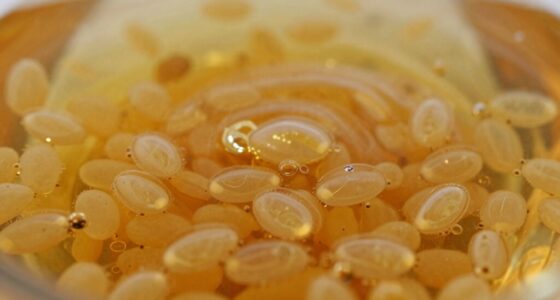
Mr Beer Homebrewing Carbonation Drops
Each package contains 22 carbonation drops
As an affiliate, we earn on qualifying purchases.
As an affiliate, we earn on qualifying purchases.
Craft A Brew – Priming Sugar – Dextrose – Corn Sugar – For At Home Beer Brewing – Prepares Homebrew For Carbonation – Primer For Bottle Conditioning – Beer & Hard Cider – No Added Flavor – 5 oz Bag
PRIMING SUGAR – Priming Sugar for beer is used to prepare your homebrew for carbonation in bottles. Yeast…
As an affiliate, we earn on qualifying purchases.
As an affiliate, we earn on qualifying purchases.