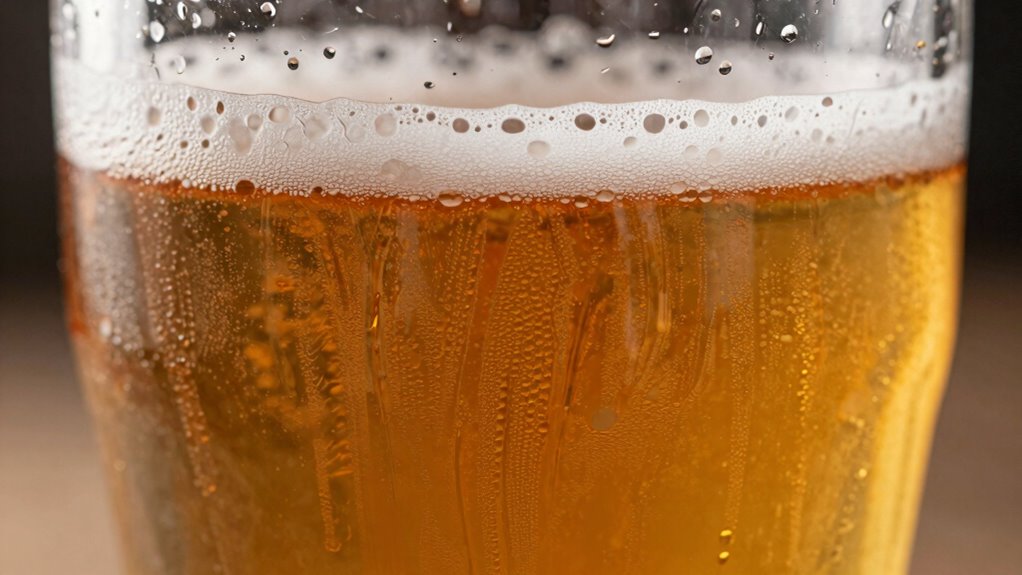

Oxidation in beer happens when it reacts with oxygen, causing a stale or papery taste nobody wants. This can occur even with careful handling, especially if exposed to light, heat, or air. To keep your beer fresh, store it in a cool, dark place and seal bottles tightly. Use proper pouring techniques to minimize air contact. If you’re curious about how to prevent oxidation and keep those vibrant flavors, there’s more to discover.
Key Takeaways
- Oxidation causes a stale, cardboard-like flavor by reacting with beer’s compounds and stripping away fresh, vibrant notes.
- Exposure to oxygen during storage or pouring accelerates oxidation, leading to undesirable taste deterioration.
- Light exposure and temperature fluctuations in storage environments promote oxidation and flavor loss.
- Proper sealing, storing in dark, cool places, and minimizing oxygen contact help prevent oxidation.
- Handling beer gently and using airtight containers preserves freshness and avoids the cardboard flavor.
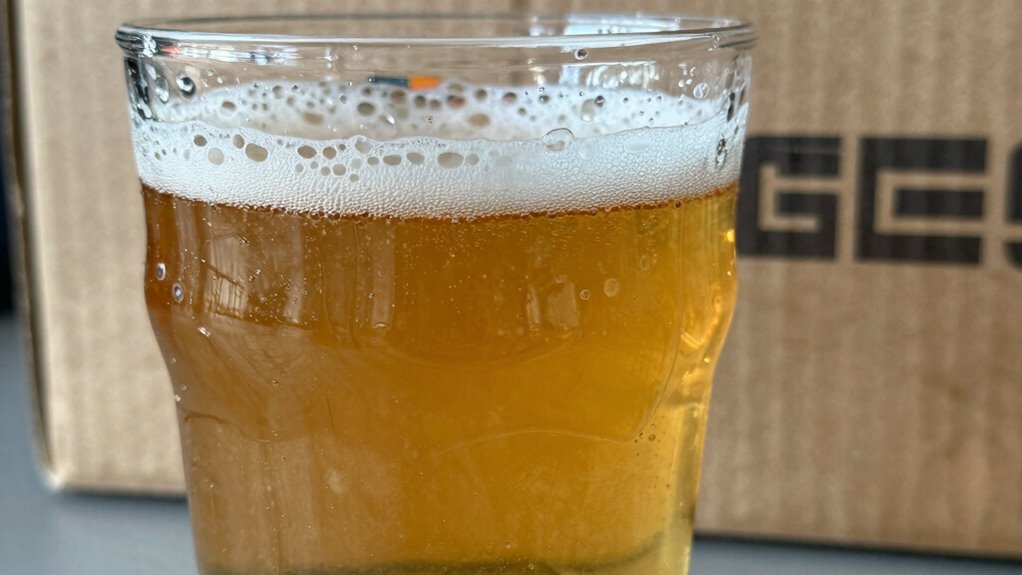
Have you ever noticed a stale or papery taste in your beer? That unpleasant flavor is often a sign of oxidation, a common issue that can spoil your brew’s quality. Oxidation occurs when beer reacts with oxygen, leading to flavor deterioration that strips away the fresh, vibrant notes you expect. It’s a frustrating problem, especially because it can sneak up even when you’re careful. Understanding how oxidation happens and how to prevent it starts with recognizing the importance of proper storage techniques. If you neglect them, oxygen can seep into your bottles or kegs, accelerating flavor deterioration and turning your beer into a cardboard-like mess.
Oxidation causes stale, papery flavors—proper storage keeps your beer fresh and vibrant.
Your storage techniques play a crucial role in maintaining beer freshness. Light, heat, and exposure to air all contribute to oxidation, so keeping your beer in the right environment is essential. Always store your beer in a cool, dark place, away from direct sunlight and temperature fluctuations. Light can trigger chemical reactions in beer that speed up oxidation, so avoid storing your bottles or cans in windowsills or near heat sources. Also, keep your beer upright instead of lying on its side. This minimizes the surface area exposed to oxygen and reduces the chance of oxidation, especially after opening. When pouring, be gentle to avoid splashing and introducing unnecessary air into the beer, which can hasten flavor deterioration.
Sealing your beer properly is equally important. Use airtight caps and make sure they’re tightly sealed to prevent oxygen from slipping in. If you’re transferring beer into a growler or other container, make sure it’s cleaned thoroughly and sealed tightly afterward. The more oxygen that gets into your beer, the faster it will develop that cardboard flavor nobody wants. If you’re storing homebrew or draft beer, consider using CO2 to displace oxygen, further protecting your brew from oxidation. Proper storage techniques aren’t just about keeping the beer cold; they’re about controlling the environment to preserve those delicate flavors and prevent flavor deterioration.
In the end, avoiding oxidation means paying close attention to how you handle and store your beer. The effort you put into proper storage techniques directly impacts the freshness and quality of your brew. By keeping your beer in the right conditions, sealing it properly, and minimizing exposure to air and light, you give your beer the best chance to stay vibrant and flavorful. Additionally, attending cultural festivals that celebrate local breweries can provide valuable insights into best practices for beer storage. Remember, the goal isn’t just to drink beer but to enjoy it at its absolute best—free from that undesirable cardboard taste that oxidation can bring.

Cornucopia Brands Clear Plastic Gallon Jar w/Handle and Airtight Lid (2-Pack) for Bulk Food, Craft Supplies, Paint and Detergent Storage and More
VALUE 2-PACK: Receive two one-gallon capacity jars with handles and airtight lids
As an affiliate, we earn on qualifying purchases.
As an affiliate, we earn on qualifying purchases.
Frequently Asked Questions
Can Oxidation Occur During Beer Packaging?
Yes, oxidation can occur during beer packaging. When packaging materials aren’t properly sealed or are permeable to oxygen, your beer gets exposed to oxygen exposure, which accelerates oxidation. This process can lead to off-flavors like cardboard or stale notes. To prevent this, brewers use airtight packaging and minimize oxygen contact during filling, ensuring your beer stays fresh and retains its intended flavor profile.
Does Oxidation Affect All Beer Styles Equally?
No, oxidation doesn’t affect all beer styles equally. Some styles, like lagers and pilsners, are more sensitive to flavor stability issues caused by oxidation, which can lead to unwanted cardboard flavors. Others, like stouts and IPAs, are slightly more resilient. Proper packaging and avoiding contamination are key to minimizing oxidation’s impact, ensuring your beer retains its intended flavor profile and freshness longer.
How Quickly Does Oxidation Develop in Beer?
About 2 to 4 weeks after brewing, oxidation can start affecting your beer, especially if it’s exposed to air. Oxidation detection becomes tricky as flavors change gradually, but the cardboard taste is a key sign. It varies by beer style and packaging, but quick exposure to oxygen accelerates flavor instability. To prevent this, keep your beer sealed and stored properly, ensuring long-term flavor stability and freshness.
Can Oxidation Be Reversed Once It Occurs?
Oxidation can’t be reversed once it occurs, but you can prevent further flavor deterioration by improving your packaging techniques. To maintain flavor stability, use oxygen-impermeable bottles or cans, and minimize headspace during packaging. Proper storage also helps slow oxidation. While you can’t undo oxidation already in the beer, these measures help preserve its freshness and prevent the development of off-flavors like cardboard, keeping your beer tasting its best longer.
Are There Specific Ingredients That Increase Oxidation Risk?
Certain ingredients, like hops and malt, can increase oxidation risk when they interact during brewing or storage. Poor storage conditions, such as exposure to oxygen, heat, or light, further accelerate oxidation. To minimize this risk, you should store beer in a cool, dark, airtight environment and be mindful of ingredient interaction during brewing. Proper handling and storage are key to preserving beer’s freshness and preventing that undesirable cardboard flavor.

Razorri 64oz Stainless Steel Beer Growler, Double-Wall Vacuum Insulated Carbonated Keg with Professional Bar Tap and Pressurized CO2 Regulator, 0.5 Gallon, Ocean Blue
Professional Tap: Adjustable bar dispenser tap, lock up for safely traveling and loosen to unlock for enjoying happy…
As an affiliate, we earn on qualifying purchases.
As an affiliate, we earn on qualifying purchases.
Conclusion
By now, you understand how oxidation can silently ruin your beer with that unwanted cardboard flavor. With proper storage and handling, you can keep your brews fresh and vibrant, enjoying every sip as intended. Isn’t it worth paying attention to these details to preserve the true taste? Remember, a little extra care goes a long way in preventing oxidation—so next time, ask yourself if your beer’s flavor is worth risking.

Household Essentials Tall Wine and Bottle Storage Chest, Natural
This sophisticated storage solution showcases sleek, hard-sided construction and window-vision front
As an affiliate, we earn on qualifying purchases.
As an affiliate, we earn on qualifying purchases.

Private Preserve Wine Preservation System | 100% Green Gas Based | Suitable for all Wine, Port, Sake, Cognac, Whiskey, Fine Oil and Vinegar
FRESHNESS PRESERVATION: Removes all of the oxygen from an open bottle, keeping the wine oxidation-free, allowing the wine…
As an affiliate, we earn on qualifying purchases.
As an affiliate, we earn on qualifying purchases.