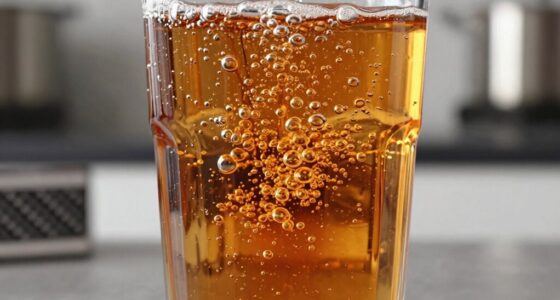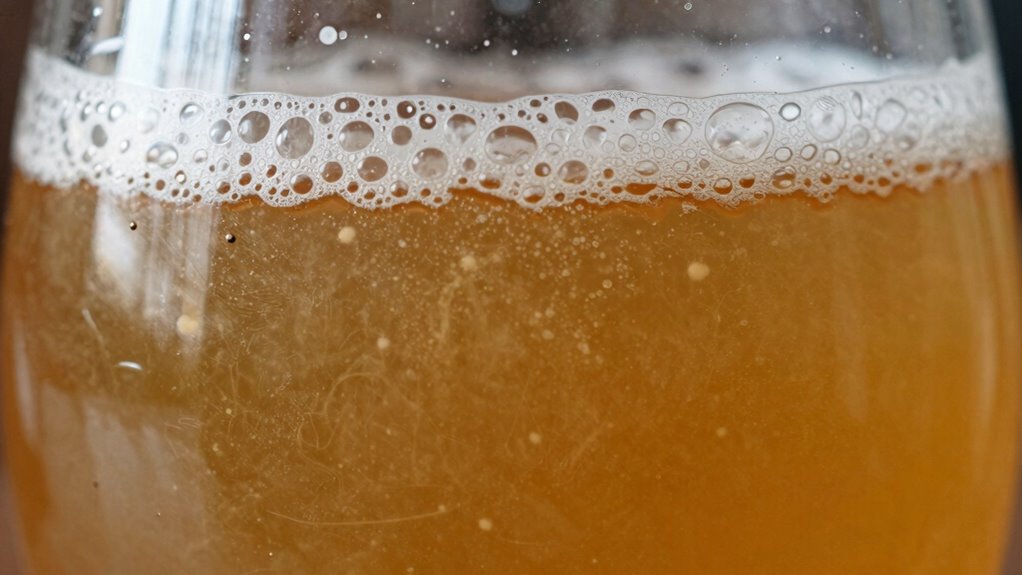

Common homebrew off-flavors come from poor ingredient quality, improper fermentation, light exposure, oxidation, or contamination. You might notice buttery diacetyl, green apple acetaldehyde, skunky flavors from UV light, stale cardboard from oxygen contact, or sour notes caused by bacteria. Sanitation, controlling fermentation temps, and storing beer properly help prevent these issues. Keep exploring to learn how to identify and fix these off-flavors effectively.
Key Takeaways
- Off-flavors often stem from stale ingredients, poor sourcing, or improper storage, leading to cardboard, papery, or skunky notes.
- Incomplete fermentation or contamination can produce diacetyl and acetaldehyde, causing buttery or green apple aromas.
- Light exposure and oxygen contact trigger skunky and stale flavors, so proper storage in dark, sealed bottles is essential.
- Yeast contamination and inadequate sanitation introduce unwanted microbes, resulting in sour, moldy, or funky flavors.
- Maintaining consistent fermentation temperatures, thorough cleaning, and ingredient quality control prevent most off-flavors.

Craft A Brew – One Step No Rinse Cleanser – For Cleaning At Home Brewing Equipment – Non-Foaming Cleanser – Safe & Easy to Use – Home Brewing Supplies (8oz)
ONE STEP CLEANSER – Craft A Brew’s One Step No Rinse Cleanser is a high quality, non-foaming cleanser…
As an affiliate, we earn on qualifying purchases.
As an affiliate, we earn on qualifying purchases.
What Are the Most Common Homebrew Off-Flavors?
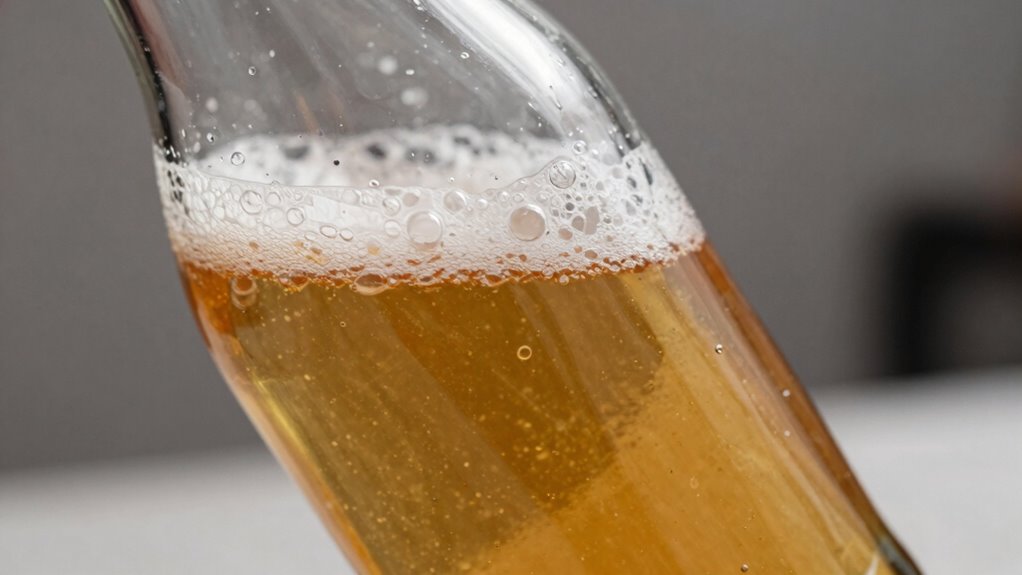
Some off-flavors in homebrew are more common than others and can be easily identified if you know what to look for. Often, flavor masking techniques or poor ingredient selection contribute to these issues. For example, using stale or low-quality ingredients can introduce unwanted flavors, such as cardboard or papery notes. To prevent this, choose fresh, high-quality ingredients and consider how each one impacts the overall flavor profile. Proper ingredient selection helps minimize off-flavors from developing during fermentation. Additionally, exploring new frontiers in ingredient sourcing can lead to unique flavor enhancements. Recognizing these common off-flavors allows you to troubleshoot effectively and improve your brewing process over time. Regular use of glycolic acid products can also enhance the clarity of flavors in your brew by promoting a cleaner fermentation environment.

Inkbird ITC-308 Digital Temperature Controller 2-Stage Outlet Thermostat Heating and Cooling Mode Carboy Homebrew Fermenter Greenhouse Terrarium 110V 10A 1100W
【Easy to use】 Supports °C/°F display.
As an affiliate, we earn on qualifying purchases.
As an affiliate, we earn on qualifying purchases.
How Do Diacetyl and Acetaldehyde Affect Your Beer’s Flavor?
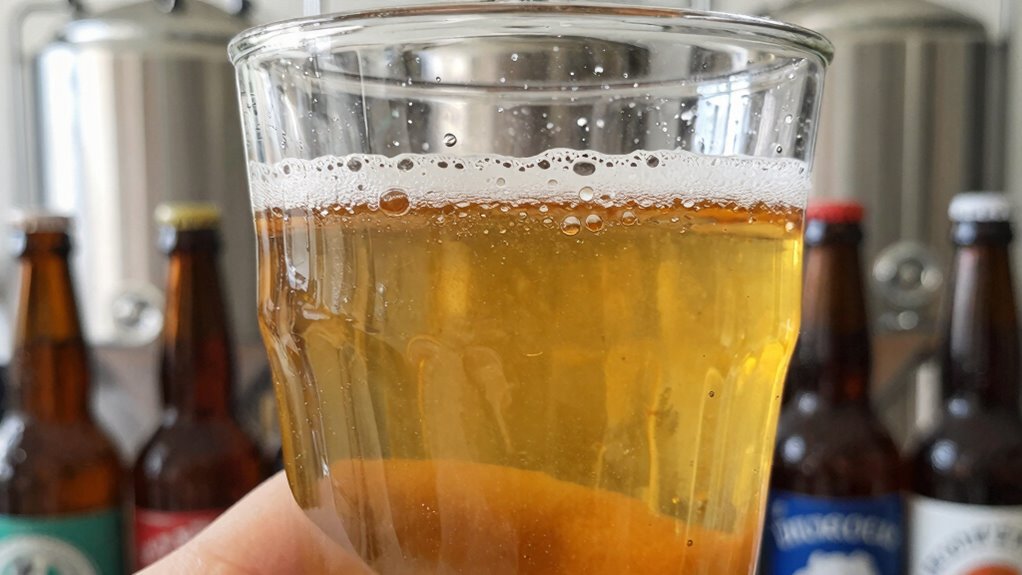
Diacetyl and acetaldehyde are two common off-flavors that can profoundly impact your beer’s taste if not properly managed. The diacetyl impact results in a buttery or butterscotch flavor, which can be unpleasant if left unchecked. It often indicates incomplete fermentation or contamination. Acetaldehyde influence, on the other hand, produces a green apple or skunky aroma, signaling that fermentation was halted too early or that oxygen exposure occurred. Both off-flavors mask the true character of your beer and can ruin the drinking experience. Managing their presence involves proper fermentation temperatures, adequate yeast health, and careful handling during brewing. Recognizing how diacetyl impact and acetaldehyde influence your beer helps you troubleshoot and produce cleaner, more refined brews. Additionally, understanding the role of fermentation temperatures can significantly reduce the development of these off-flavors.

FastRack Amber Beer Bottles 12oz (Pack of 24) | Longneck Glass Beer Bottles w/Crown Finish for Home Brewing Mead, Cider & Kombucha | Durable Brewing Bottle & Bottling Kit
[WHAT’S INCLUDED] This set includes 24 – 12 oz amber glass beer bottles. Perfect beer bottles for home…
As an affiliate, we earn on qualifying purchases.
As an affiliate, we earn on qualifying purchases.
Why Do Beer Sometimes Get Skunky or Lightstruck?
Sure! Here’s the revised content following your directions:
—
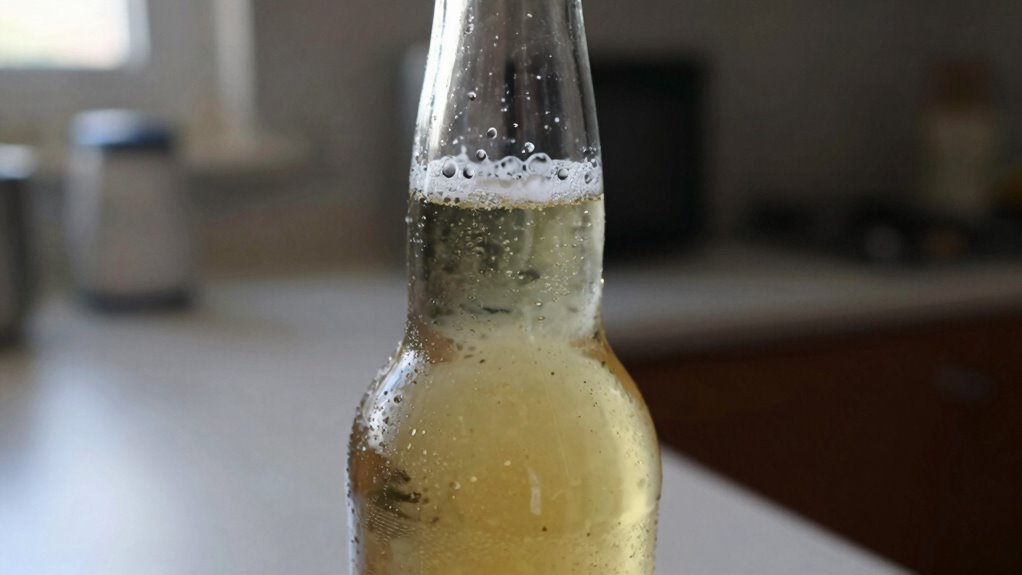
Light exposure and certain chemical reactions can cause beer to develop unwanted flavors, such as skunkiness. This often happens when beer is exposed to UV light, especially from canned light or sunlight. Canned light, despite its name, isn’t completely lightproof and can still allow UV rays to penetrate, triggering a chemical reaction with compounds in the beer. This reaction produces thiols, which give the beer a distinctive skunky aroma. To prevent this, store your beer in dark bottles or opaque containers, and keep it away from direct sunlight or bright artificial lights. Proper packaging and storage are essential to avoid lightstruck flavors and maintain your homebrew’s fresh, clean profile. Additionally, understanding smart home practices can enhance your homebrewing experience by creating a more enjoyable atmosphere for tasting your creations. Regularly checking for stain removal techniques can also help keep your brewing area tidy and pleasant. Using emerging trends in digital publishing can provide valuable insights into new brewing techniques and innovations.

American Cream Ale Homebrew Beer Ingredient Kit
Brewer's Best American Cream Ale
As an affiliate, we earn on qualifying purchases.
As an affiliate, we earn on qualifying purchases.
What Causes Oxidation and Stale Flavors in Beer?
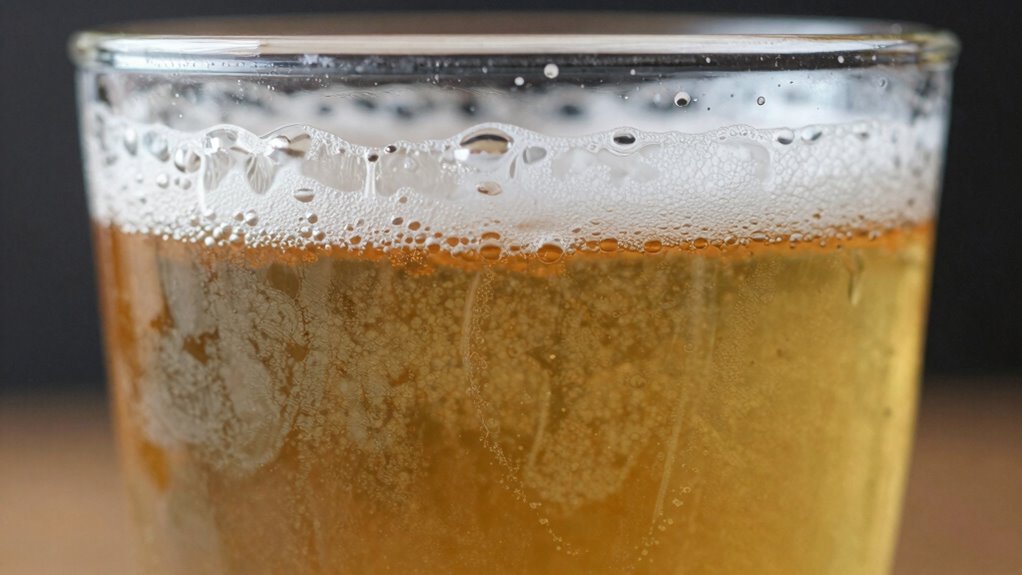
Oxidation occurs when beer comes into contact with oxygen, leading to chemical reactions that degrade its freshness and flavor. This process causes oxidation effects that result in stale flavor development, making your beer taste flat, cardboard-like, or papery. To prevent this, you should be aware of common causes.
- Exposing beer to air during bottling or transferring – introducing oxygen can accelerate oxidation effects.
- Poor storage practices – leaving bottles or kegs in warm or light-exposed environments promotes stale flavor development.
- Inadequate sealing – using faulty caps or closures allows oxygen to seep in over time, increasing oxidation risks.
How Does Yeast Contamination Spoil Your Brew?
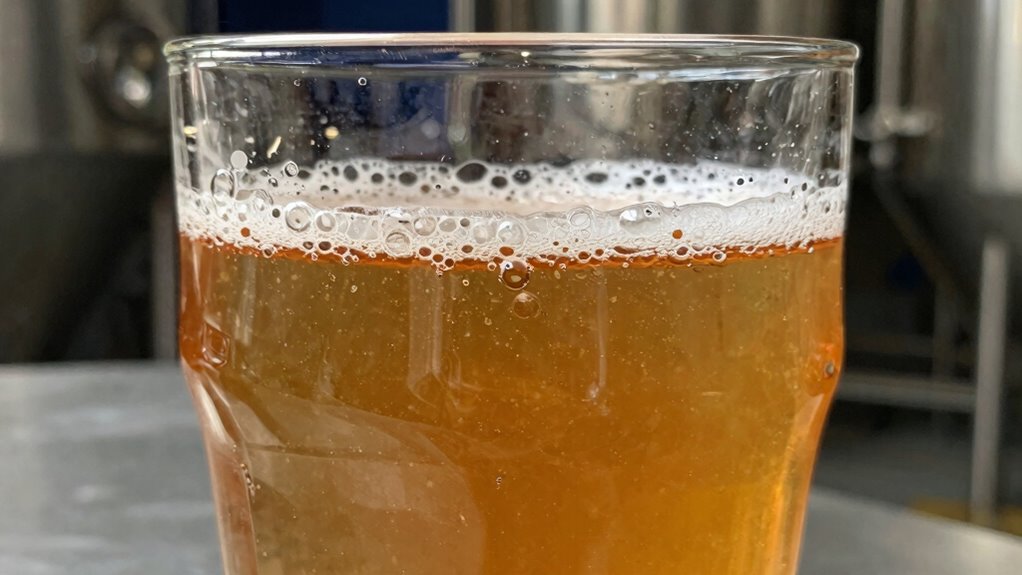
Yeast contamination can quickly ruin your brew by introducing unwanted microorganisms that interfere with fermentation. When your yeast isn’t healthy or the fermentation temperature isn’t properly controlled, it creates an environment where bad bacteria and wild yeasts can thrive. These contaminants compete with your yeast for nutrients and produce off-flavors, sourness, or even spoilage aromas. Poor yeast health, caused by improper storage or handling, makes your brew more vulnerable. Similarly, inconsistent fermentation temperatures can stress the yeast, weakening its defenses against contamination. Once contaminated, your beer may develop undesirable flavors like skunky, moldy, or sour notes, and fermentation may stall altogether. Maintaining proper yeast health and a stable fermentation temperature is crucial to prevent contamination and ensure a clean, flavorful brew. Additionally, using cabling solutions can help streamline the installation process, ensuring that your brewing equipment operates efficiently and effectively. Understanding the importance of DIY tools can also inspire brewers to uphold the same dedication and excellence in their craft. Understanding LPGA achievements can also inspire brewers to uphold the same dedication and excellence in their craft.
Why Do Sours and Funky Flavors Develop in Homebrew?
Why Do Sours and Funky Flavors Develop in Homebrew?
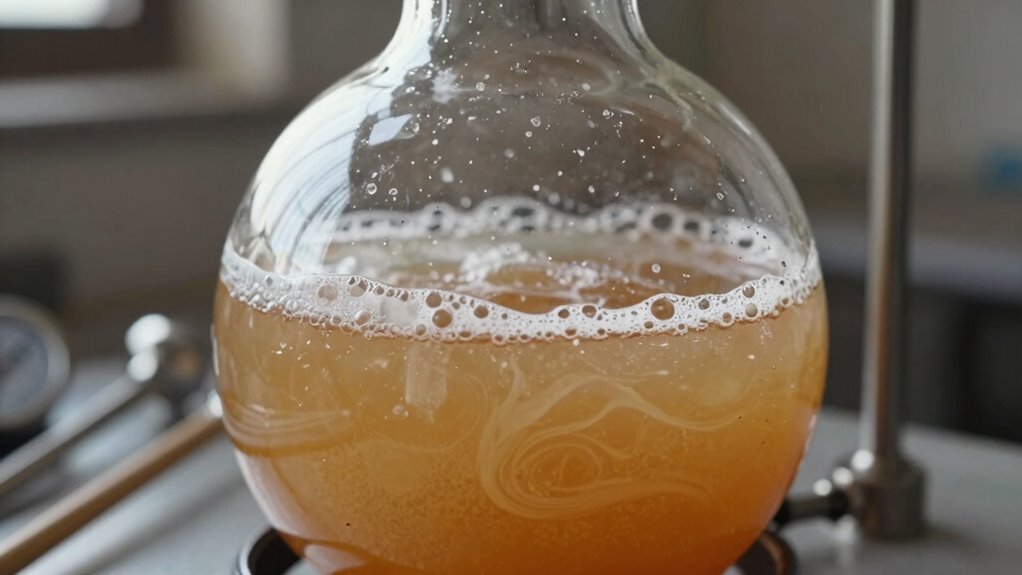
Sours and funky flavors often develop when wild yeast contaminates your brew or when sanitation falls short. These unwanted microbes can introduce unpredictable flavors that weren’t part of your original recipe. Keeping your equipment clean and avoiding contamination is key to preventing these off-flavors. Additionally, using proper power protection for your brewing equipment can help maintain consistent fermentation temperatures, reducing the chance of unwanted flavors. Using high-quality ingredients is also essential for achieving the desired taste profile in your brews. Understanding the importance of sanitation practices is crucial for any homebrewer to ensure a clean and flavorful batch. Moreover, the principles of comparative advantage in resource allocation can also apply to selecting the best ingredients for your brewing process. Incorporating music therapy techniques during brewing sessions can enhance focus and creativity, resulting in better overall outcomes.
Wild Yeast Contamination
Have you ever wondered why your homebrew develops those funky, sour flavors unexpectedly? Wild yeast can be a sneaky culprit, causing contamination that leads to off-flavors. When wild yeast infiltrates your brew, it fermentates sugars differently than your intended yeast strain, creating unpredictable sourness or funkiness. Proper contamination control is essential to prevent this. Here are key points to consider:
- Wild yeast often enters through unclean equipment or open fermentation vessels.
- It can survive in small cracks or residues, making thorough sanitation crucial.
- Even minimal exposure to airborne yeast spores can result in contamination. Additionally, effective storytelling about your brewing processes can help others understand the importance of cleanliness and attention to detail in preventing issues like wild yeast contamination.
Insufficient Sanitization Practices
Insufficient sanitization is a common culprit behind the development of funky flavors in homebrew. If your cleaning routines aren’t thorough or if you neglect proper sanitation tools, you risk introducing unwanted bacteria and wild yeasts into your brew. Residual bacteria can produce off-flavors like sourness or funk, which aren’t part of your intended profile. Always make sure to clean all equipment meticulously before brewing, paying attention to bottles, airlocks, and fermenters. Use appropriate sanitation tools, such as no-rinse sanitizers, and follow their instructions carefully. Skimping on sanitation can allow microorganisms to thrive, spoiling your beer. Proper sanitization isn’t just about cleanliness; it’s essential for controlling flavor quality and avoiding unpredictable, undesirable sour or funky notes.
How Can Poor Sanitation and Equipment Lead to Off-Flavors?
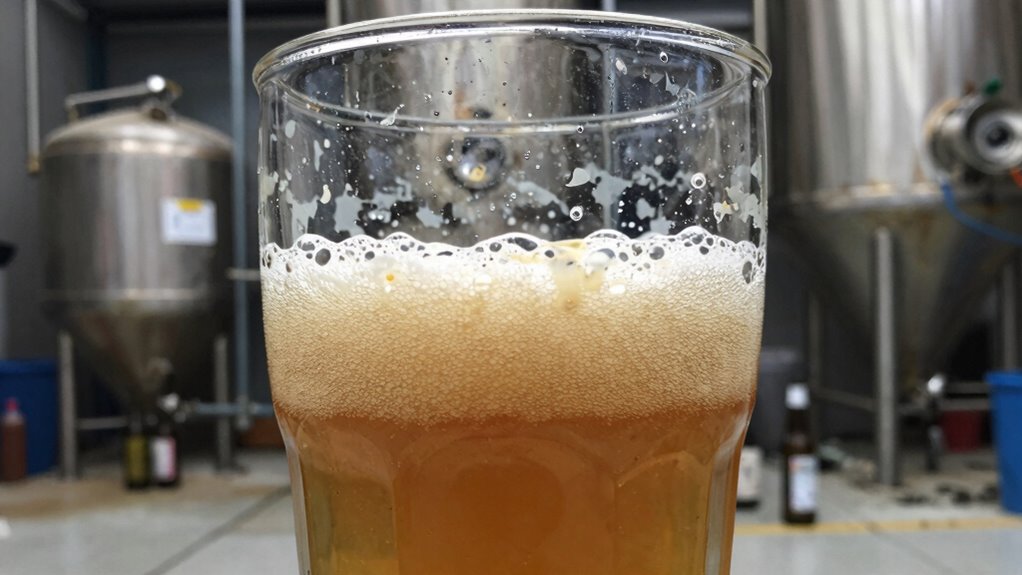
How Can Poor Sanitation and Equipment Lead to Off-Flavors?
Poor sanitation and unclean equipment are common culprits behind off-flavors in homebrewed beer. If you neglect cleaning routines or skip equipment maintenance, it creates opportunities for unwanted bacteria and wild yeasts to thrive. These microbes produce off-flavors like sourness, cardboard, or sulfur. To avoid this, focus on three key areas:
- Regularly sanitize all equipment before use, including fermenters, bottles, and utensils. Regular sanitation helps prevent unwanted microbial growth, which can significantly alter the flavor profile of your brew. Additionally, a thorough cleaning process can eliminate common homebrew off-flavors, ensuring a more enjoyable final product. Using effective sanitizers can greatly enhance your sanitation efforts.
- Maintain your equipment by checking for cracks, residue, or corrosion that can harbor microbes. Astrological compatibility may also play a role in your brewing success by enhancing your focus and enjoyment of the process.
- Develop consistent cleaning routines after each brewing session to prevent buildup and contamination.
Proper sanitation and diligent equipment maintenance are essential to keep your beer tasting fresh and true to your recipe. Additionally, using airless paint sprayers can help ensure a thorough cleaning process for your brewing tools.
How to Prevent and Fix Off-Flavors in Your Homebrew?
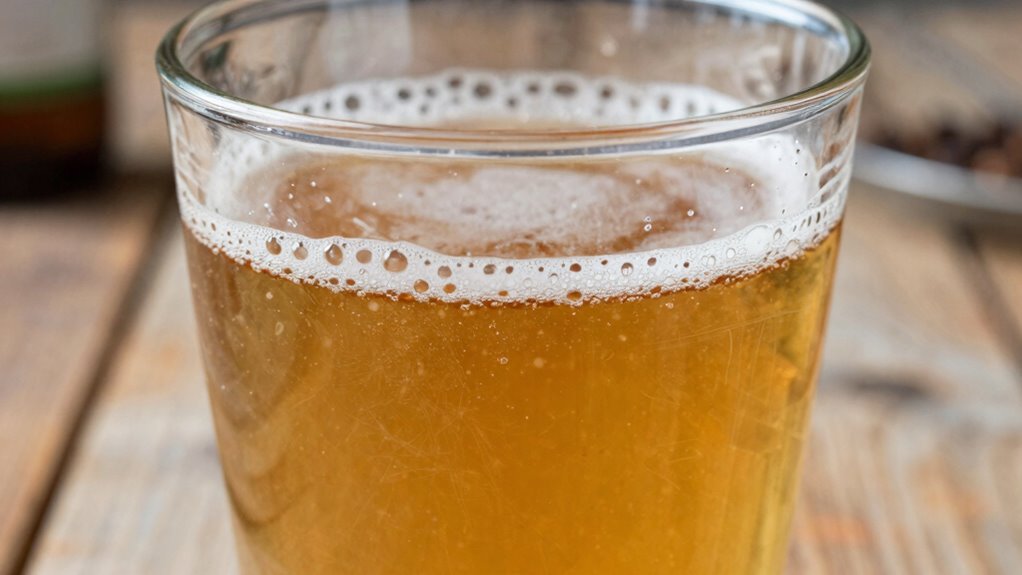
To prevent and fix off-flavors in your homebrew, start by identifying the root cause, whether it’s fermentation temperature, contamination, or ingredient flaw. Proper fermentation temperature control is essential; too high or low can cause off-flavors like fusel alcohols or diacetyl. Make sure your fermentation environment stays within the ideal range for your yeast. If off-flavors develop after bottling, check your bottle conditioning process. Properly cleaning bottles and using correct priming sugars reduces contamination risks. If off-flavors persist, consider adjusting fermentation temperature or extending conditioning time. Additionally, monitor your ingredients for freshness and quality. By controlling fermentation temperature and following proper bottle conditioning procedures, you’ll minimize off-flavors and produce cleaner, better-tasting homebrew. Incorporating eco-friendly practices can also help improve your brewing environment and reduce unwanted flavors.
Frequently Asked Questions
How Can I Detect Off-Flavors Early During the Brewing Process?
To detect off-flavors early, regularly taste your brew during fermentation while monitoring fermentation temperature and yeast health. Keep an eye out for unusual smells or flavors that develop before the process completes. Maintaining proper fermentation temperature guarantees healthy yeast activity, reducing the risk of off-flavors. If you notice sour or skunky notes early on, it’s a sign to assess yeast health and temperature, allowing you to address issues before they worsen.
What Are the Best Cleaning Products for Preventing Off-Flavors?
To prevent off-flavors, use cleaning products like PBW or oxyclean to keep equipment spotless, ensuring good yeast health. Proper fermentation temperature control is essential, as it impacts yeast activity and flavor. After cleaning, rinse thoroughly to remove residues that could contaminate your brew. Maintaining clean, sanitized gear reduces unwanted bacteria and wild yeasts, helping you avoid off-flavors caused by poor sanitation or improper fermentation conditions.
Can Off-Flavors Be Completely Eliminated From Homebrew?
Think of your homebrew as a delicate garden; completely eliminating off-flavors is tough, but you can tend to them. While you can’t guarantee perfect flavor stability or absolute fermentation consistency every time, you can minimize off-flavors through careful sanitation, temperature control, and diligent process management. Regular tasting and adjustments help. The goal is to keep your brew as close to perfection as possible, even if a few off-flavors still sneak through occasionally.
How Does Water Quality Influence Off-Flavor Development?
Water quality considerably influences off-flavor development in your homebrew. If your water has high mineralization, it can introduce unwanted tastes or reactions that cause off-flavors. A pH imbalance, either too high or too low, can also lead to undesirable flavors and affect fermentation. By testing and adjusting your water’s mineral content and pH before brewing, you can minimize the risk of off-flavors and produce a cleaner, better-tasting beer.
Are Certain Beer Styles More Prone to Specific Off-Flavors?
Yes, certain beer styles are more prone to specific off-flavors due to factors like yeast contamination and fermentation temperature. For example, ales brewed at higher temperatures can develop esters or fusel alcohols, while lagers are more sensitive to contamination, leading to off-flavors like diacetyl. Understanding each style’s ideal fermentation conditions helps you prevent these issues, ensuring your beer remains true to its intended flavor profile.
Conclusion
When you’re brewing, think of your beer as a delicate garden—each element, from sanitation to ingredient quality, shapes its flavor. Off-flavors are like weeds trying to take over your carefully tended plants. With keen attention and proper techniques, you can keep your brew vibrant and true to your vision. Trust your senses, catch issues early, and enjoy the rewarding process of crafting a beer that’s as perfect as a sunrise in a glass.