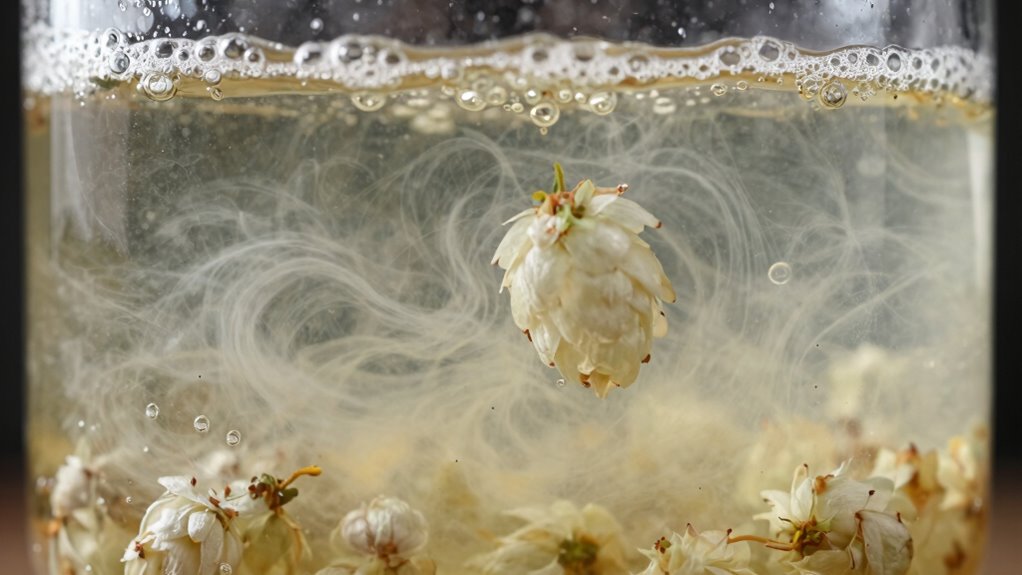

Dry hop creep is a surprising fermentation activity that can occur after dry hopping your beer, causing unexpected changes in aroma, flavor, and carbonation. It happens because hop particles introduce compounds and sugars that stimulate yeast activity, leading to a secondary fermentation phase even after primary fermentation ends. This process can make your beer more vibrant and complex over time. If you want to understand how to manage or embrace this phenomenon, you’ll find useful insights ahead.
Key Takeaways
- Dry hop creep is a secondary fermentation triggered by hop compounds and residual sugars interacting with yeast after dry hopping.
- It can cause unexpected increases in aroma, carbonation, and subtle flavor changes over days or weeks.
- Hop particles may introduce fermentable sugars, stimulating yeast activity even post-primary fermentation.
- Managing dry hop creep with techniques like cold crashing or pasteurization can slow or control this activity.
- Recognizing dry hop creep helps brewers predict and craft more complex, evolving beer profiles.
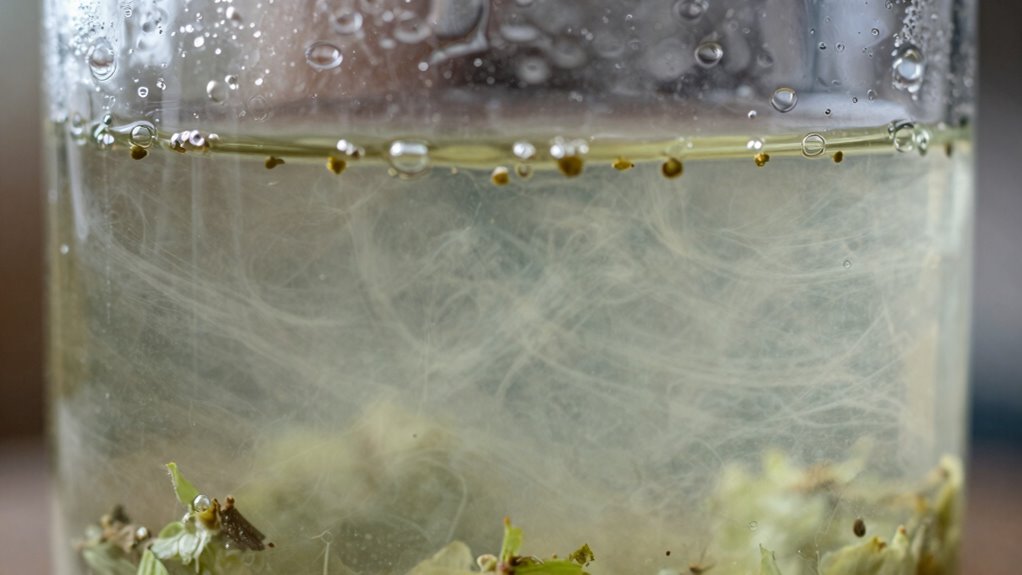
Have you ever noticed a sudden increase in beer’s aroma or a shift in its flavor profile after dry hopping? If so, you’re experiencing one of the interesting phenomena known as dry hop creep. This unexpected fermentation activity occurs after you’ve added hops during the brewing process, especially in the dry hop stage. It can seem puzzling because, at first glance, dry hopping is just meant to boost aroma and flavor, not fermentation. But dry hop creep reveals that even after primary fermentation, the beer can continue to evolve, driven by residual sugars and hop compounds.
When dry hopping, you’re primarily aiming for flavor enhancement and aroma retention. The aromatic oils from hops diffuse into the beer, creating that fresh, hoppy aroma that draws drinkers in. However, the process also introduces hop compounds that can interact with residual sugars and yeast cells present in the beer. These interactions sometimes trigger a slow, secondary fermentation, which is the core of dry hop creep. It’s as if the beer is still alive and adjusting itself, subtly changing its character over time. The result? A beer with intensified aroma, sometimes even more vibrant than immediately after dry hopping. But this can also lead to unexpected increases in carbonation or slight changes in flavor, catching brewers off guard.
Dry hopping can trigger secondary fermentation, intensifying aroma and carbonation unexpectedly over time.
What’s happening during dry hop creep is that yeast, still present in the beer, finds new nutrients or stimuli from hop particles. These particles may contain fermentable sugars or other compounds that yeast can metabolize slowly. The activity often starts days or even weeks after dry hopping, making it a tricky phenomenon to predict. If you notice a sudden spike in carbonation or a shift in flavor after dry hopping, you’re likely witnessing dry hop creep. It’s a sign that your beer is continuing to evolve in the package or fermenter, which can be both exciting and challenging for brewers.
Understanding dry hop creep is essential because it influences how you manage your beer post-dry hop. If you want to control this activity, you might consider pasteurization or cold crashing to slow down fermentation activity. But if you’re aiming for maximum aroma retention and flavor enhancement, embracing this slow fermentation can add complexity to your beer. It’s a reminder that beer is a living beverage, capable of developing new layers of aroma and flavor long after the initial brewing stages. Recognizing dry hop creep allows you to better predict and appreciate these subtle changes, ultimately helping you craft more nuanced and enjoyable beers. Additionally, knowing how to choose and verify synthetic lubricants can help ensure that your brewing equipment runs smoothly, enhancing overall performance.

Craft A Brew – Mead Making Kit – Reusable Make Your Own Mead Kit – Yields 1 Gallon of Mead
BREW YOUR OWN – Be more than a mead drinker; be a mead maker! This Craft a Brew…
As an affiliate, we earn on qualifying purchases.
As an affiliate, we earn on qualifying purchases.
Frequently Asked Questions
Can Dry Hop Creep Affect Beer Clarity?
Dry hop creep can affect your beer clarity by increasing hop haze, making the beer look cloudier. As the yeast interacts with hop particles during this process, it can also impact foam stability, causing less persistent foam. If you notice haze or foam issues post-dry hopping, it’s likely due to dry hop creep. Controlling your dry hop timing and quantity helps minimize these effects, keeping your beer clear and well-foamed.
Does Dry Hop Creep Influence Beer Shelf Life?
Ever wondered if dry hop creep impacts your beer’s shelf life? It can, because fermentation kinetics and hop compound interactions continue subtly after packaging. These ongoing reactions might cause carbonation or flavor shifts, potentially shortening your beer’s freshness. So, yes, dry hop creep influences shelf life, especially if unaccounted for. To keep your beer tasting great longer, monitor fermentation closely and consider how hop interactions might evolve over time.
How Can I Prevent Dry Hop Creep in Brewing?
To prevent dry hop creep, you should carefully time your fermentation and dry hopping processes. Add hops after primary fermentation slows down to reduce residual sugars that cause creep. Keep the beer cold during dry hopping to slow microbial activity, preserving hop aroma. Additionally, monitor gravity before and after dry hopping to detect any unexpected fermentation activity, allowing you to address dry hop creep early and maintain beer quality.
Is Dry Hop Creep More Common in Certain Beer Styles?
Dry hop creep is more common in hop-forward beer styles like India Pale Ales and American Pale Ales, where hop aroma is a priority. Think of it as a brewing ghost that haunts these styles, subtly altering fermentation stability. You’ll notice more activity if you use a lot of dry hops or high-alpha hops. To keep your beer stable, manage hop additions carefully and monitor fermentation closely, preventing surprises lurking in your brew.
What Are the Signs of Excessive Dry Hop Creep?
You’ll notice excessive dry hop creep when fermentation extends beyond the usual timeline, causing ongoing activity. Signs include continued bubbling, rising pressure, or foam in your fermenter. You might also see a change in hop aroma, as the beer develops more hop character during this phase. Keep a close eye on the fermentation timeline and monitor pressure levels, as these are key indicators of dry hop creep happening in your brew.

Dual Output Temperature Controller for Beer Fermentation, TD130A (Standard Version)
Temp Controller
As an affiliate, we earn on qualifying purchases.
As an affiliate, we earn on qualifying purchases.
Conclusion
As you pour that last sip, the subtle dance of flavors lingers on your palate, a reminder of the unexpected journey dry hop creep took you on. Like slipping into a cozy, aromatic haze, this quirky fermentation surprise adds a layer of complexity you never saw coming. Embrace the unpredictable, for it’s in those tiny, hidden moments where craft beer reveals its true magic—turning the ordinary into an unforgettable experience.
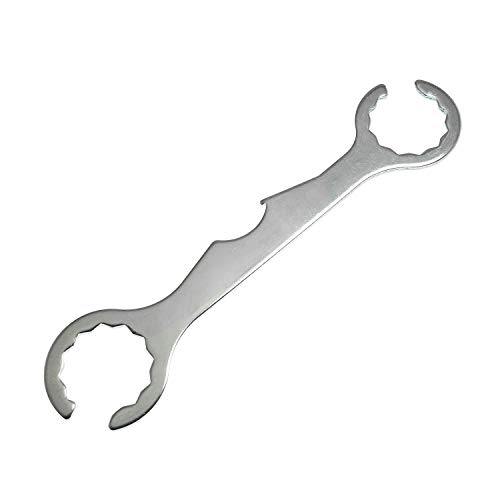
Maxmoral 1 Pack Faucet Wrench Stainless Steel Multifunctional Draft Beer Faucet Spanner for Tap Tower Coupler Tools
Package included:1pcs Multifunctional Beer Faucet Wrench.
As an affiliate, we earn on qualifying purchases.
As an affiliate, we earn on qualifying purchases.
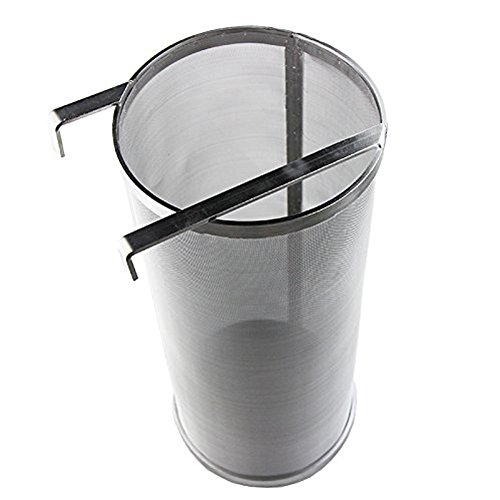
Hop Spider 300 Micron Mesh Stainless Steel Hop Filter Strainer for Home Beer Brewing Kettle
FAMILY BREWING – A must-have for home brew lovers, suitable for brew bucket fermenter and perfect for big…
As an affiliate, we earn on qualifying purchases.
As an affiliate, we earn on qualifying purchases.